
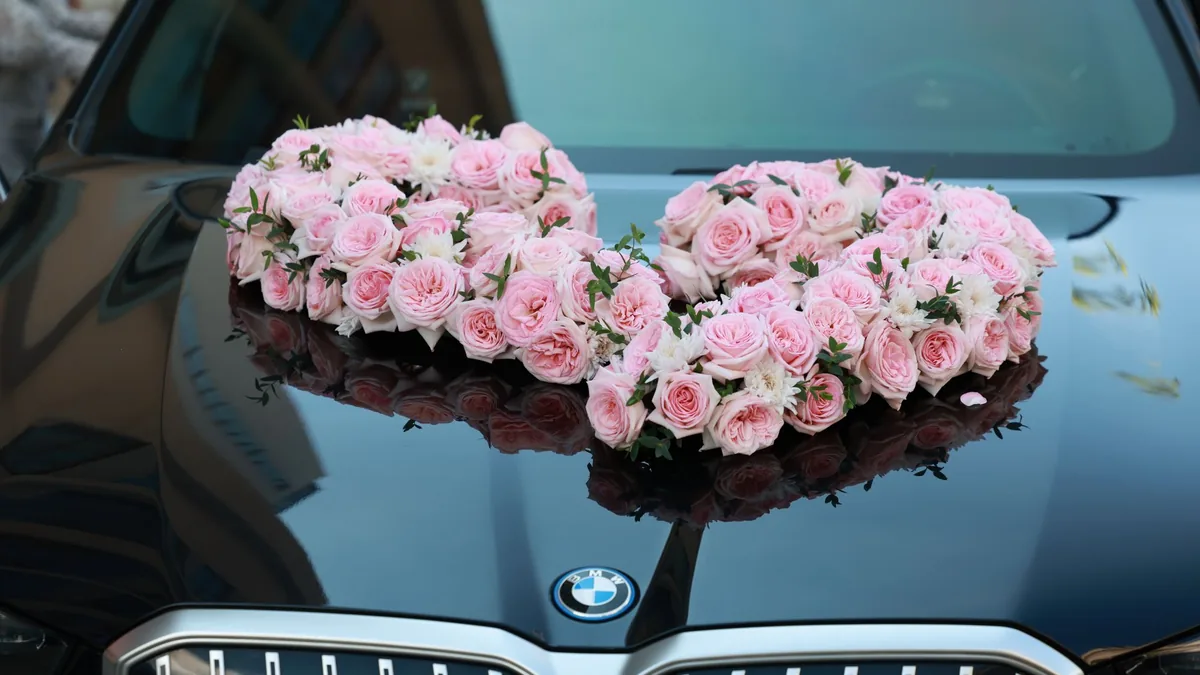
The bride pickup from parlour is the one wedding journey where the clock belongs to other people. The makeup artist decides when she is ready, the photographer decides when the shoot ends, and the hall decides when the evening closes. Your job is to book a car that sits inside all three. In practice that means four things: book the car with a waiting window rather than a single pickup time, agree before the day who rides with the bride, set a hard "leave by" time worked back from the entry slot at the hall, and name one person who tells the hall and the groom's side when the car actually moves. Do that and a shoot that overruns by forty minutes becomes an inconvenience, not a missed entry.
Typical parlour and photoshoot durations (and why to treat them as ranges)
There is no official standard for how long bridal makeup takes, and any figure you read online is somebody's experience, not a rule. What you can do is ask your own parlour and photographer two direct questions and plan against their answers, plus a margin.
Ask the parlour: "If I arrive at the booked time, what time will I realistically be ready to walk out, fully dressed, with the dupatta set?" Ask them to include dressing, not just makeup. Many families only hear the makeup estimate and forget that the lehenga, jewellery and pinning come after.
Ask the photographer: "How long is the pre-event shoot, where exactly will it happen, and what is the latest time you will release her?" The last question matters most. A photographer who has agreed a release time in advance is far easier to hold to it than one who has only agreed a start time.
To show how the pieces add up, here is a worked example. The durations are illustrative allowances for planning, not typical or guaranteed times; replace every line with what your own parlour and photographer tell you.
| Stage (example allowances) | Planned | Realistic with margin |
|---|---|---|
| Arrive at parlour | 2:00 pm | 2:00 pm |
| Makeup and hair | 2 hr 30 min | 3 hr |
| Dressing, jewellery, dupatta pinning | 45 min | 1 hr |
| Shoot at or near the parlour | 45 min | 1 hr 15 min |
| Walk to car, settle dress, depart | 15 min | 20 min |
| Ready to leave | 6:15 pm | 7:35 pm |
Notice the gap between the two columns: over an hour, and nothing in that example has gone badly wrong. That gap is the reason the car should never be booked as "pick up at 6:15, drop at the hall". It should be booked as "on standby from 6:00, departure expected between 6:15 and 7:45".
Where the shoot happens changes everything
If the bridal photoshoot before baraat happens inside the parlour or in its car park, the car waits in one place and the only variable is time. If the shoot moves to a second location, the car becomes part of it: it drives the bride there, waits again, and then does the final run to the hall. That is effectively a short chauffeur duty, not a transfer, and it should be requested that way.
Ask the photographer to name the second location as a real address or landmark, and whether vehicles can stop at the entrance. A lovely garden that forces the bride to walk 300 metres in a heavy lehenga from the nearest drop-off point will eat twenty minutes you did not plan for.
Booking the bride car to wedding hall with waiting time built in
The single most useful change you can make is to stop thinking of this as a drop-off. The bride car to wedding hall is a booked vehicle and driver for a window of time, and your request should say so plainly. Our hourly chauffeur duty sheet covers the general format; for the bride's car, these are the lines that matter.
What to put in your request
- Standby start time. The time the car should be parked and ready outside the parlour, with the driver contactable. Set it at least 15 minutes before the earliest possible ready time.
- Expected departure window. For example, "departure expected between 6:15 and 7:45 pm". This tells the operator the car is committed for that whole period.
- Every stop. Parlour address, any shoot location, and the hall, with the gate you want to use. Include a landmark for each, because parlours in commercial blocks can be hard to find at dusk.
- Passenger count. The bride plus whoever rides with her (see the next section). This decides the vehicle.
- Waiting and overtime question. Ask how waiting time beyond the window is treated and who must approve it. Get the answer in writing, even if it is a WhatsApp message.
- Decoration. Whether the car will be decorated, by whom, and when. If a decorator is involved, the car needs to be with them before the standby time, not during it.
- One contact name. The person on your side who can authorise changes on the night.
When you plan the journey with us (planned link), you send those details as an enquiry. The operator then comes back to you on vehicle, availability and cost. Nothing is confirmed until that reply, so send it early and keep the thread where the family can find it.
Choosing the vehicle
A bride in a full lehenga needs more room than her headcount suggests. A saloon with a low roofline can mean a bent crown, a crushed dupatta or a very awkward entry. A larger car with a higher door opening and a flat rear floor is generally easier. If you are considering an SUV, our premium SUV journeys (planned link) page explains what that category covers; confirm the actual model, seat layout and step height with the operator before the day rather than assuming.
Bride pickup from parlour: who travels with her
Decide this before the wedding week, not in the parlour doorway. It is surprisingly contested: mothers, sisters, sisters-in-law, a best friend holding the phone, sometimes the photographer. The car has a finite number of seats and the bride needs more than one of them.
A workable default:
- Bride in the rear seat on the side nearest the kerb at the hall, so she exits straight onto the pavement or red carpet.
- One companion beside her who manages the dupatta, the phone, the clutch bag and the emergency kit. This person should be calm, not the most senior relative.
- Front seat for a second family member who handles calls with the hall and the groom's side, or left free for the photographer if they need to ride along.
If more family members want to arrive with the bride, give them their own car that follows. It keeps the bride's car uncrowded and gives you a spare vehicle if something goes wrong with the first one.
Write the names on the plan and share it with the driver's contact. On the night, the driver should know exactly who is getting in, so there is no negotiation at the kerb.
Dress, dupatta and car door practicalities
A lehenga, a heavy dupatta and bridal jewellery behave very differently in a car than on a stage, and the car door is where most of the damage happens.
Before the car arrives
- Ask the driver to set the rear seat as far back as it goes and the front passenger seat forward, to open up legroom.
- Check the rear seat for anything that can snag: loose trims, seat-back pockets with hooks, child-seat fittings.
- Ask for the car to be cleaned inside on the day. Light-coloured fabrics show everything.
- Air conditioning on before she gets in. A car that has stood with its windows up on a warm evening heats up fast, and makeup does not forgive that.
Getting in
- The companion gets in first on the far side, ready to receive the dupatta.
- The bride sits sideways onto the seat edge with her back to the car, feet still outside.
- She swings her legs in together while the companion lifts the lower part of the lehenga over the sill.
- The dupatta is gathered forward over her lap or passed to the companion, not trailed behind.
- The driver closes the door only after the companion confirms nothing is near the hinge side.
The seat belt question comes up every time. The belt should still be worn; route it carefully under the dupatta and over the shoulder, and have the companion adjust it once she is seated. A few extra minutes here saves a torn border.
The emergency kit
Keep a small bag in the car, not in someone's handbag that ends up in another car: safety pins, tissues, a small mirror, a phone power bank, water with a straw, a hand fan, and any medication she needs. It is the smallest item on this list and it gets used more than anything else.
Bridal makeup to venue timing: work backwards from the entry
Families usually plan forwards: arrive at the parlour, get ready, shoot, go. The safer way to set bridal makeup to venue timing is backwards, starting from the moment the bride needs to walk into the hall.
The four anchor times
- Entry time at the hall. Agree this with the hall manager and the groom's side. It is the time the bride steps out of the car at the gate, not the time she is "expected".
- Latest departure from the last stop. Entry time minus the drive, minus a traffic allowance. Ask your driver or operator for the drive time at that hour on that day, because a route that takes 25 minutes at noon can take far longer in the evening.
- Photographer release time. Latest departure minus 15 to 20 minutes for the walk to the car and getting seated. This is the time you give the photographer as a firm stop.
- Parlour ready time. Release time minus the agreed shoot length.
If the parlour ready time you end up with is earlier than the parlour says it can manage, you have found the problem a week early rather than on the night. You can then move the parlour booking, shorten the shoot, or move the shoot to after the event.
Evening traffic is the part you cannot negotiate
Wedding season evenings bring many cars onto the same roads at once: other baraats, guests, and normal rush-hour traffic. Before you leave, check live conditions. In Lahore, the City Traffic Police Lahore lists Helpline 15 and its Rasta app, which it describes as keeping citizens updated on traffic jams and suggesting alternative routes. In Islamabad, the Islamabad Capital Territory Police site lists the traffic helpline 1915 and Islamabad Police FM 92.4. Your driver will usually know the local shortcuts, but a check before departure costs nothing.
Check the wider picture too
Planned protests and marches can close roads at short notice. The UK Foreign, Commonwealth and Development Office's Pakistan travel advice currently notes that protests and marches are planned in Islamabad, Rawalpindi, Peshawar and other cities in Pakistan. The same page advises against all travel to Balochistan and most of Khyber Pakhtunkhwa, including Peshawar city, and against all but essential travel to some other areas, including northern Sindh (north of and including Nawabshah). If any part of the wedding is in an area covered by those warnings, read the official page in full before making plans; this guide does not cover those areas.
Handling a late shoot without missing the entry
It will happen. The light is perfect, a relative arrives with a second outfit, the drone battery needs changing. Here is how to keep a running-late shoot from turning into a missed entry.
Set the rules before the day
- Give the photographer the release time in writing, and tell them it is set by the hall, not by the family's mood. A deadline with a reason attached is much harder to drift past.
- Agree with the car operator how extra waiting will be handled, so nobody is on the phone negotiating overtime while the bride is still posing. Our guide to wedding transport when the reception runs late covers how to agree those terms at the other end of the evening; the same approach works here.
- Name one person, not three, who is allowed to say "we leave now". Everyone else defers to them.
On the night: a three-step escalation
- Twenty minutes before release time. The companion tells the photographer "twenty minutes". The driver moves the car to the exact pickup spot and keeps the engine and air conditioning running.
- At release time. The companion says "we are walking to the car now", and walks. Final shots can happen beside the car door, which often gives better frames than the tenth shot in the same corner.
- Fifteen minutes past release time. The family contact calls the hall manager with a revised entry time (see the next section), and the groom's side is told the same time. Once that call is made, the new time is the plan and nobody reopens it.
If you are badly late
If the delay is so large that the entry cannot happen as planned, change the order rather than rushing the road. Options families use include:
- Moving some of the photos to the end of the evening, after the rukhsati, when the pressure is off.
- Asking the hall to let the groom's side proceed with seating and serving while the bride arrives slightly later, then holding the stage entry for her.
- Skipping the second shoot location entirely and doing the remaining portraits at the hall's own entrance or garden.
What you should never do is ask the driver to make up time. A heavily dressed bride in the back of a car being driven fast through evening traffic is a risk nobody signed up for. If an accident or medical emergency does happen on the road in Punjab, Rescue 1122 is the provincial emergency service number, and it lists road traffic crashes and medical emergencies among the incidents it handles.
Communicating the arrival to the hall
A bride's entry is a small production at the hall end: music, lights, flower petals, the stage party standing ready, sometimes a planned walk under a dupatta canopy. All of that depends on one piece of information arriving at the right person in time: "she is ten minutes away."
Build a simple message chain
Set this up a day or two before, in one short group chat or a written list:
| Who | Their job on the night | Needs to hear |
|---|---|---|
| Companion in the bride's car | Tells the family contact when the bride is walking to the car | Nothing; she starts the chain |
| Family contact (front seat or following car) | Sends departure time and live location to the hall manager and the groom's side | Departure, then "ten minutes out" |
| Hall manager or event coordinator | Cues the music, lights and entry team | "Ten minutes out", then "at the gate" |
| Groom's side lead | Gets the groom and stage party into position | "Ten minutes out" |
| Driver | Drives, parks at the agreed gate, opens the door | The gate and the kerb side |
Share live location from the family contact's phone, not the bride's. Her phone will be in a clutch bag she cannot reach.
The gate matters
Many halls have more than one gate, and the one the guests use is often not the one the bride should use. Ask the hall manager which entrance is used for the bridal entry, whether a car can stop right at it, and whether there is space to turn around or wait. Put that gate on the driver's plan with a landmark. Arriving at the wrong gate and trying to reverse through a car park full of baraat vehicles is an entirely avoidable delay.
Keep one eye on closing time
Every hall has a finish time. It may come from the hall's own booking terms, from provincial or district rules on wedding functions, or both, and those rules have changed over the years. Ask the hall manager for the time in writing when you book, and ask what happens if you are still inside after it. Once you know that time, every other time on your plan can be checked against it.
A one-page plan to hand the driver
Print this or send it as one message, so the driver has everything in one place:
- Bride's name and the companion's name and phone number
- Family contact's name and phone number
- Standby time and address at the parlour, with landmark and parking spot
- Shoot location (if any), address and drop-off point
- Hall name, address, bridal entry gate and landmark
- Expected departure window and target entry time
- Agreed waiting terms and who can approve extra time
- Vehicle preparation: seats adjusted, interior cleaned, air conditioning on, decoration timing
- Who rides in the car, and who is following in a second car
For the wider picture of how the bride's car fits with the baraat convoy, the guest vehicles and the walima, our weddings service page sets out what a family can request across the whole event.
If a relative abroad is organising the day and would like one operator handling every wedding car across more than one city, iDrive's weddings and events booking, the managed mobility network behind Pakistan Taxi, is set up for multi-vehicle event requests.