
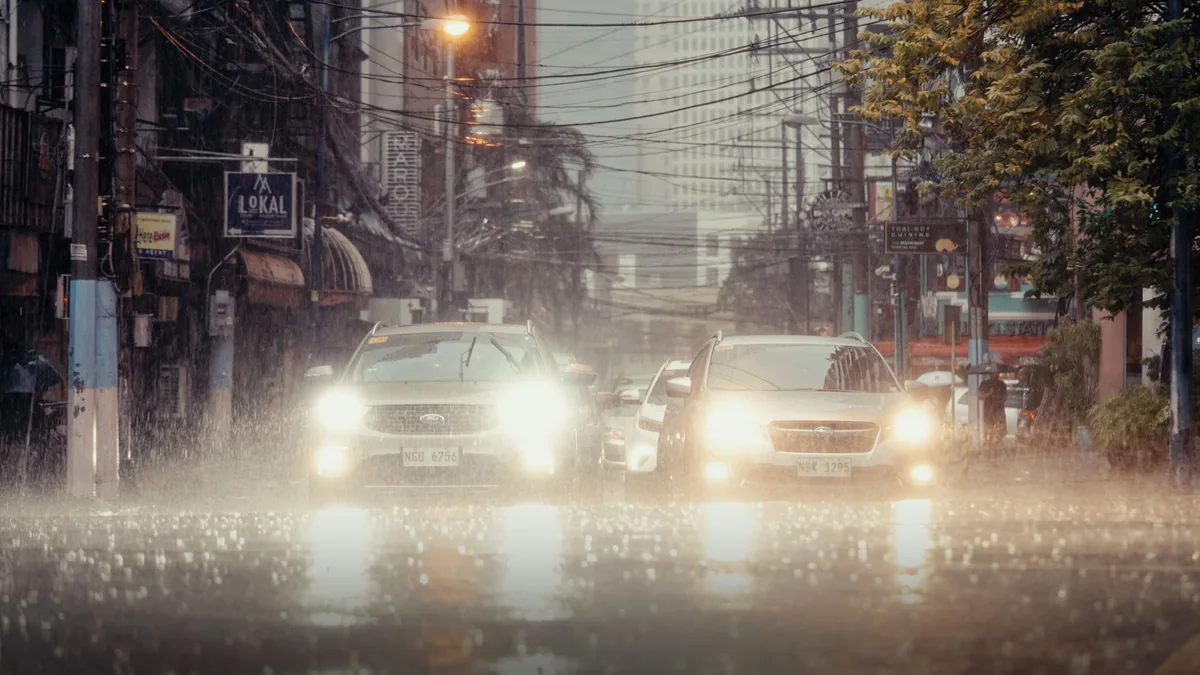
For a monsoon wedding, Pakistan's weather forces one assumption on the transport plan: at least one road will be under water on the day. The season usually runs from late June to early October, according to the UK government's Pakistan travel advice, and a single heavy spell can turn a fifteen-minute hop between the bride's home and the marquee into a two-hour crawl. The practical answer is simple to state and takes an evening to prepare: check the Pakistan Meteorological Department forecast from three days out, map a second route that stays on higher ground and avoids underpasses, arrange a covered drop point with umbrellas waiting at the door, put the bride and elderly guests in higher-clearance vehicles if water is forecast, and agree in advance who has the authority to delay pickups. Everything below turns that list into something your family can actually run on the day.
It is written for families in Lahore, Karachi, Islamabad and Rawalpindi, and for relatives flying in from the UK, the Gulf or North America who will not know which local roads flood first. When the authorities tell people to stay off the roads, that instruction outranks any timetable on a wedding card.
Why rain matters more to a wedding than to an ordinary journey
An ordinary trip in the rain can simply wait. A wedding cannot, because it runs to fixed moments: the baraat leaving, the nikah, the rukhsati, dinner service at the hall. Every one of those moments involves several vehicles, older relatives, heavy outfits and, usually, at least one person who has just landed and is tired.
Rain affects that chain in three ways.
- Roads close or slow without warning. Water gathers in dips, underpasses and older neighbourhoods with weak drainage. In July 2026, Arab News reported that torrential rain submerged parts of Lahore, with a shopkeeper describing water nearly six feet deep in his market and a truck stuck in the floodwater.
- Power becomes unreliable. Ahead of heavy Karachi rain in August 2025, NDMA warned of power outages alongside urban flooding, Arab News reported. That matters for venue lighting, lawn generators and the phone you are using to coordinate drivers.
- Walking the last fifty metres becomes the hardest part. A car can reach the gate, but a bride in a heavy embroidered lehenga cannot cross a waterlogged car park without help.
The aim of a wedding day rain plan is to deal with all three before anybody puts on their shoes.
Read the season before you pick the date
If the date is not fixed yet, the calendar is your first safeguard. The FCDO advice says monsoon flooding can affect all provinces, and that roads and bridges have been damaged or destroyed. Punjab's disaster authority, PDMA Punjab, has issued monsoon advisories warning of urban flooding risk in Rawalpindi, Gujranwala, Gujrat and Lahore.
Karachi's pattern can differ from Punjab's. In August 2025, Arab News reported that the Karachi Metropolitan Corporation declared a rain emergency, schools and colleges were closed, and residents were told to avoid commuting while people waded through waist-deep water in low-lying parts of the city. A late-August date in Karachi is therefore not automatically safer than a July date in Lahore.
If the date is already fixed inside the monsoon window, you do not need to move it. You need to plan as though rain is likely, then enjoy it if the sky stays clear.
What to watch in the days before
| When | What to check | Who does it |
|---|---|---|
| 7 days out | Latest outlook and advisories from the Pakistan Meteorological Department | Wedding transport lead |
| 3 days out | City forecast for each event city; any NDMA or PDMA advisory | Transport lead, shared with both families |
| Day before | Latest PMD forecast; confirm backup routes with every driver | Transport lead and operator |
| Morning of | Advisory updates; local reports from someone physically at the venue | Venue contact and transport lead |
| Two hours before each move | A real look at the roads: a relative already out, a driver on the way | Named coordinator |
Keep it to one person. When five uncles are all reading forecasts and forwarding voice notes, nobody knows which one to trust.
Map a dry route and a second dry route
Most families plan the fastest route between home, hotel and venue. In the monsoon, plan the highest one.
Urban flooding: Lahore roads, Karachi lanes and how to spot the risky ones
You do not need a hydrology degree. You need local memory and a little logic.
- Underpasses are the lowest point on any road. Water collects there first and drains last. If your normal route drops under a junction, choose an alternative that crosses at street level, even if it adds ten minutes.
- Ask the people who live there. The bride's family, the venue manager and the local drivers usually know which chowk floods every year. Write those names down and share them with every driver, not just the lead car.
- Watch the older, lower neighbourhoods. Reports from both Lahore and Karachi describe water entering homes and shops in low-lying areas first. If a pickup address sits in one of these pockets, plan to collect guests from a nearby main road instead of the front door.
- Beware of standing water you cannot see into. Open manholes and broken road edges hide under murky water. The National Disaster Management Authority urges people to avoid travelling on waterlogged roads and to keep away from electric poles during rain.
Build the route card
For each leg of the day, write a short route card and send it to every driver the evening before. A usable card has four lines.
- Main route, with the one or two roads to avoid named.
- Backup route that stays on higher ground.
- The meeting point if the lane outside the house is flooded.
- The coordinator's number and a second number in case the first phone dies.
Our guide to planning wedding guest transport between hotels and venues covers the wider shuttle timetable. The route card is the rain layer that sits on top of it.
Covered drop-off: the fifty metres that ruin outfits
On a wet day the drive is rarely the disaster. The walk from the car to the stage is.
Talk to the venue before the day
Banquet halls with a porch or covered entrance are easier. Lawns and open marquees need more thought. Ask the venue manager these questions early in the week:
- Is there a covered drop point, and can cars pull right up to it?
- If not, can a temporary canopy or tent walkway be set up from the gate to the marquee entrance?
- Where does water collect on the lawn or car park in heavy rain?
- Is the generator protected, and who switches it on if the grid supply fails?
- Is there a separate entrance for the bride and family so that the main gate queue does not block her car?
Umbrellas at the door, not in the boot
Umbrellas in the boot of a car are useful to nobody once it is pouring. Put two or three people at the drop point with large umbrellas whose only job is to walk guests from car door to canopy. Give them a small stack of towels and a mat for the floor inside the entrance, because wet marble floors in wedding halls are slippery.
A simple rotation keeps the queue moving:
- Car stops under or as near the canopy as possible.
- Umbrella team opens the rear door and walks the passenger in.
- Driver moves on at once to the parking area or the next pickup.
- Nobody waits in the drop lane to chat. Greetings happen inside.
When to swap to higher-clearance vehicles
A low saloon decorated with flowers looks lovely in the photographs. It also sits lowest to the road, and a flooded dip that an SUV clears slowly can leave a sedan stuck with water around the doors.
If the forecast shows heavy rain on the day, discuss a switch with your operator for three kinds of passenger:
- The bride and groom, because their clothes, jewellery and timing matter most.
- Elderly relatives and anyone using a wheelchair or walking frame, who cannot step out and walk if the car stalls.
- Families with small children and luggage, particularly guests coming straight from the airport.
A premium SUV (planned link) usually offers more ground clearance than a standard saloon, although no vehicle makes it safe to drive into water of unknown depth. The rule for every driver stays the same: if you cannot see the road surface, do not enter the water. Turn round and use the backup route.
A simple decision table for the morning
| Forecast or report on the morning | Decoration car | Guest vehicles | Action |
|---|---|---|---|
| Clear or light drizzle | Keep as planned | Keep as planned | Brief drivers on backup routes anyway |
| Moderate rain, roads wet but moving | Keep, add umbrella team | Keep, leave 20 to 30 minutes earlier | Confirm covered drop point |
| Heavy rain forecast, some roads waterlogged | Ask about a higher-clearance car for the couple | Move elderly guests into SUVs or vans | Use backup routes, move pickups to main roads |
| Official advice to avoid travel | Hold | Hold | Delay the event timeline; follow NDMA or PDMA guidance |
Treat the table as a starting point, not a rule book. The final call depends on what drivers can see on the road, and any vehicle change depends on what your operator actually has available.
Protecting the bridal outfit and the couple's timings
The bride's journey deserves its own small plan, because it is the one leg that cannot be repeated.
Inside the car
- Lay a clean sheet or towel over the seat and footwell before she gets in.
- Keep a separate bag with a spare dupatta pin set, tissues, a small hand towel and a plastic cover for the shoes.
- If the car has been decorated with fresh flowers, check that the decorator has not blocked the rear window or the wipers.
Getting in and out
- The bride should leave the house under a large umbrella held by someone who is not also carrying bags.
- Pull the car as close to the door as the lane allows. If the lane is flooded, it is better to carry the bags a little further than to walk the bride through water.
- At the venue, the couple's car goes straight to the covered drop point or the family entrance. Photographers can shoot the arrival under the canopy.
Timing buffers
Add a real buffer to every bridal movement. On a wet day, plan for at least double the normal journey time on the bride's legs and tell the stage team in advance that the entry may shift. It is far easier to push a stage entry by thirty minutes than to rush a bride through a flooded junction.
If you are coordinating from abroad, our page on wedding transport explains what information our planning team needs to understand the day.
Rain wedding guest transport: moving the crowd
Guests are where rain plans usually fall apart, because there are so many of them and they arrive from different directions.
Group guests by where they start
Split your guest list into three groups and give each a plan:
- Hotel guests. Easiest to manage. Run shuttles from the hotel porch, which is usually covered, and stagger departures so the venue drop lane never has more than two or three vehicles waiting.
- Guests from family homes in the same city. Ask them to gather at two or three pickup points on main roads rather than at individual houses in narrow lanes. A petrol station forecourt or a market car park with a roof is better than a street corner.
- Guests arriving from the airport or another city. Build in extra time and make sure someone tracks their flight. If they are landing on the wedding day in the middle of a heavy spell, it may be kinder to take them to the hotel first and bring them to the venue once they have changed.
Tell guests the plan in one message
Send one short message to guests the evening before. It should include the venue address with a map pin, the covered entrance to use, the pickup points and times, and the coordinator's number. Ask them not to drive their own cars if the forecast is poor, since parking in a waterlogged lot can leave them stranded after the event.
When to delay pickups, and who decides
This is the part families avoid discussing, and it causes the most trouble. Agree it before the day.
Name one decision-maker
Choose one person, usually a calm relative who is not in the wedding party, who can say "we wait" and be obeyed. Give them the drivers' numbers, the venue manager's number and the stage coordinator's number. Everyone else passes information to that person rather than instructing drivers directly.
Clear triggers for holding a pickup
Hold a pickup, or move it to a different meeting point, when any of these happen:
- NDMA, the provincial PDMA or the city administration advises people to avoid travel, as Karachi's authorities did during the August 2025 rain emergency.
- A driver reports that the planned route and the backup route are both waterlogged.
- The pickup lane is flooded and there is no safe main-road alternative nearby.
- Lightning is striking close by and passengers would have to wait in the open.
- Power is out along the route and street lights are down after dark.
How to delay without chaos
- The decision-maker tells the drivers first, then the stage coordinator, then the guest group.
- Guests stay indoors where they are. Nobody stands outside waiting in the rain.
- The stage coordinator shifts the programme, so that dinner service or the rukhsati moves later rather than forcing arrivals.
- Pickups restart only when a driver has physically checked the route.
A thirty-minute delay is irritating. A car stalled in an underpass with grandparents inside is dangerous.
Phones, power and the coordination kit
On a stormy night the grid can fail, mobile networks slow down and a phone battery drains fast when it is used for calls, maps and voice notes all evening.
Put together a small kit for the transport coordinator:
- Two charged power banks and a car charger.
- A printed sheet with every driver's name, vehicle and number, plus the guest pickup groups.
- The venue manager's number and the name of whoever runs the generator.
- The NDMA emergency helpline, 051-111-157-157, and PDMA Punjab's helpline, 1129, for families in Punjab. Check the current numbers on the official sites before the day.
- A torch, because car parks at lawn venues are often dark once the rain knocks out outdoor lighting.
Keep the printed sheet in a plastic sleeve: paper never runs out of battery, but it does go soggy.
After the event: the drive home in the rain
The return often happens late at night, when roads are darker and water may still be standing. Send older guests home first, stagger departures so the drop lane never jams, and brief drivers again: a road that was dry at six may not be dry at midnight. If the reception runs late, our guide to wedding transport when the reception finishes late explains how to talk to your operator about extra hours.
Monsoon wedding Pakistan checklist: your wedding day rain plan
Copy this list into your family group chat a week before the event.
- Pick one transport lead and one decision-maker for delays.
- Check the PMD outlook seven days out and the city forecast three days out.
- Write a route card for every leg with main route, backup route, meeting point and two phone numbers.
- Confirm a covered drop point or temporary canopy with the venue.
- Arrange an umbrella team with towels and a floor mat.
- Ask your operator about higher-clearance vehicles for the couple and elderly guests if heavy rain is forecast.
- Move pickups from narrow lanes to main-road meeting points.
- Add at least double the normal journey time to the bride's movements.
- Pack the coordinator's kit: power banks, printed sheet, torch, helpline numbers.
- Agree the triggers for holding pickups and tell the stage coordinator how delays will be handled.
Planning your transport with us
When you send a planning request through Pakistan Taxi, share the dates, the cities, each venue and pickup address, the number of guests and any passengers who need extra help. Mention that the wedding falls in the monsoon and whether you would like to discuss higher-clearance options. Our team will review the details and come back to you. Vehicle types, availability and prices depend on the date, city and operator, so nothing is confirmed until it has been agreed with you.
You can start planning your wedding journeys (planned link) whenever you are ready. For larger corporate or multi-city events, our sister network iDrive, which runs the platform behind Pakistan Taxi, has a weddings and events service that some families use alongside their own plans.
Above all, keep the official channels open on the day. The FCDO's Pakistan travel advice is worth reading before any overseas relative travels, the PMD publishes the forecasts, and NDMA and the provincial PDMAs issue the warnings. If they say stay put, stay put. The wedding will still happen, just a little later and with dry guests.