
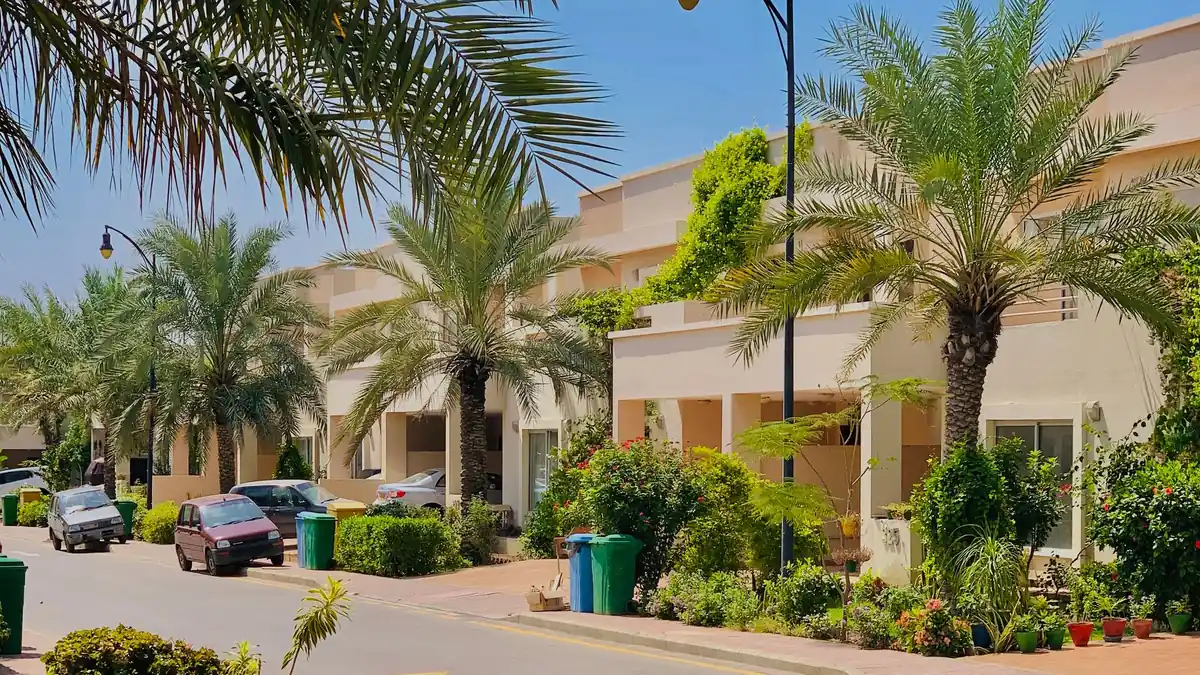
A nikah at home usually goes wrong at the gate, not in the drawing room. The house can seat forty people on floor cushions and borrowed chairs, but the lane outside might take six cars before someone's reversing lights are an inch from a neighbour's motorbike. The fix is simple to describe and needs a bit of discipline to carry out: make the house a drop-off only address, park the cars somewhere else, and give each group a pickup time instead of an open-ended "we'll leave whenever". Elders, the maulvi or qazi, and the bride's side get fixed collection slots. Everyone else arrives by car and driver, shared lift or a short shuttle from a nearby parking spot, and leaves the same way. Do that, and the street stays passable, the neighbours stay friendly, and the nikah starts roughly when you told people it would.
Why cars, not guests, are the real limit at a home nikah
A simple nikah ceremony at home is often chosen precisely because it is smaller: close family, a few friends, the imam or qazi, witnesses, perhaps a light meal. The guest list feels manageable. The car list rarely is.
Think about how people actually turn up to a family event in a Pakistani residential street:
- Each household tends to arrive in its own car, even when two families live five minutes apart.
- Elders are dropped at the door, and the driver then looks for somewhere to wait close by, often double-parked with the engine running.
- Overseas relatives arrive in a hired car from a hotel and the driver has nowhere to go.
- Someone brings the sweets, someone else brings extra chairs, the caterer's van appears half an hour into the ceremony.
Put those habits together and, as a rough example, forty guests could mean well over a dozen vehicles trying to reach one gate within the same half hour. In a gated block with wide roads that might be fine. In an older mohalla, a narrow lane in Rawalpindi, or a street of attached houses in Karachi, it will not be.
So before you plan anything else, do the car count honestly.
A quick way to count vehicles
- Write the guest list by household, not by name.
- Next to each household, note how they would normally travel: own car, driver, rickshaw, or lift with someone.
- Mark anyone who cannot walk more than a short distance: elders, anyone recovering from illness, parents with small children.
- Add the working vehicles: the maulvi or qazi's transport, the photographer if you have one, any food delivery, and the bride's car if she is coming from elsewhere.
That total, not the headcount, is the number your street has to absorb. If it is more than the space directly outside the house plus perhaps one or two spots along the kerb, you need a drop-off only plan.
Make the house a drop-off only address
A drop-off only wedding sounds stricter than it is. It simply means that no vehicle parks at the house during the event. Cars pull up, passengers get out, and the car moves on, either to a parking spot you have arranged or back home.
How to set it up
- Decide the drop-off point precisely. "Outside the house" is not precise. Pick the stretch of road where a car can stop without blocking the lane: beside your own gate, opposite an empty plot, or at the corner where the road widens. Take a photo of it.
- Keep the gate area clear. Ask the family not to park their own cars in front of the house on the day. It is surprising how often the host's car is the one blocking the drop-off spot.
- Put one person on the gate. A cousin or a younger family member who knows most faces is ideal. Their job is to greet, help elders out of the car, and politely wave the driver on.
- Tell guests in advance. A short message a few days before works better than a sign on the day. Something like: "Parking is very limited on our street. Please drop off at the gate and park at [the spot], or let us know and we will arrange a car."
- Keep a wheelchair or a sturdy chair near the gate for anyone who needs to sit while their companion finds the house.
The gate person matters more than any sign. Drivers will stop and wait if nobody asks them to move; a friendly "Uncle, parking is round the corner, we'll call you ten minutes before" usually does it.
Choosing a nearby parking spot and running a shuttle loop
Once the house is drop-off only, cars need somewhere to go. This is the part families tend to leave until the morning of the nikah, and it is the part that deserves a proper look a week ahead.
Where to look
- A friend's or relative's driveway nearby, if they are happy for two or three cars to use it.
- The local mosque, if it has space and the committee agrees, and as long as your timing does not clash with a prayer.
- A school or community ground that is closed on the day, with permission from whoever manages it.
- A wider main road or market parking within walking distance, keeping in mind that markets may be busy at the time you need them.
Walk from the spot to your gate yourself. If it takes longer than five or six minutes for a fit adult, it is too far for elders and too far for guests in formal shoes on an uneven lane. That is when a shuttle loop earns its place.
How a shuttle loop works
A shuttle loop is simply one or two cars with drivers running back and forth between the parking spot and your gate. Guests park, the car picks them up, drops them at the gate, and goes back. At the end, it reverses the loop.
For a home nikah, you usually do not need a large vehicle. A comfortable saloon or a family vehicle that seats six or seven is often enough, because the distance is short and each run takes only a few minutes. You can arrange the car and driver through our car and driver service for a set block of time, and tell the booking team clearly that the job is a short repeated loop rather than one journey.
A few things make the loop run smoothly:
- Give the driver both pins: the parking spot and the gate, plus the photo of the drop-off stretch.
- Name one family contact the driver can call, ideally the person managing the parking spot.
- Agree the block of time the car is needed, and what happens if the nikah runs late. Ask about waiting or extra time before the day rather than on it.
- Keep elders off the loop if you can. They should have their own door-to-door pickup, which is covered below.
If guests are staying at a hotel rather than driving themselves, the loop may not be needed at all. Our guide on planning transport between a hotel and a family home explains how to handle that leg separately.
Which option suits your street?
| Your situation | Suggested approach | Watch out for |
|---|---|---|
| Wide road, space for most cars outside | Drop-off at gate, cars park along the kerb on your side only | Blocking neighbours' gates, especially at departure |
| Narrow lane, parking spot within a 3-4 minute walk | Drop-off only; guests walk back from the parking spot | Elders and children walking in the dark afterwards |
| Narrow lane, parking spot further away | Drop-off only plus a shuttle loop | Driver waiting time if the nikah starts late |
| Gated society with guard at the entrance | Share the guest list with the guard; drop-off only inside | Guards turning away cars not on the list |
| Most guests coming from hotels | Arranged cars from the hotel, no parking needed | Everyone arriving at the same minute |
Timed pickups for elders and the maulvi or qazi
Some arrivals cannot be left to chance. If the maulvi, imam or qazi is late, nothing starts. If an elderly grandparent is stuck in a car at the end of the lane, the whole family notices. These people get fixed, confirmed pickups.
The maulvi or qazi
Many families arrange for the person conducting the nikah to be collected and dropped back. Even if he has his own transport, it is worth confirming:
- What time he needs to arrive, and how long he expects to stay.
- Whether he is coming from another engagement. In the busy wedding months, the same imam may have more than one nikah in a day, so build in a small buffer.
- Who will collect him, from where, and who will take him back.
- Whether the witnesses and the registrar or anyone handling the paperwork are travelling with him or separately.
If you are arranging his car, book it as its own journey with a clear collection time, rather than hoping a guest will fetch him on the way.
Elders and anyone with limited mobility
Treat each elder as a named pickup, not as part of the general flow.
- Collect them door to door and drop them right at the gate, not at the parking spot.
- Time their arrival early, ideally before the main wave of guests, so they can be seated before the lane fills up.
- Arrange their return separately too, often earlier than everyone else. Many elders prefer to leave soon after the meal.
- Tell the driver about mobility needs in advance: a walking frame, a folding wheelchair, a need to sit in the front seat.
For larger families where different relatives are coming from different parts of the city, the approach in our guide to coordinating several family pickup points works just as well for a small home ceremony.
Neighbours, gates and not blocking the street
Home nikah guest parking is as much about the people next door as about your own guests. Neighbours will usually be generous for a family occasion, especially if they are asked rather than surprised.
Before the day
- Speak to the immediate neighbours in person, a few days ahead. Tell them the date, the rough times, and what you have arranged for parking. Invite them if it is appropriate.
- Ask whether anyone needs to get a car out during the event, for work, a hospital visit or a school run, and keep their gate clear at those times.
- If a tent or shamiana is going up, make sure it does not take over the road. A marquee that closes the lane makes every other part of this plan harder.
- In a gated society, speak to the management or the guard office. Many societies want a guest list or vehicle numbers in advance, and some have their own rules on parking and noise.
On the day
- No double parking, even for "just five minutes". That is exactly how an ambulance or a neighbour gets stuck.
- No blocking of gates or garages, including your own, since your drop-off point depends on it.
- Keep the gate person on duty until most guests have arrived, not just for the first few cars.
- Keep noise reasonable, especially late in the evening. Loud music from parked cars and fireworks are a common source of complaints about wedding events in residential areas, as reporting from Hyderabad in The Express Tribune has described.
On that last point, aerial firing at weddings has caused injuries and deaths in Pakistan, and it has no place at a family nikah. If anyone in the extended family is known for it, have that conversation beforehand.
If there is a problem with traffic
If a car is blocking a gate and nobody can find the owner, it is easier to deal with early. Keep a list of guests' car numbers if you can, or ask the gate person to note them. In Islamabad, the Islamabad Capital Territory Police list 1915 as the traffic helpline and 15 for emergencies; other cities have their own local numbers, so check yours before the day.
Late evenings and other functions nearby
In September 2026, the federal Cabinet Division reintroduced austerity measures that, according to Dawn's report on the notification, require marriage halls and marquees to close by 10pm and call for a single dish at marriage-related functions. The report describes the rules as applying to marriage halls, marquees and commercial places where events are held, not private homes. Rules like these can change quickly and may be applied differently by province, so check the current position locally. For your plan, the practical point is that roads near halls can be busier around closing time, so allow extra time for late pickups; mention late finishes when you enquire through our weddings service.
Departure after the nikah: where home events usually fall apart
Arrivals spread themselves out naturally. Departures do not. The moment the meal is over and the last photos are taken, twenty people want to leave at once, their drivers all come back to the gate together, and the lane locks up.
Stagger the departures deliberately
- Elders leave first. Call their drivers ten or fifteen minutes before they are ready, so the car is waiting at the drop-off point, not circling.
- The maulvi or qazi next, with his car confirmed before the meal ends.
- Families with young children after that, since children tend to reach their limit early.
- Everyone else in small groups. The gate person can call the parking spot or the shuttle driver to bring cars round a few at a time.
Use the shuttle loop in reverse
If you ran a shuttle loop for arrivals, run it again for departures. Guests walk to the gate, the car takes them back to the parking spot, and they drive away from there rather than from your lane. This one change often does more to keep the street clear than anything else in the plan.
For the wider picture of guests leaving at different times, see our guide on event return transport when guests leave at different times.
Overseas relatives and hotel guests
For many families, a nikah at home is timed around relatives flying in from the UK, the Gulf or North America. They are often the ones with the least idea of how your street works, and the most luggage when they first arrive.
A few practical points:
- Do not make the home nikah their first stop from the airport if you can avoid it. A short rest at a hotel or a relative's house, followed by a separate car to the nikah, is kinder on everyone.
- Arrange their transport as part of the plan, so their driver knows about the drop-off only rule before setting off.
- Share the photo of the drop-off point with their driver, not just the address. Many residential streets have similar-looking gates, and house numbers are not always visible.
- Plan their return, including a time. Jet-lagged guests often want to leave earlier than expected.
If you are organising a wider programme with more than one function, our sister service iDrive, the network behind Pakistan Taxi, has a dedicated page for weddings and events car and driver requests.
A word on where the nikah is
Families are spread across the country, and the family home is not always in a big city. The UK Foreign, Commonwealth and Development Office advises against all travel to Balochistan, to many districts of Khyber Pakhtunkhwa including Peshawar and Swat, and to areas near the Afghan border and the Line of Control. It advises against all but essential travel to others, including Azad Jammu and Kashmir, Dera Ghazi Khan, and Sindh north of and including Nawabshah. If a family home, or the road to it, is in one of those areas, read the FCDO travel advice for Pakistan before planning any journey, and check your travel insurance position. The FCDO's safety and security guidance also notes that local driving standards are erratic, especially at night, which is one more reason to plan late departures carefully.
A one-page transport checklist for your home nikah
Print this, or share it with whoever is managing the gate.
One week before
- [ ] Guest list written by household, with the likely number of cars.
- [ ] Drop-off point chosen and photographed.
- [ ] Parking spot agreed, with permission if it belongs to someone else.
- [ ] Neighbours spoken to, including anyone who needs their gate clear.
- [ ] Society management or guard office informed, if you live in a gated block.
- [ ] Maulvi or qazi transport confirmed, with arrival and return times.
- [ ] Elders' pickups listed by name, address and time.
- [ ] Car and driver arranged for any shuttle loop, with a clear block of time.
On the day
- [ ] Host's own cars moved away from the gate.
- [ ] Gate person briefed, with a list of elders and their drivers' numbers.
- [ ] Drop-off point kept clear for the bride's arrival and the rukhsati.
- [ ] Departures called in order: elders, maulvi or qazi, families with children, everyone else.
Planning your journeys with us
If you would like help with the cars, you can plan your journey with Pakistan Taxi (planned link) and tell us about the home nikah: the address, the parking spot, the pickups for elders and the maulvi or qazi, and the times you have in mind. Our team will come back to you about what can be arranged. Nothing is confirmed until you have heard back from us, so it is worth getting in touch well before the day, particularly during the busy wedding months.