
If you are looking at Peshawar rent a car with driver options for a day around the Peshawar Museum and the old city, start with the safety position rather than the itinerary. The UK Foreign, Commonwealth & Development Office (FCDO) currently advises against all travel to Peshawar, including the city itself, and the US State Department tells its citizens not to travel to Khyber Pakhtunkhwa province because of terrorism and kidnapping. The FCDO also warns that travelling against its advice could invalidate your travel insurance.
So this is not a sightseeing pitch. It is written for people who are in Peshawar anyway: families visiting relatives, guests in town for a wedding or a funeral, Pakistani residents showing an overseas cousin around the city they grew up in. If that is you, a car and driver makes a museum-and-bazaar day calmer and shorter, and the plan below keeps it that way: one museum visit in the morning, a short walk in the old city with the car waiting at an agreed point, a proper lunch and prayer break, and the car heading home before the evening build-up. If you are a British or American visitor weighing a leisure trip, the honest answer is that both governments say don't go.
Read the current travel advice before anything else
Travel advice for Pakistan changes, and Peshawar sits in the most restrictive category the FCDO uses. In the version updated on 22 September 2026, the FCDO lists Peshawar, "including the city of Peshawar", among the areas of Khyber Pakhtunkhwa it advises against all travel to. Nearby districts such as Mardan, Nowshera and Swabi are in the "all but essential travel" category instead.
The FCDO's safety and security page for Pakistan also names Peshawar among cities that have suffered regular terrorist attacks, lists places of worship, shopping areas, hotels, restaurants and popular tourist sites among possible targets, and suggests limiting movements on Friday afternoons. It asks visitors to be cautious about any public event, from protests and rallies to religious gatherings, and warns that during unrest major roads in and around cities may be shut and mobile data cut without warning.
What that means in practice for a day out:
- Check the advice on the morning you go, not the week before.
- Tell your insurer where you are going; you may be uncovered for the whole day.
- Ask your family about the local picture that week: closed roads, security presence, planned rallies.
- Keep the day short and low-profile, with fewer stops and less time in crowds.
- Avoid Fridays, particularly the afternoon, and any date with a known political or religious gathering.
If you are the relative planning the day for a visitor, share the advice page with them so the decision is theirs. Coming in from the capital? Our Islamabad to Peshawar travel checks cover the questions to settle before the journey itself.
Peshawar rent a car with driver: why it suits this day
A museum-and-bazaar day in Peshawar is awkward without your own vehicle for two reasons.
First, the two halves of the day are in different parts of the city. The Peshawar Museum occupies the old Victoria Hall, where it opened in 1907, west of the walled city; going by the coordinates on Wikipedia, it is roughly a kilometre from Qissa Khwani in a straight line, and further by road. Qissa Khwani, Sethi Mohallah and the Mahabat Khan Mosque are inside the old walled city, the Andar Shehr. On a hot day, with older relatives or small children, that gap is a drive, not a stroll, and you want it to be the same vehicle both ways so you are not looking for a ride in a crowded bazaar at the end of the afternoon.
Second, the old city is a place of narrow lanes. Peshawar was enclosed by a wall with sixteen gates until the mid-1950s, and the street pattern inside still reflects that. Cars can reach the edges and some main roads; they cannot follow you into most lanes. A driver who waits at a known point, with elderly parents or children in the group, solves the "how do we get out" problem before it becomes one.
This is not a full Peshawar city tour by car. It is two areas, done slowly, with the vehicle as your fixed point.
Morning: the Peshawar Museum first
Start with the museum. It is indoors, it is the part of the day that needs the most concentration, and doing it first means you meet the old city with a sense of what you are looking at.
What is inside
The hall was named in memory of Queen Victoria, and the building mixes British, Mughal, Buddhist and Hindu architectural elements. The collection runs to roughly 14,000 objects according to the museum's Wikipedia entry, and it is best known for Gandhara-period Buddhist sculpture. There is also a coin collection of more than 8,000 pieces, Mughal-era bronze and silver work with calligraphy, and ethnological displays from Khyber Pakhtunkhwa, including Kalash objects. The museum is run by the Khyber Pakhtunkhwa government.
Agree in the car which rooms matter most to whom, so nobody spends an hour waiting in a corridor.
Peshawar Museum timings: confirm on the day
Peshawar Museum timings are set by the provincial authorities that run it, and they can shift with the season, public holidays, Ramadan hours and security decisions. We could not verify a current published timetable, so we are not printing one. Hours shown on map apps and older listings may be out of date.
How to handle it:
- Ask a relative or your host to phone the museum the day before, or the morning of the visit.
- Ask specifically about the day of the week you plan to go, whether any galleries are closed, and whether there is a separate charge for foreign visitors or for photography.
- Plan to arrive near opening time. The building is cooler and quieter in the morning, and you keep the rest of the day flexible.
A sensible start
Build the morning backwards from the museum's actual opening time. As an example only: if the museum opened at 9:00, you might be collected at 8:15 from a family home in a nearby neighbourhood, allowing for traffic and for a security check at the entrance. Tell the driver the collection time, the address with a landmark, and one phone number that will definitely answer.
Allow around two hours inside if you want to see the main galleries without hurrying. Less with young children; more for a Gandhara enthusiast.
Be ready for a bag check at the entrance, as at many public buildings. Carry your ID (passport or CNIC/NICOP) and keep bags small so any check is quick.
Midday: moving from the museum into the old city
After the museum, the driver takes you from the museum towards the walled city. This is the stage where the day can go wrong if nobody has agreed where the car will stop.
Peshawar old city parking: agree the drop point in advance
We found no official visitor car park that serves Qissa Khwani, Sethi Mohallah and the Mahabat Khan Mosque together, and space at the edge of busy bazaars is limited. The realistic arrangement is:
- Drop-off point: the driver sets you down on a road the car can actually reach, as close as sensible to your first stop.
- Waiting point: the driver then either waits nearby, parks where they know it is permitted, or moves away and returns when you call. Local drivers usually know which option works on a given day.
- Pick-up point: agree this before you step out. It may be the same as the drop-off, or it may be a different, easier spot on the far side of the area you are walking through.
Save the pick-up point, with a landmark, in your family group chat so anyone who splits off knows it and the driver's number.
Ask the driver directly: "Where will you wait, and how long will it take you to get back to us if I call?" If it is ten minutes or more because of traffic, plan to call early.
The old city on foot: Qissa Khwani, Sethi Mohallah and Mahabat Khan Mosque
The old city is where the day earns its reputation. It is also where the FCDO's warning about shopping areas and public gatherings applies most directly, so keep the walk short and purposeful. Two hours on foot is plenty for most families; you do not need to see everything.
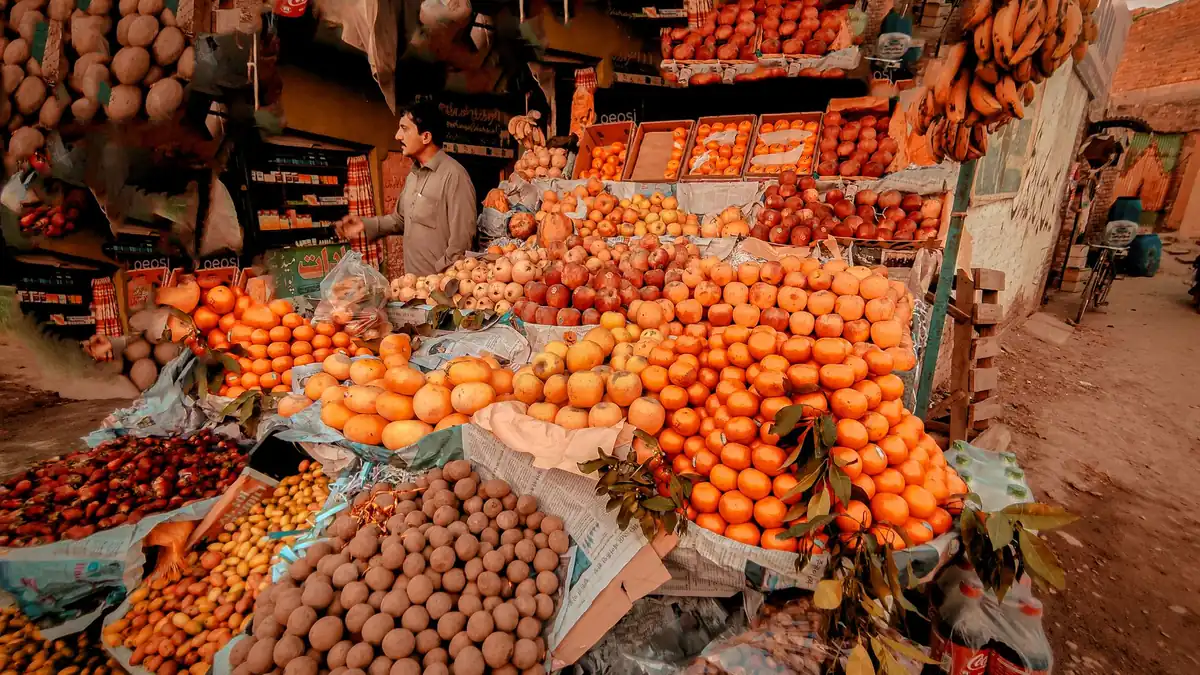
Qissa Khwani Bazaar visit
The name means "storytellers' market" in Pashto and Urdu, and visitors once called it the Piccadilly of Central Asia. The bazaar is still known for its chai and qehwa houses, and it keeps some older timber-fronted buildings. It is also a place with a hard history: on 23 April 1930, British Indian Army troops fired on anti-colonial protesters here, and the bazaar was bombed again in 2010 and 2013, as recorded in the Qissa Khwani Bazaar entry.
A Qissa Khwani Bazaar visit works best as a slow walk and one sit-down stop for tea, rather than a shopping expedition. Looking for an ancestral street or house? Bring a relative who knows the way.
Sethi Mohallah and Sethi House
The Sethi merchant family built a row of havelis in the walled city between the early 1800s and 1910. Seven of the original twelve survive, with some modifications: carved wooden doors and balconies, painted ceilings, mirror work, stained glass and cool basement rooms (tehkhanas). The Sethi Mohallah entry notes that the provincial government bought one house and that some are open to visitors.
Opening arrangements for the houses that admit visitors are, again, not something we could confirm from an official timetable. Ask your host to check on the day. If they are closed, the lanes around them still show the architecture from outside, and a slower walk past the doorways is its own reward.
Sethi Mohallah sits near the Ghanta Ghar clock tower and the Gor Khatri complex. Gor Khatri is a walled compound with a long layered history, from Buddhist-era remains through a Mughal caravanserai created by Jahanara Begum to a Shiva temple built in the Sikh period, as described on the Gor Khatri entry. If your group has energy left and the site is open, it pairs naturally with Sethi Mohallah.
Mahabat Khan Mosque
The Mahabat Khan Mosque dates from the 1660s and is named after the Mughal governor of Peshawar of that period. Its white façade, three domes and minarets rise above the jewellers' bazaar that crowds up against it. It was built on what was historically the highest point in the old city.
This is a working mosque. Plan your visit outside prayer times, dress modestly (long sleeves and trousers or a long skirt; women should carry a scarf), take shoes off where indicated and ask before photographing people. Non-Muslim visitors should ask at the entrance whether and when they may enter. Avoid Friday entirely, both for congregational prayer and because of the FCDO's advice about Friday afternoons.
Which order to walk them in
There is no single right order, but it helps to finish near your pick-up point. Two sensible patterns, each an example to adapt with your driver:
| Plan | Order on foot | Suits | Watch for |
|---|---|---|---|
| Mosque first | Mahabat Khan Mosque, then Qissa Khwani for tea, then Sethi Mohallah | Groups who want the mosque visited early, before the midday prayer | Tighter timing if the museum ran long |
| Bazaar first | Qissa Khwani for tea, Sethi Mohallah and Ghanta Ghar, then Mahabat Khan Mosque | Families who want to rest early after the museum | Aim to leave the mosque before the afternoon prayer crowd |
| Short version | Qissa Khwani only, with tea, then back to the car | Elderly relatives, young children, hot weather | Keeps time in crowds to a minimum |
The short version is not a compromise. On a hot day, or a day when the local news is unsettled, it is the right plan.
Lunch and prayer breaks belong in the plan
Prayer. Zuhr falls around midday and Asr in the afternoon; the exact times change through the year, so check a local timetable for the date. Decide where your group will pray, and remember your driver will want to pray too; build that into the waiting plan.
Lunch. You have two broad options:
- Eat in the old city at a place your family trusts. Close to the bazaars, but longer in a busy area.
- Return to the car and eat elsewhere, back near the museum or closer to home. Less time in the crowded core, and a proper rest for elderly relatives.
Either way, tell the driver the lunch plan so they can decide where to wait and when to eat themselves.
Heat. Peshawar summers are long and very hot, with the average maximum in the hottest month above 40 °C and a recorded high of 50 °C in June 1995. In summer, do the walking before lunch, keep water in the car, and cut the afternoon short without guilt. The cooler months are far more comfortable for time on foot.
Getting back before the evening build-up
Plan to be back in the car by mid-afternoon. Tired children and elderly relatives are much easier to manage in a car at 3:30 than on a pavement at 5:30, the approach roads get harder as the working day ends, and the FCDO's guidance is to reduce time in crowded places. If you are heading back to Islamabad the same day, an earlier start home also gives you more daylight on the road.
The city's main east–west corridor follows the Grand Trunk Road, which also carries the Peshawar BRT. Your driver will know whether GT Road or a parallel route is quicker at that hour; tell them in the morning if you must be home by a fixed time.
A simple timetable to adapt
This is an illustration of how the pieces fit, not a promise of timings. Real times depend on the museum's hours that day, traffic, the season and your group.
| Time (example) | What happens | Car and driver |
|---|---|---|
| 8:15 | Collection from home | Driver arrives, confirms the plan and phone numbers |
| 9:00–11:00 | Peshawar Museum | Driver waits near the museum |
| 11:00–11:30 | Drive from the museum to the old city | Drop at the agreed point |
| 11:30–13:15 | On foot: mosque, tea at Qissa Khwani, Sethi Mohallah | Driver waits or returns on call |
| 13:15–14:30 | Prayer and lunch | Driver's own break |
| 14:30–15:30 | Short second walk, or straight back to the car | Pick-up at the agreed point |
| 15:30 onwards | Drive home | Heading off before the evening build-up |
If the museum opens later, or the group is slow in the morning, drop a stop rather than squeezing everything in. The day works because it is unhurried.
What to tell the operator when you arrange the car
A rent-a-car listing gives a vehicle type and a price. It rarely says whether the driver knows the old city or how waiting is handled. Put the details in your request so the operator can answer honestly.
Include:
- Date, collection time and the latest time you need to be home.
- Address with a landmark, and a local number that will answer.
- Passengers: adults, children, and anyone who needs help with steps or a wheelchair.
- Stops in order, marked fixed or optional.
- Waiting: at the museum and lunch, and collection from an agreed old-city point.
- Hours, and how extra time is approved and charged.
- Vehicle size, with room for a pushchair or walking frame if needed.
- Language: Pashto, Urdu, English, or a mix.
Our guide to what an hourly chauffeur duty sheet should include has a template for times, changes and cost approval that fits this kind of day well.
With Pakistan Taxi, you send those details through the journey planner and the team comes back to you. Nothing is confirmed until an operator has agreed the duty, the vehicle and the price with you directly, and availability in Peshawar will depend on the date and on the current security picture. You can read how our car and driver service works before you start.
If you are arranging this for a company visitor, or you want a managed chauffeur account across several cities, iDrive, the network behind Pakistan Taxi, handles chauffeur services for business and corporate travel.
A pre-day checklist
Run through this the evening before:
- [ ] Checked the FCDO Pakistan advice again, and your insurer knows your plans
- [ ] Museum opening confirmed for tomorrow by phone
- [ ] Driver's name, number and vehicle registration saved in everyone's phone
- [ ] Old-city drop-off and pick-up points agreed, with landmarks
- [ ] Prayer times and lunch plan agreed, and shared with the driver
- [ ] Water, scarves, small cash, and ID for every adult (passport, CNIC or NICOP)
- [ ] A fixed "we leave by" time, and a fallback plan if you skip the old city
The fallback matters most. If the news is unsettled, if a demonstration is planned, or if your relatives tell you to stay away from the bazaars that day, do the museum and go home. Or skip the day entirely. Nothing in the old city is worth pushing on for.
If the family trip continues from Pakistan to Makkah and Madinah for Umrah, our sister company Hajj Umrah Taxi can help you plan a private multi-stop pilgrim journey in Saudi Arabia.
When you are ready, plan your Peshawar journey (planned link) with the details above, and we will tell you honestly what we can arrange for your date.