
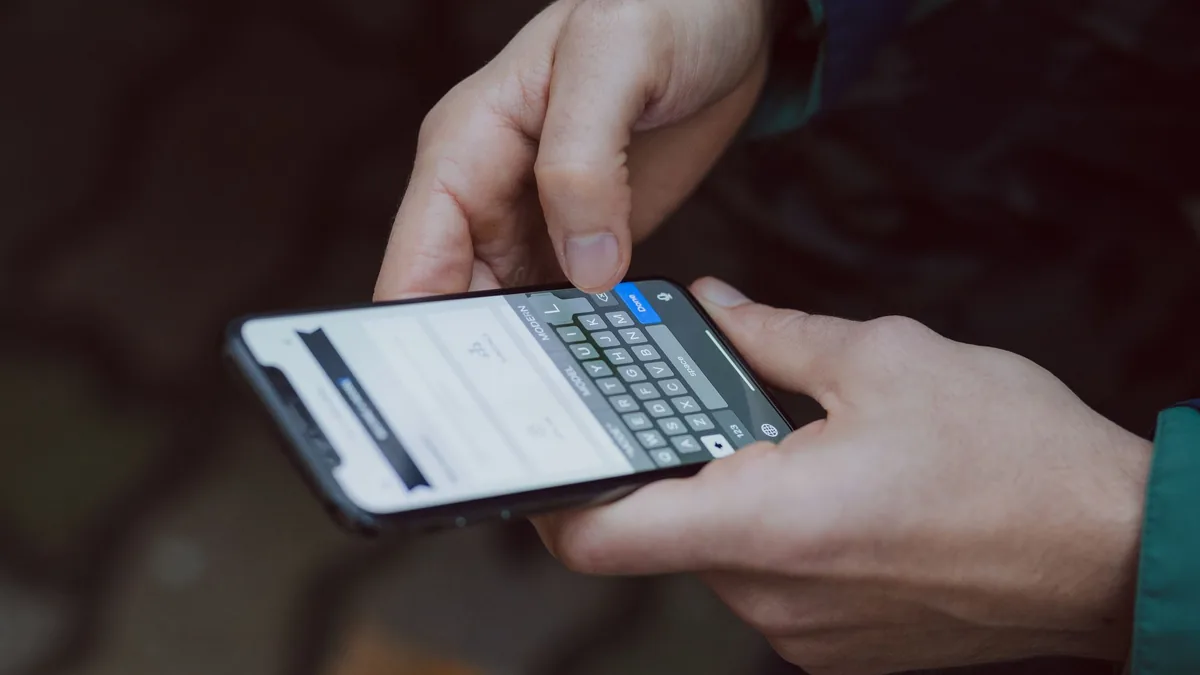
The best eta message to family is short, sent once, and answers four questions before anyone has to ask: who is in the car, what car is it, which way are you coming, and roughly when will you be at the door. Send it the moment the car pulls away, to one person at the receiving house rather than to the whole extended family, and tell that person when your next update will come. That single message replaces the usual chain of "have you left?", "where are you now?" and "which car should we look for?" calls that drain your battery and distract the driver.
Why one clear message beats ten phone calls
Anyone who has landed at Islamabad, Lahore or Karachi and then driven to a relative's house knows the pattern. An aunt rings to ask whether you have landed. A cousin rings to ask whether you have left the airport. Someone else rings to ask which road you are taking, because they have heard there is traffic near the chowk. By the time you arrive, the phone has been ringing for an hour and nobody at home has a clear picture.
The problem is not that people care. It is that no one has been given the information in one place. A good departure message fixes that because it:
- gives the household one version of the facts, not five slightly different ones
- names a single point person so relatives ask them, not you
- sets an expectation for the next update, so silence does not read as a problem
- lets the driver concentrate on the road instead of fielding calls on speaker
If you are travelling late at night, pair this message with the wider plan in our guide to a contact plan for arriving in Pakistan late at night. The message below is the part you send once the wheels are actually turning.
A copy-ready ETA message to family
Copy this into your notes app before you fly, fill in the fixed parts at home, and complete the rest in the car. It is written to be read quickly on a phone screen by someone who may be busy in the kitchen.
Leaving now.
From: [airport / hotel / city]
To: [house name or street, area]
Travelling: [names, e.g. me, Ammi and two children]
Car: [colour, make and model], plate ending [last 3-4 characters]
Driver: [first name]
Route: [main road or motorway, e.g. "via the motorway, then the ring road"]
Expected at the door: around [time], give or take [30/60] minutes
Stops planned: [e.g. one short stop for prayer and tea]
Next update: when we [leave the motorway / reach the city / are 20 minutes away]
Please be the person everyone asks: [name of point person]
That is the whole thing. It fits on one screen, and each line answers a question someone at home would otherwise ring to ask.
A filled-in example
Here is how it might look for a hypothetical family arriving at Lahore and heading to a relative's house. The times and names are an example only, not a prediction for your journey.
Leaving now.
From: Lahore airport
To: Khala's house, Model Town
Travelling: me, Ammi, Sana and Bilal
Car: white Toyota Corolla, plate ending 482
Driver: Imran
Route: city main roads, no motorway
Expected at the door: around 11:15pm, give or take 30 minutes
Stops planned: none, straight home
Next update: when we are 20 minutes away
Please be the person everyone asks: Faisal bhai
Notice what is missing. There is no full phone number for the driver, no full address pasted into a family group of forty people, and no passport or flight details. None of that helps the household greet you at the gate.
Short versions for Urdu and mixed-language households
Many families will read a message faster in Roman Urdu or a mix of English and Urdu. Keep the structure identical and simply translate the labels, for example "Nikal gaye hain", "Gaari", "Driver ka naam", "Pohanchne ka andaza". The important thing is that the car description, the arrival window and the name of the point person survive translation unchanged.
Driver and car details to share, and when to hold back
The car description is the most useful line in the message. Whoever waits outside needs to recognise the vehicle at night, in a lane lined with parked cars, and possibly in rain. Colour, make and model, plus the last few characters of the plate, are usually enough to do that.
Here is a simple way to decide what goes where:
| Detail | Send to the point person? | Send to a large family group? | Why |
|---|---|---|---|
| Car colour, make and model | Yes | Yes | Helps anyone at the gate spot the car |
| Last 3-4 characters of the plate | Yes | Usually fine | Enough to confirm the right car |
| Full registration plate | Yes, if they want it | Not needed | Useful for one person if something goes wrong |
| Driver's first name | Yes | Yes | So the household can greet the right person |
| Driver's phone number | Only if you agree it with the operator | No | It is the driver's personal data and a distraction while driving |
| Your live location | Optional, to one person | Rarely | Shows where you are without constant calls |
| Your flight number and passport details | No | No | Nobody at the house needs them |
The driver's details deserve a moment's thought. Drivers are working people, and their phone number is their own personal information. If the household genuinely needs a second contact route, for example because your phone battery is low, ask the operator how they prefer that to be handled rather than passing the number around. When you are arranging an intercity journey for relatives in another city, agree in advance who the operator should contact if plans change, so the driver is not juggling calls from three people.
Why the plate matters more than people think
At a busy arrivals area, several white saloons can look identical. The same is true at the other end in a residential street. Asking the person at home to check the plate before opening a gate for an unfamiliar car is a sensible habit, not an insult to the driver. It is the same reason the UK Foreign, Commonwealth & Development Office tells visitors in its Pakistan safety and security advice to use taxis only from reputable, licensed companies where you call for the car and the operator contacts the driver, rather than hailing street taxis. Knowing exactly which car you are in, and letting one trusted person know too, fits that approach.
Building an arrival time that holds up
The weakest line in most messages is the estimated arrival time for relatives waiting at home. "Reaching in 20 minutes" sent from an airport car park is optimistic in almost any Pakistani city. A realistic estimate takes three things into account.
- The base drive. Use a maps app or ask the driver how long the drive usually takes at this time of day. Drivers who do the airport run regularly tend to know the evening pinch points better than any app.
- Known delays. Rush hour, school runs, wedding season traffic outside marriage halls, road works, and weather, including winter fog. If visibility is poor, expect the driver to slow down or pick a different road, and let the household know.
- Stops. Prayer, a tea break, a pharmacy, picking up another relative. Each stop is rarely "just five minutes" once everyone gets out of the car.
Then send a window rather than a single time. "Around 11:15pm, give or take 30 minutes" is far more useful than "11:15pm", because a household that expected 11:15 starts worrying at 11:20. For longer journeys between cities, give a wider window and mention the planned breaks. If you are unsure how to plan those, our note on asking for breaks and stops on an intercity journey explains how to agree them with the booking team before you set off.
Rough windows to start from
These are rules of thumb, not promises, and your driver's local knowledge should override them:
- Short city drive at a quiet hour: add 15 minutes to the base time.
- City drive at peak time or on a wedding night: add 30 to 45 minutes.
- Intercity drive with one planned stop: add the length of the stop plus a further 30 to 60 minutes.
- Anything in fog, heavy rain or a public holiday: give a wide window and promise updates instead of a firm time.
The message if the journey runs late
Delays happen. The damage comes from silence, not from the delay itself. A household that has been told "next update when we leave the motorway" will wait calmly for that update. A household that hears nothing for an hour past the promised time starts ringing everyone.
Send a delay update when either of these is true:
- the new arrival time is more than about 30 minutes later than your original window, or
- you have missed the checkpoint you promised to update from.
Keep it as short as the first message:
Running late.
Now near: [place]
Reason: [traffic / fog / stopped for prayer / picked up Chacha]
New time at the door: around [time]
All fine. Next update: [checkpoint]
The words "All fine" matter more than they look. Without them, a late message can read as bad news. If something is genuinely wrong, say so plainly and say what you need, for example "car has a flat tyre, driver is changing it, no help needed" or "please ask Faisal bhai to call me".
When the signal drops
Signal drops on any long drive, and in Pakistan it can also be switched off deliberately. The FCDO notes that during periods of unrest, mobile data and internet connectivity may be cut without warning and major roads in and around cities may be shut or blocked. Plan for that:
- Tell the point person in the first message that a gap in updates may just mean no signal.
- Agree a "no news" rule, for example: if there is no update 45 minutes after the promised checkpoint, the point person calls once, then waits another 30 minutes before worrying.
- If data is down but calls work, a single short voice call to the point person does the job of a message.
- Keep the operator's contact number saved on your phone and written on paper, so you can reach them even if the app you booked through is not loading.
Who waits at the gate on arrival
The last hundred metres are where many arrivals go wrong. The car turns into the right street, but nobody has come outside, the gate is locked, the house number is hidden behind a parked van, and the driver circles the block.
Decide in advance who waits at the gate on arrival, and make it the same person as the point person where possible. That person should:
- Watch for the "20 minutes away" update and put their shoes on.
- Step outside or send a younger family member to the gate about ten minutes before the car is due.
- Check the car against the description and plate you sent before opening the gate.
- Guide the driver to a safe spot to unload, especially if the lane is narrow or there is a drain along the edge.
- Organise help with luggage so the driver is not left waiting while relatives greet each other.
If the house is hard to find, add a landmark to your first message, such as "gate opposite the mosque" or "second lane after the petrol pump", or send a pinned location once to the point person.
The point person does not have to be the most senior relative. Pick whoever will have a charged phone on them and can reach the gate in time, often a cousin or sibling, and tell the elders who it is.
Keeping personal data to what is needed
It is tempting to forward the full booking confirmation to the family WhatsApp group "just in case". Resist it. Booking confirmations can contain names, phone numbers, email addresses, payment references and flight numbers that nobody at the house needs, and family groups often include dozens of people and are forwarded onwards.
A useful test comes from the UK Information Commissioner's Office, which describes the principle of data minimisation as keeping personal data "adequate, relevant and limited to what is necessary". The ICO guidance is written for organisations, but the same thinking works well for a family message. Ask of each detail: does the person waiting for me need this to greet me safely? If not, leave it out.
In practice that means:
- send the car description and driver's first name, not the booking confirmation
- send your live location to one person, not the whole group
- stop sharing live location once you are inside the house
- never share passport numbers, CNIC or NICOP numbers or payment details in a family chat
End-to-end encryption on messaging apps protects messages in transit, and WhatsApp announced in April 2016 that it had added end-to-end encryption to every form of communication, as recorded on Wikipedia's WhatsApp entry. That does not stop a relative screenshotting or forwarding what you sent, so the safest detail is still the one you never shared.
If something goes wrong on the road
Most journeys end with nothing more dramatic than a late dinner. Still, the point person should know what to do if a message says something is genuinely wrong, rather than working it out in a panic.
The FCDO's Pakistan emergency contacts page lists 15 for police and 1122 for ambulance and fire. Rescue 1122 now covers almost every region of the country, with Islamabad's service running as CARES 1122. For British nationals, the FCDO also runs a 24-hour line in London, 020 7008 5000, that relatives in the UK can call about someone abroad.
Add a line to your planning notes, not to the family group message, with:
- the booking operator's number
- 15 and 1122
- your embassy or high commission contact if you are a foreign national
- the name of a relative in the destination city who can drive out if needed
One more point for the planning notes. The FCDO's Pakistan travel advice advises against all travel to the whole of Balochistan, most of Khyber Pakhtunkhwa including Peshawar, and the Karakoram Highway between Mansehra and Chilas, and against all but essential travel to other areas, including Sindh north of and including Nawabshah, and Azad Jammu and Kashmir. A well-written message cannot make an advised-against journey safe. If your route touches any of those areas, read the current advice for that exact route before planning the trip at all.
Adapting the message for different journeys
The template works for most trips, but a few situations benefit from small changes.
Airport to home
This is the classic case. Send the message once you are in the car, not while you are still waiting for bags, because the time spent at the carousel and customs is unpredictable. If someone else booked the ride for you, the booker is often the natural point person.
Intercity journeys
On a long drive, use two or three checkpoints instead of one: leaving the city, the halfway stop, and 20 minutes from the door. That gives the household a steady rhythm of reassurance without a message every few kilometres.
Wedding days and events
On a wedding day, several cars may be heading to the same venue, and each one should have its own point person on the receiving side. A single coordinator can then collect those updates. Keep the messages about arrival logistics in a separate chat from the main wedding group, which will be busy with photos and greetings.
Pilgrims flying out to Saudi Arabia
Families often use the same approach when relatives set off for Umrah, when the "leaving now" message goes from the house to the airport, and a second one follows from Jeddah or Madinah. If your relatives are travelling on to Saudi Arabia, our sister company Pilgrim Taxi has a guide to sharing one final pickup message in the family group chat for the ground journey at the other end.
Before you set off: a two-minute checklist
Run through this while the luggage is being loaded:
- Point person chosen and told they are the point person.
- Car colour, make, model and plate ending noted.
- Driver's first name noted.
- Arrival window worked out, with stops included.
- Next update checkpoint decided.
- Landmark or pinned location ready for the house.
- Phone charged, or a power bank within reach.
- Operator's number saved on phone and written on paper.
- Nothing sensitive, such as passport or payment details, in the message.
If you would like to see how the arrivals side works at the airport end, iDrive, the network behind Pakistan Taxi, explains how the arrivals pickup works when meeting family at Islamabad or Sialkot airport.
Planning the journey itself
The message is only as good as the plan behind it. When you use our journey planner (planned link) to describe a trip, include the pickup point, the address at the other end, passenger numbers, luggage and any stops you want. The team reviews each enquiry and comes back to you with options and details; nothing is confirmed until you have agreed them. If you have questions about how that works, the help and journey planning page (planned link) is the place to start.