
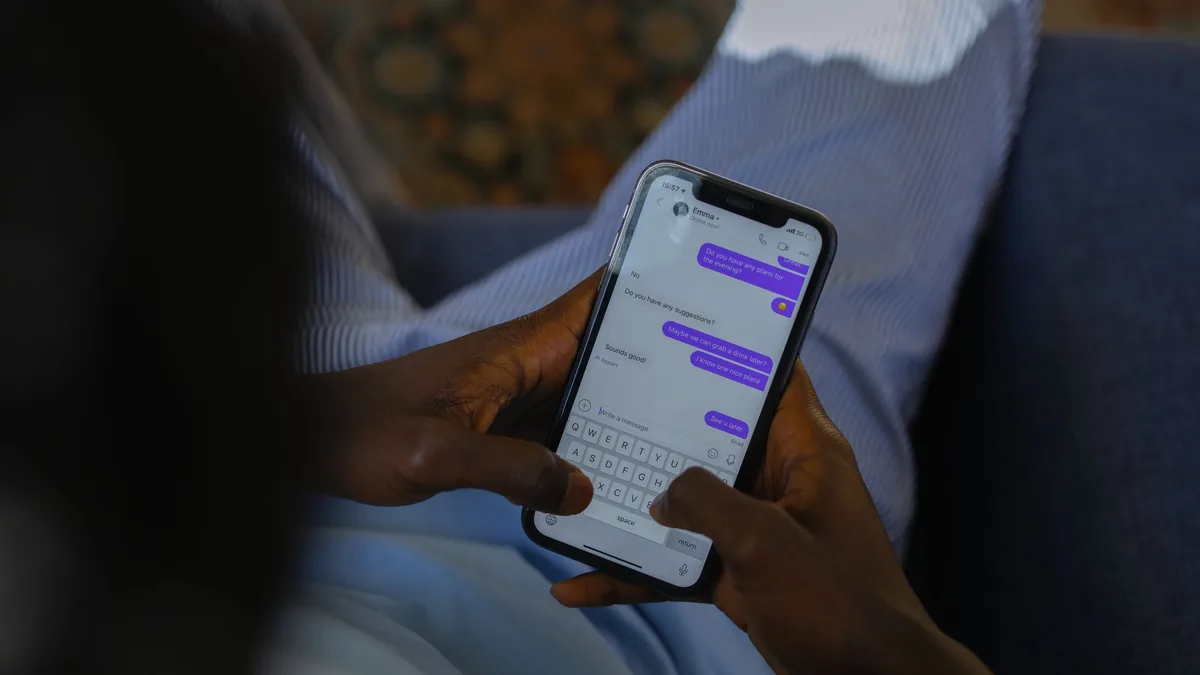
A WhatsApp group for a family trip only works as a safety net if it has three things: one person in charge, one pinned plan everyone reads from, and one short "reached" message that every car or traveller sends the moment they arrive. Add a rule for who chases a missing message and after how long, and the chat stops being a stream of forwards and becomes something you can actually rely on at 11pm when the last car is still on the motorway.
Below: a pinned-plan template, a check-in format, a follow-up ladder with sensible waiting times, and a way to close the day so nobody goes to sleep wondering whether Phuppo's car made it home. It suits families spread across Pakistan for a wedding or a round of visits, including those organising from the UK, the Gulf or North America.
Why the usual family chat fails as an arrival check
Most families already have a group. The trouble is that it was built for chatting, not for confirming.
Picture the evening after a mehndi: forty people, photos from the stage, a voice note from an uncle. Somewhere in that flood, a cousin types "home" at 12:40am. Her own home or her in-laws'? Was the grandparents' car behind her or ahead? Nobody knows, because nobody was watching for it.
Three things go wrong again and again:
- Nobody owns the question. Everyone assumes someone else is keeping track.
- Messages mean different things. "Reached", "almost there", "we're here" and a thumbs-up get treated as the same signal.
- The important message drowns. A single line of text is no match for sixty wedding photos.
The fix is not a new app, just a little structure inside the one you already use.
Setting up the WhatsApp group for a family trip
Make a fresh group for the trip rather than repurposing the long-running family chat. A new group has a clear start and end, a clean message history, and only the people who are actually travelling. WhatsApp groups can hold up to 1,000 people according to WhatsApp's own groups page, so size is never the problem. Focus is.
Name it so it is obvious on a phone lock screen: "Lahore wedding travel 12-15 Dec" beats "Khan family (new)".
Choose one family trip group admin, and a deputy
The family trip group admin is the person who holds the plan and watches for check-ins. Pick someone who:
- Will be awake and near a phone during the evening journeys.
- Is not the one driving, or the bride's mother, or anyone else with a full day of their own.
- Is comfortable asking people, politely but repeatedly, "Have you reached?"
Then pick a deputy in a different city or time zone. An organiser in Manchester or Dubai can make a very good deputy, because they are not at the event and have fewer distractions. Brief the deputy on exactly when they take over, for example "from 1am Pakistan time, or if I've gone quiet for 30 minutes".
WhatsApp lets group admins choose who can add and remove people, as its groups page explains. Make both of you admins and keep that control with the two of you, so the group does not quietly swell with friends-of-friends halfway through the week.
Write the pinned trip plan in the group
WhatsApp's messaging features page says you can pin up to three messages at the top of a chat, and that a pinned message stays as a banner for 24 hours, 7 days or 30 days. For a trip of a week or so, choose 7 days so the plan does not vanish mid-trip, or 30 days if the stay is longer.
Use the three pins like this:
- The trip plan (the master message, edited or re-posted when it changes).
- Today's movements (who is going where, today only).
- The check-in rule (the format and the follow-up times, below).
A pinned trip plan in the group should fit on one phone screen. Here is a template you can copy and adapt:
TRIP PLAN (pinned)
Admin: Sana (Lahore). Deputy: Imran (London), takes over after 1am PKT.
Base addresses: Nani's house, Model Town (full address and a landmark). Hotel for UK guests (name and road).
Events: Mehndi Thu 7pm, Baraat Fri 8pm, Walima Sun 1pm (venue names and gate numbers).
Cars: Car A (Uncle Tariq drives), Car B (booked vehicle, see below), Car C (Asif drives).
Check-in rule: see pin 3. Reply "R" plus car letter when you arrive.
Emergencies in Pakistan: Rescue 1122, Police 15.
A few notes on that template:
- Give every car a letter. "Car B has reached" is far easier to track than "the Honda with Ammi and the kids".
- Write full addresses once, here. The group should never need to ask "which house?" at night.
- Put the emergency numbers in the pin. The UK government's Pakistan travel advice on getting help lists 1122 for ambulance and fire and 15 for police. Relatives flying in from abroad may not know them.
If you are also shaping the route itself, with pickups from several homes and stops on the way, our guide to planning a multi-stop family journey covers the order of stops and the details a driver needs.
Settings worth checking on day one
Open the group info screen and go through the settings with the trip in mind. Menus shift between app versions and between Android and iPhone, so check what your own phone shows rather than relying on memory. The points that matter:
- Who can add people. As above, keep this with the admins.
- Disappearing messages. WhatsApp lets you set messages to disappear after a set time. That is useful for privacy in general, but for this group, keep it off until the trip is over. You may want to scroll back and see exactly when "R-B" was posted.
The reached safely message: one format for everyone
The heart of the system is a reached safely message that looks the same every time, from every car. Short enough to type at a gate with a sleeping child on your shoulder. Clear enough that the admin can tick it off without asking a follow-up question.
Use this format:
R-[car letter] [place] [time] [headcount]
For example: "R-B Nani's house 11:52pm 5/5". That tells the admin which car, where it stopped, when, and whether everyone who set off is inside.
Two more message types complete it:
- "L-B 10:40pm 5": left, with the headcount. This starts the clock.
- "D-B 20 min": delayed, with the new estimate. This resets the clock and stops unnecessary worry.
Agree that a thumbs-up, a sticker or "almost there" does not count as reached. It sounds strict; in practice it means nobody has to interpret anything at midnight.
An arrival check-in for each car, not each person
For a family of twenty, twenty separate messages is noise. Nominate one person in each car to post the arrival check-in for each car. Usually that is the front-seat passenger, not the driver, who should not be touching a phone.
People travelling alone, older relatives in their own vehicle, or teenagers heading back to a hostel send their own messages. Treat them as a "car" of one and give them a letter too.
The admin keeps a simple tracking table, on paper or in notes on the phone:
| Car | Who is on board | Left | Expected | Reached | Status |
|---|---|---|---|---|---|
| A | Tariq, Nasreen, 2 kids | 10:15pm | 10:50pm | 10:47pm | Done |
| B | Ammi, Abbu, 3 cousins | 10:40pm | 11:45pm | 11:52pm | Done |
| C | Asif, Sadia | 10:55pm | 11:30pm | - | Chase at 12:00am |
_The names and times above are an example to show the layout._
The "Expected" column is the one people forget. Set it before the car leaves, from a realistic estimate for that time of night, and write it down. Without it, nobody knows when silence becomes a concern.
Who follows up, and after how long
A check-in system without a follow-up rule is just a hope. Decide the ladder in advance, pin it as message three, and then follow it without drama. Most missed messages turn out to be a flat phone battery or a car that stopped for chai. The ladder is there for the rare time it is something else.
The waiting times below are a suggested starting point, not a rule from any authority. Shorten them for late-night journeys, older passengers or a single traveller; lengthen them on a long intercity leg where a delay of half an hour is normal.
| Time past "Expected" with no R or D message | Who acts | What they do |
|---|---|---|
| 15 minutes | Admin | A friendly @mention in the group: "@Asif, have you reached?" |
| 30 minutes | Admin | Direct call to the nominated passenger, then to a second person in that car |
| 45 minutes | Admin | Call the driver (or, for a booked vehicle, the operator's contact number) |
| 60 minutes | Admin and deputy | Call the destination: is anyone at the house able to see the car? |
| Still no contact and real concern | Admin | Consider contacting the police (15) or, if there may have been an accident, Rescue 1122 |
Keep the calling to the admin and deputy. Ten relatives phoning the same cousin only drains her battery and blocks the line.
Why silence does not always mean trouble
Phones die. Car chargers fail. Signal drops in the gaps between towns. There is also a Pakistan-specific reason worth knowing: the UK Foreign Office's safety and security advice for Pakistan warns that during protests or civil unrest, mobile data and internet connectivity may be cut without warning, and that major roads in and around cities may be shut or blocked.
Two practical consequences for your group:
- Know a normal phone number, not just WhatsApp. If data is cut, a plain voice call or SMS may still get through where WhatsApp cannot. Put a regular mobile number for the nominated passenger in each car into the admin's contacts.
- Plan an alternative route before you need it. The same FCDO page advises having alternative routes for journeys you plan. The admin should know, roughly, what the second option would be.
On motorways, the National Highways and Motorway Police publish a travel advisory and run FM 95 radio for road users. A delayed car on the M-2 may well hear about a closure on the radio before anyone in the group does.
A note on where the trip is going
Before you build the plan, check the FCDO's main travel advice for Pakistan. It currently advises against all travel to some areas, including Balochistan and a list of districts in Khyber Pakhtunkhwa, and against all but essential travel to others, such as Azad Jammu and Kashmir. If any leg of your family trip touches those areas, a group chat is not the safety measure that matters. Read the official advice first, check what it means for your travel insurance, and decide whether the journey should happen at all.
Keep driver numbers out of the big group
It is tempting to add every driver to the family group so everyone can "just message him". Resist it.
- Privacy works both ways. A driver should not have forty strangers' numbers, and your relatives should not be sharing personal details, addresses and photos with someone they have never met.
- Drivers need one voice. When three aunties send three different pickup changes, the driver has no idea which one is real. Mixed instructions are an easy way to end up with a car waiting at the wrong gate.
- Nobody should text a driver who is driving. A busy group pinging a driver's phone is a distraction on the road.
Instead, the admin (or the person who arranged that vehicle) is the single contact for each driver or operator. Changes go through them. If you want the driver's number available in an emergency, put it in the pinned plan only as "Car B driver: via Sana", or share it privately with the one passenger responsible for that car.
For booked vehicles, the same rule applies to the operator's number. The FCDO's safety page says to use taxis only from reputable, licensed companies where you call for a taxi and the operator contacts the driver. That operator relationship works best when one family member holds it.
Muting the noise while keeping the alerts visible
Even a disciplined travel group gets busy. The goal is that everyone else can mute it without the admin missing anything.
For everyone except the admin and deputy: mute the group if you like. The pinned plan is still there when you open it. Ask people to check it before asking a question that the pin already answers.
For the admin and deputy: keep the group un-muted during travel windows, and use the tools WhatsApp already gives you:
- Inbox filters. WhatsApp's messaging page describes filters for All, Unread, Favorites and Groups. Mark the trip group as a favourite so it sits in its own short list, away from the main family chat and the forwarded good-morning messages.
- @mentions for anything that needs an answer. A message that names the person is harder to scroll past than one more line in the flood. Use them sparingly, for follow-ups only, so they keep their weight.
- Keep chatter elsewhere. The single most effective step is cultural, not technical: photos, jokes and "mashallah" replies go in the main family chat. The travel group is for L, D and R messages, changes to the plan, and questions about logistics.
Closing the loop at the end of the day
The night is not over when the last car reaches. It is over when the admin says so.
A short closing message makes the difference between people drifting off to sleep with a small worry and everyone knowing the day is done:
All cars reached. A 10:47, B 11:52, C 12:08, D 12:20. Tomorrow's pin updated. Goodnight.
Then do three quick jobs:
- Update pin 2 (today's movements) with tomorrow's plan, even if it is only "No travel before 2pm".
- Note anything that went wrong. If a car was 40 minutes late because the venue gate was closed, write the correct gate into the plan now, while everyone remembers.
- Hand over, if needed. If the admin needs a morning off, say so in the group: "Imran is admin until 12pm tomorrow."
At the end of the whole trip, post a final message, thank people, and then either archive the group or leave it for the next family event. If you do keep it, rename it and clear out the old pins so an out-of-date address never gets followed by mistake.
An example evening, start to finish
_This is a hypothetical example to show how the pieces fit together._
A family is staying across three houses in Lahore for a walima that finishes late. The admin is a cousin in Lahore; the deputy is her brother in Birmingham, where it is several hours earlier. Four cars leave the venue between 11pm and 11:40pm.
- At 10:30pm, the admin posts in the group: "Leaving soon. Cars A to D as per pin. Send L when you set off." She adds expected arrival times to her tracking table.
- Cars A, B and D send L messages as they pull out. Car C forgets. The admin spots the gap and @mentions the passenger, who replies "L-C 11:25 4".
- Car B hits traffic near a road closure and posts "D-B 25 min". The admin updates the table and does nothing else, which is exactly the point.
- By 12:15am, A, B and D have posted R messages. Car C is 15 minutes past expected. The admin @mentions, gets no answer, and at 30 minutes calls the passenger's normal mobile number. It turns out the phone battery died; the driver's phone was fine and the car was two minutes from the door.
- The admin posts the closing message, hands over to the deputy for anything overnight, and goes to bed.
Fitting booked vehicles into the same system
Many family trips mix relatives' cars with one or two booked vehicles. The system does not change: the booked vehicle becomes another car letter, with the person who arranged it as its contact, and its passengers, addresses and expected times go into the pinned plan like any other car. When departures are spread across a long evening, our guide to return transport when guests leave at different times shows how to group people into sensible waves so each car has a clear leaving time to check in against. For arrivals landing late at night, the approach in our late-night arrival contact plan fits neatly alongside the family group.
If you are planning transport for a larger party, Pakistan Taxi's group travel service is the place to start. You can describe the journeys you have in mind through Plan Your Journey (planned link): the team reviews your request and comes back to you about what could work. Nothing is confirmed until you have agreed the details. For wedding and event car-and-driver bookings, iDrive, the network behind Pakistan Taxi, also has a page on booking cars and drivers for weddings and events.