
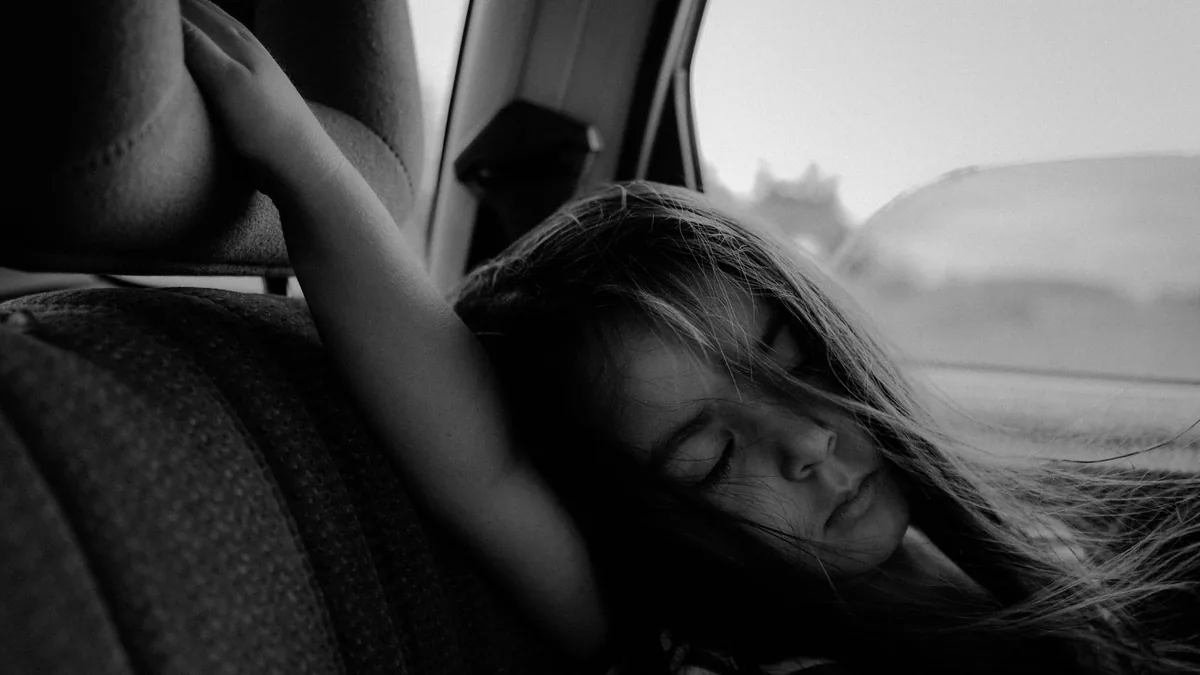
If you are travelling to Pakistan with kids and a long drive between cities sits in the middle of the trip, the flight is rarely the hard part. The car day is. It works best when you plan it around the children rather than around the map: drive legs that match naps and meals, a stop roughly every one and a half to two hours, and at least twenty to thirty minutes for each proper break. Add that break time to the journey you ask to be quoted, so the driver expects it and nobody feels rushed. Tell the booking team the ages of the children and whether you are bringing your own child seat before the car is assigned, not at the kerb. And if you have just landed, keep the first road day short, or push the long leg to the next morning.
Travelling to Pakistan with kids: why the car day needs its own plan
Adults think about intercity travel in kilometres. Children experience it as a string of small events: a sticky seat, a hungry moment, a loo that is needed now rather than at the next service area. A trip that looks simple on paper, say Islamabad to Lahore on the M-2, is a long stretch. Wikipedia's M-2 entry puts the motorway at 375 kilometres, with five service areas on each side: Sukheki, Sial, Bhera, Kallar Kahar and Chakri, on average 60 to 80 km apart.
That spacing matters. Once you pass a service area, the next one is a fair distance away, so a toilet request just after leaving one is a real problem. Build the plan around where the stops actually are, not around a vague "we'll stop when we need to".
Before anything else, check the route against official safety advice. The UK Foreign, Commonwealth & Development Office lists the areas it advises against travelling to on its Pakistan regional risks page. At the time of writing, Islamabad, Lahore, Karachi, Murree and the M-2 corridor are not in those categories, but large parts of Khyber Pakhtunkhwa, all of Balochistan, northern Sindh from Nawabshah upwards and stretches of the Karakoram Highway are. The list changes, so read it the week you travel. A family road trip is leisure travel, and it does not belong on a route the FCDO advises against.
Planning drive legs around nap and meal times
The single most useful thing you can do is decide when the children will sleep in the car, and protect that window.
Map the day in blocks, not hours
Write the day as blocks:
- Breakfast before departure. Leave fed, not with a plan to eat "on the way". A hungry toddler in the first hour sets the tone for the whole drive.
- Leg one: awake time. Use the first leg while the children are fresh. Window-watching, songs and talking work well here.
- Stop one: toilet, stretch, snack. Short and practical.
- Leg two: nap window. If your child naps after lunch, try to have this leg fall there. A sleeping child in a moving car covers ground more easily than anyone.
- Stop two: proper meal. Longer. Children eat, run around, change clothes if needed.
- Final leg: arrival buffer. Plan to arrive before the evening meltdown hour, not during it.
If the nap happens during a stop instead of during a drive, you lose the best part of the day. Most parents know their child's rhythm well enough to line this up.
Keep the evening out of it
The FCDO's Pakistan safety and security guidance describes local driving standards as erratic, especially at night, and advises care on long journeys. That is a good enough reason to plan family road days to finish in daylight. It also suits children: an arrival at six in the evening is manageable, an arrival at eleven is not.
Toilet breaks with children on the motorway: how often, and how long
Here is the honest version. With small children you will stop more than you expect, and each stop will take longer than you expect.
How often
A workable rule for a long car journey with children in Pakistan is a planned stop every 90 minutes to two hours, plus one unplanned stop you do not yet know about. For a potty-training toddler, assume shorter gaps. On the M-2, that roughly means using most of the service areas rather than skipping them, because the next one can be an hour or so of driving away.
Before each leg, ask everyone to try the toilet, even the ones who "don't need to". It saves a lot of stress twenty minutes later.
What a stop realistically takes
These are planning estimates, not rules. Your family will have its own numbers.
| Type of stop | What happens | Realistic time to allow |
|---|---|---|
| Quick toilet stop | Toilets, nappy change, back in the car | 15-20 minutes |
| Stretch and snack stop | Toilets, a walk, drinks, snack, a change of clothes if needed | 25-35 minutes |
| Meal stop | Order, wait, eat, wash hands, toilets again, settle children back in seats | 45-60 minutes |
| Prayer and meal together | Prayer, then a meal, with children in turns | 60 minutes or more |
The part people forget is re-boarding. Buckling three children back in, finding the lost shoe and handing out water can take ten minutes on its own.
What to carry for stops
- A small "stop bag" separate from the main luggage: wipes, tissues, hand sanitiser, a change of clothes per child, spare nappies, a travel potty or potty liner, and a plastic bag for wet things.
- Toilet paper or tissues of your own. Facilities vary, and it is easier to carry than to hope.
If you want to see how we suggest you phrase stop requests when you plan a journey, our guide on asking for breaks and stops on an intercity journey walks through it.
Kids car sickness on a long drive
Car sickness is common in children, and a winding road or a stuffy back seat makes it worse. The NHS guidance on motion sickness is practical and applies well to a Pakistani motorway day:
- Look straight ahead at a fixed point, such as the horizon, instead of at a phone, tablet or book.
- Avoid reading and screens during the drive if a child is prone to sickness.
- Break up long journeys for fresh air, water and a short walk.
- Avoid heavy or spicy meals shortly before or during travel.
- Distract children by talking, listening to music or singing.
The NHS also notes that dissolvable tablets are available for children and that patches are for adults and children over 10. Ask a pharmacist at home before you fly, since the right product depends on your child's age, and bring it with you. The FCDO's health advice for Pakistan warns that there are often shortages of medicine in Pakistan, so pack enough of anything your children need.
Where the child sits
The NHS suggests sitting in the front of a car, but young children belong in the back, so aim for the rear seat with the clearest view forward. In a family vehicle that often means a middle-row window seat rather than the third row. If you are bringing a child seat, mention which child is prone to sickness, so the seat can go in the best spot rather than wherever it fits last.
Keep a sick kit within reach of an adult, not in the boot: sick bags or zip bags, wipes, a towel, a spare top and a bottle of water.
Heat, snacks and water
For much of the year the plains of Punjab and Sindh are hot, and small children can overheat quickly in a car or at a sunny stop. The US CDC's Pakistan travellers' health page warns that heat-related illness can be deadly and advises eating and drinking regularly, wearing loose, lightweight clothing and limiting activity in high temperatures. On a road day that translates into a few simple habits:
- Plan stops for the shade, not the sun. Keep the midday stop short if it is very hot, and do the longer walk earlier or later.
- Dress children in light layers. Air-conditioned cars can feel cold after a hot stop, and hot again the moment the door opens.
- Carry more water than you think. Sealed bottled water for everyone, plus a refillable bottle per child for familiarity.
- Never leave a child in a parked car, even for "just a minute" at a service area.
Snacks that travel well
Pick food that does not melt, stain or crumble into the seat: plain crackers, dry cereal, bananas, apples cut in advance, dates, simple sandwiches. Keep sugary drinks and heavy fried food for after the drive rather than during it, especially for a child who gets car sick.
The CDC also advises washing hands often, especially before eating, and using an alcohol-based sanitiser when soap and water are not available. On a road day, that means sanitiser before every snack. If a child has an allergy, carry their own food and any prescribed medicine with you in the car, not in the suitcase.
Winter is different
Summer is about heat. Winter brings its own problems. The FCDO notes that air pollution is a health hazard in Pakistan, particularly from October to February, and that Punjab and Lahore are among the worst affected. For a child with asthma, that is worth discussing with your doctor before you fly, and worth checking daily while you are there. The National Highways & Motorway Police publishes travel advisories on its official website, which is worth a look on the morning you set off.
Seating, seat belts and bringing your own child seat
This is the part to settle before the trip, not on the day.
Say how many children, and how old
When you plan the journey, give the booking team:
- The number of adults and children, with each child's age.
- Which children need a child seat, a booster or nothing.
- Whether you are bringing your own seats, and how many.
- Any buggy, travel cot or bulky item that has to fit as well.
Children count as passengers. A car that is fine for four adults can be cramped for two adults, three children, two child seats and suitcases. Our sister network iDrive, the platform behind Pakistan Taxi, has a useful comparison of how many people and suitcases actually fit in common Pakistani fleet vehicles. For families, our page on family vehicles (planned link) explains what to ask for.
Bring your own seat if you can
Child seats are not something you should assume will be in the car. If your child uses one at home, the safest plan is usually to bring your own, one you know how to fit and that suits your child's weight and height. Check your airline's rules on carrying it before you fly.
When you plan the journey, say that you are bringing the seat and whether it is fitted with a seat belt or an ISOFIX-type system, so the vehicle assigned has the right belts in the right places. Ask whether every seat position has a working three-point belt. Everyone wears a belt on every leg, and a child on a lap is not a substitute for a seat.
Adding break time to the quote so nobody is rushed
A family journey planned as if it were an adult-only drive creates tension all day. The driver is watching the clock, you are hurrying the children, and every stop feels like a negotiation.
The fix is simple: include the breaks when you describe the journey.
What to write in your journey request
Instead of "Islamabad to Lahore, Saturday morning", try something closer to this example:
Two adults, three children aged 2, 5 and 8. One child seat and one booster, both our own. Pickup 8:30 am. We would like two planned stops of about 30 minutes and one longer lunch stop of about an hour. One child gets car sick, so please allow for an extra short stop if needed. Four large suitcases, one buggy.
That gives the team what they need to think about the vehicle, the timing and the driver's day. It also means the operator can tell you, before anything is confirmed, whether the plan works or needs adjusting. Pakistan Taxi's journey flow is for planning and enquiries, so treat any reply as a proposal to discuss, not a fixed fare or a guaranteed car. Our guide on what a city-to-city quote should include explains the details to compare.
A simple break-time calculator
This is an example of how to think about it, not a formula:
- Start with the normal driving time the operator gives you.
- Add 20 minutes for every planned short stop.
- Add 45 to 60 minutes for a meal stop.
- Add a 20 to 30 minute buffer for the unplanned stop.
A drive that would take an adult group a few hours can easily become a full day with young children. That is normal. Plan for it.
Travelling to Pakistan with a toddler: the jet-lag day
The first road day after landing is where most family plans go wrong.
Why the first day is hard
Pakistan Standard Time is UTC+5 and does not observe daylight saving, according to Wikipedia's Pakistan Standard Time entry. From the UK that is four hours ahead during British Summer Time and five hours ahead in winter. If your overnight flight lands in the early morning, a child's body still thinks it is the middle of the night.
The NHS guidance on jet lag lists difficulty staying awake during the day, tiredness and poor sleep as the main symptoms, and says it usually improves within a few days. It suggests moving to the new time zone's sleep schedule as quickly as you can and getting outside in daylight to help the body clock adjust.
What that means for your plan
You have two sensible choices.
Option A: rest first, drive the next day. Land, go to a hotel or a relative's house nearby, eat, take a short rest, get some daylight and aim for a normal local bedtime, then do the long drive the following morning. For a toddler this is almost always the kinder choice.
Option B: drive straight on, but short. If the family home is a moderate drive from the airport, go straight there, accept that the children will sleep in the car, and keep stops practical. This works better for older children than for toddlers.
What rarely works is landing at dawn after an overnight flight and then attempting a long intercity leg with small children the same day. If you must do it, add extra stops and extra buffer time, and leave the driving to a rested professional rather than a jet-lagged relative. Our guide on combining an airport arrival with an onward intercity journey looks at this decision in more detail.
The toddler-specific list
- Keep the same comforter, blanket and sleep routine you use at home.
- Pack a nappy bag in the cabin with enough for the flight and the car day.
- Carry a familiar cup or bottle; new ones can be refused when a child is tired.
- Expect a long sleep in the car and a lively evening afterwards. Plan dinner early.
Health checks before you fly
Road days are easier when the health admin is done at home. The FCDO advises checking the TravelHealthPro Pakistan guidance at least eight weeks before the trip for vaccine recommendations, and notes that you should provide proof of polio vaccination if a vaccination team asks. The CDC adds that a significant share of typhoid strains in Pakistan are extensively drug resistant, which is one more reason to speak to your GP or travel clinic about the children's vaccines well before departure.
Keep each child's vaccination record, a copy of any prescriptions and their regular medicines in your hand luggage, where you can reach them on the flight and in the car.
The night-before checklist
Use this the evening before a long car journey with children:
- Confirm the pickup time and meeting point with the operator, and share the lead passenger's phone number.
- Repeat the passenger list: adults, children, ages, child seats, buggy, suitcase count.
- Confirm planned stops and roughly how long each one will be.
- Pack the car bag: water, snacks, stop bag, sick kit, medicines, a light blanket, chargers.
- Check the route advice: the FCDO travel advice, and the NHMP website for motorway advisories.
- Sleep. Adults included.
If the trip continues to Saudi Arabia
Some families pair a Pakistan visit with Umrah or a stop in Jeddah. The car-day principles are the same there: shorter legs, planned breaks, and the heat taken seriously. If Jeddah is on your route, our sister company Jeddah Cabs has a guide to planning a family day out in Jeddah by taxi with kids. You can also read our own guide on family Umrah travel from Pakistan and the ground journeys involved.
Your next step
When you are ready, plan your journey with Pakistan Taxi (planned link). Include the children's ages, the seats you are bringing and the breaks you want, and the team will come back to you to talk through the plan before anything is confirmed.