
If you are flying in for a fortnight and the family list includes a land record, a bank signature, a gas bill dispute, a sofa from the bazaar and three aunts in different chaks, a Sargodha rent a car with driver arrangement is usually the calmest way to get through it. One car, one driver, one day (sometimes two), and a route built around which counters close first rather than which stop is nearest.
The short version: sort your errands by office hours before you sort them by geography. Government and bank counters go in the morning, bazaar pick-ups and relatives go in the afternoon, and anything that needs a signature from someone else goes on a day when that person is definitely free. Keep original documents in one folder that never leaves your hands, measure anything bulky before you ask for a vehicle, and be honest with yourself about whether the list fits in one day. Many don't.
This guide walks you through building that day: how to order the stops, what to expect at land record and bank counters, how to handle goods, and when to split the plan in two. Pakistan Taxi helps you plan and enquire about the journey; the vehicle, timings and cost are confirmed with you afterwards, not promised on this page.
Is Sargodha straightforward to travel to right now?
Check before you plan, not after. At the time of writing, the UK Foreign, Commonwealth & Development Office's Pakistan travel advice lists Dera Ghazi Khan as the only part of Punjab where it advises against all but essential travel; Sargodha district is not named in its warnings. That can change, so read the current page before you fly and again before any long road day.
The FCDO's safety and security guidance still applies everywhere in the country, and a few points matter directly for an errands day:
- Carry photo ID at all times. You may be asked to show it.
- Street crime happens in crowded areas. Bazaars count. Keep your phone and cash out of sight when you step out of the car.
- British nationals of Pakistani origin have been targeted by criminals, because they are often seen as wealthier than locals. Keep a low profile, avoid announcing your plans, and vary timings if you make the same journey several days running.
- Protests can close roads with little warning, and mobile data can be cut. Save your driver's number and your addresses offline.
- Don't photograph military sites. Sargodha is home to PAF Base Mushaf, which Wikipedia describes as Pakistan's largest airbase. Keep phones down when you pass it.
The FCDO also advises against street taxis and ride-hailing apps, recommending taxis from reputable, licensed companies that you call. That is one practical reason families pre-plan a single driver for the whole day rather than hailing car after car between offices.
Why one driver for several errands works better in Sargodha
Sargodha is spread out in a way that catches returning visitors off guard. The city runs along long main roads such as University Road, Fatima Jinnah Road and Katchery Road, and the district spreads across seven tehsils: Sargodha, Bhalwal, Bhera, Kot Momin, Sahiwal, Shahpur and Sillanwali. Family land is often in a chak or a smaller town, while the bank and the utility office are in the city.
Keeping one driver for several errands means:
- Your papers stay in one car. You are not moving a document folder between four vehicles and four strangers.
- The driver learns the day. By the second stop they know you need a photocopy shop near every office and a shaded spot to wait.
- Waiting time is built in, not argued about. Counters rarely run to the minute. A driver who is on a duty for you can wait; a one-way ride cannot.
- Older relatives travel with you. A parent who needs to sign or give a thumbprint can ride along, rest in the car and be taken home as soon as their part is done.
If you have not used a driver-for-the-day before, our guide to what an hourly chauffeur duty sheet should cover explains start times, waiting and how changes are agreed.
Step one: list your errands by office hours, not by map
Most errand days fail at 1.30pm, when you arrive at a counter that has stopped taking new files. So start with a sheet of paper and three columns.
| Errand type | Typical window to aim for | Why it goes there | What to confirm the day before |
|---|---|---|---|
| Land record, revenue or court-related visits | First thing in the morning | Queues build, files move between desks, and afternoons are short | Office working days and hours, token system, which documents are needed |
| Bank branch visits (signature changes, account updates, cheque collection) | Morning, after the branch opens | Branch staff may need to call head office or verify you | Branch timings, whether an appointment helps, which ID they accept |
| Utility bill offices (electricity, gas) | Late morning | Counters are often shared with walk-in complaints | Consumer or reference number, whose name the connection is in |
| Bazaar collections and shopping | Afternoon | Shops open later and stay open longer than offices | That the item is ready, packed and paid for or reserved |
| Relatives' visits and meals | Late afternoon and evening | Flexible, and nobody minds if you are an hour late | Exact location pin, parking, who will be home |
Office and branch hours in Pakistan change with the season, during Ramazan and around public holidays, so treat the column above as a planning pattern, not a timetable. Ring ahead or ask a relative who lives locally to check.
A few rules that save hours:
- Keep Friday light. Jumu'ah prayers break up the middle of the day, and the FCDO suggests limiting movements on Friday afternoons. Put your most important counter visit on another weekday.
- Group by area only after you've grouped by time. Two morning offices on opposite sides of town is still better than one morning office and one missed deadline.
- Leave a gap after each official stop. Thirty to sixty minutes of slack between counters is a sensible starting assumption. If you finish early, the driver simply moves you on.
- Keep one errand as your "drop if late" item. Usually the shopping. It can move to tomorrow without consequence.
Property and bank visits in Sargodha: what to prepare
For many overseas families, property and bank visits in Sargodha are the whole reason for the trip. They are also where a wasted morning hurts most.
Land records and the patwari question
Rural land records in Punjab used to sit almost entirely with the local patwari. The Punjab Government set up the Punjab Land Records Authority in 2017, under the Board of Revenue, to computerise the record and move services away from what Wikipedia's entry on the authority calls the "Patwari culture". Today PLRA's portal lists services such as online fard (the ownership record extract) and deed registration, and the authority runs a network of field offices and Arazi Record Centres across the province. Check the portal for which services can be started online before you drive anywhere.
What that means for your day:
- Know which centre covers the land. Land in Bhalwal or Kot Momin is not necessarily handled at an office in Sargodha city. Ask before you set off, so the driver is not sent to the wrong tehsil.
- Bring the identifiers. Khewat, khatooni or khasra numbers, the mauza (revenue estate) name, and the owner's details speed up any request.
- Bring the owner, or the right authority. If the land is in a parent's name, their presence or a properly executed power of attorney may be needed. Check what is required for the specific service before you travel.
- Allow for identity checks. Expect your identity to be checked against your national ID. A CNIC or NICOP that has expired or has outdated details can stop the visit. NADRA lists the NIC for Overseas (NICOP) among its products; renew it well before your trip if it is close to expiry.
A word on property risk
The FCDO is unusually blunt on this subject. Its safety page says property disputes are common in Pakistan and can turn violent, and it lists scams British nationals have faced: the same plot sold to several buyers, forged documents or fake land records, illegal occupation (qabza) where owners live overseas, impersonation of the rightful owner, and misuse of a power of attorney. It adds that the British High Commission cannot get involved in property disputes. For property in Punjab, it points people to the Overseas Pakistani Cell at the Lahore High Court and advises independent legal advice from an English-speaking lawyer.
For your errands day, that translates into practical habits:
- Verify at the official counter, not from a copy someone hands you.
- Don't sign anything in a car park. If a document needs signing, do it at the office, with time to read it.
- Keep the driver's role simple. Your driver gets you there, waits and gets you home. They should not be holding, photocopying or passing on your papers.
Bank branches
Bank visits look simple on paper and rarely are. Signature mismatches, dormant accounts and joint accounts with a relative abroad can all need extra verification. Before the day:
- Call the branch and ask exactly what they need for your request, and whether a particular officer handles it.
- Carry originals and copies of your CNIC or NICOP and, if relevant, your passport. The FCDO notes that credit card fraud is common in Pakistan, so use cards at counters and machines inside branches rather than street ATMs where you can.
- Plan the cash question. If you are withdrawing a meaningful amount, go straight from the bank to your next safe stop (home, a relative's house), not to the bazaar. Tell your driver the plan in the car, not on the pavement.
Utility bill offices
Electricity and gas offices are where overseas owners often discover that a meter is still in a late grandparent's name, or that bills have been going to an old address. Bring the latest bill or its reference number, the property address exactly as written on it, and the ID of whoever the account is registered to. If the connection needs a name change, it may take more than one visit, which is a good reason to schedule utility stops early in the trip rather than on your last day.
Collecting goods with a car: boot size, roof and the honest limit
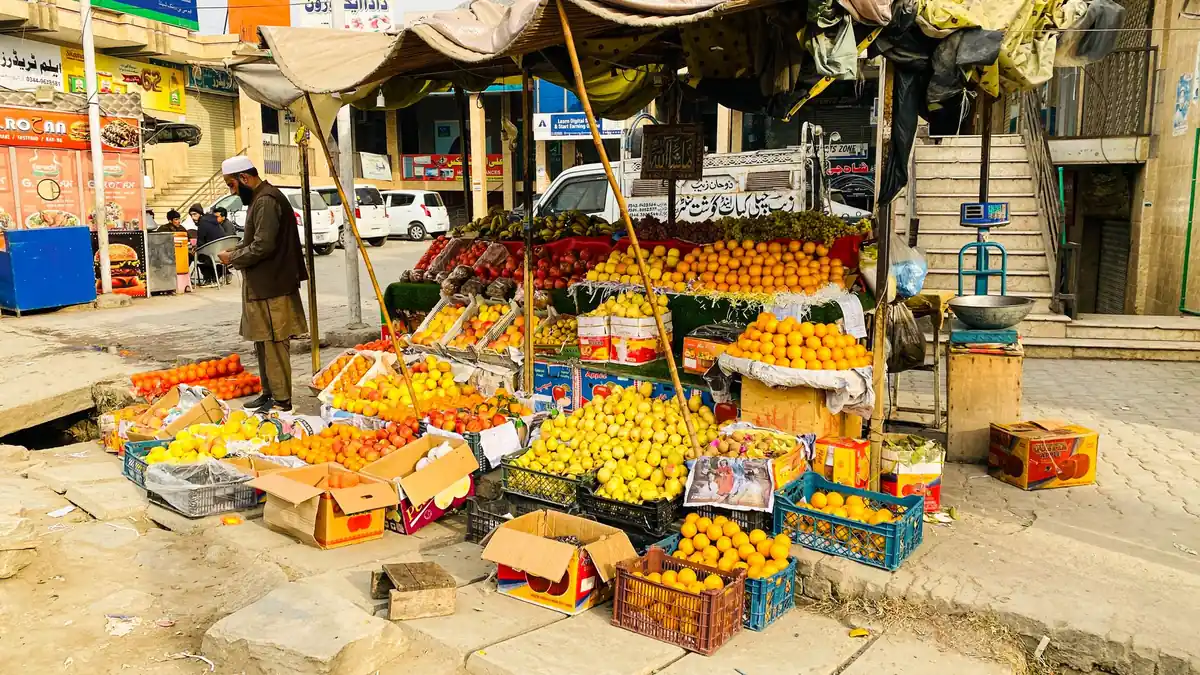
Errands days in Sargodha often include a pick-up: a carpet from Amin Bazaar, kitchenware from Anarkali Bazaar, jewellery collected from the Sarafa Bazaar, wedding clothes, or crates of kinnow for relatives in Lahore. Sargodha is known as a major citrus district (Wikipedia calls it the largest kinnow-producing district in the world), so in the winter season fruit boxes are a very common extra passenger.
Collecting goods with a car works well when you are realistic about size.
- Measure before you enquire. Length, width, height and rough weight. "A small cupboard" means different things to different people.
- Tell us about the goods when you plan the day. A standard saloon boot fits suitcases and boxes; a longer item or several large boxes may need a bigger vehicle. We can only suggest a vehicle type once we know what you are carrying.
- Don't assume roof carriage. Tying loads to the roof is not something to improvise at a shop door. If an item will not fit inside the vehicle, the safer answer is usually the shop's own delivery or a separate goods vehicle.
- Ask the shop to pack it. Wrapped, taped and labelled with your name. Fragile items go in last and come out first.
Sargodha summers are severe. Wikipedia's climate section notes that temperatures can reach 50°C. Collect anything heat-sensitive (medicines, food, electronics) last, and do not leave it in a parked car while you visit the next office.
Keeping documents safe in the car
A folder of originals (title documents, CNICs, a passport, bank papers) is the most valuable thing in the vehicle, and it is easy to leave behind on a seat while you run into a photocopy shop.
A simple routine:
- One folder, one person. Decide who carries the originals and stick with it all day. Everyone else carries copies only.
- Photos first. Photograph every document before you leave home and keep the photos on your phone, offline.
- Folder travels with you, not the car. Every time you leave the vehicle, the originals leave with you. Even for "two minutes".
- Nothing on the dashboard or parcel shelf. Papers, phones and envelopes of cash stay out of sight.
Your driver can help by parking where you can see the car and by waiting nearby, but the responsibility for original documents stays with you.
Errands for relatives abroad: running the day on someone else's behalf
Not every errand day is run by the person whose name is on the paperwork. Often a brother in Birmingham or a cousin in Dubai asks the one family member who has flown home to "just pop in" to a bank, the land record centre and the electricity office. These errands for relatives abroad need extra planning, because you are the one standing at the counter without the authority to answer every question.
Before you accept the list:
- Ask what the office will accept from a representative. Some services need the owner in person; others accept an authorised representative with the right documents. Find out before the day, not at the counter.
- Get copies of the owner's ID and the relevant papers sent to you in advance, clearly legible.
- Agree a call window. If the counter needs to speak to the owner, you want them awake and reachable. Remember UK time is several hours behind Pakistan.
- Report back in writing. A short message after each stop ("Fard copy collected, reference noted, bank needs your signature in person") avoids the family misunderstandings the FCDO warns can grow into property disputes.
If you are organising the day from abroad for someone else, such as an elderly parent who will ride with the driver, our guide to arranging an intercity journey for relatives in another city covers how to share pick-up details, contact numbers and timings with the person travelling.
A sample Sargodha errands day
Here is an example plan to show the structure. The stops and times are illustrative, not a promise of how long any office will take.
- 8.30am, pick-up from home in Satellite Town. Originals folder checked, copies envelope packed, water in the car.
- Land record service centre. First official stop, aiming to arrive as it opens. Parent who owns the land rides along.
- Photocopy and stamp-paper shop nearby. Any extra copies the counter asked for.
- Bank branch. Signature update and statement collection. Parent signs, then is dropped home to rest.
- Electricity office. Name-change enquiry with the latest bill.
- Lunch and prayer break. Driver rests too.
- Bazaar pick-ups. Pre-packed items collected from two shops that confirmed by phone that morning.
- Relatives' visit in a nearby chak. Tea, the kinnow boxes, a slow drive back.
- Early evening drop-off. Receipts photographed and shared with the family group.
Notice what is not in it: a trip to Bhalwal, a hospital appointment, and a second relative's house across town. Those would turn a full day into a stressful one.
When to split into two days
A single day with one driver is efficient up to a point. Past that point, you pay for it in missed counters, tired parents and hurried signatures. Split the plan when:
- Two official offices are in different tehsils. A city bank and a land record centre in Kot Momin or Shahpur rarely fit comfortably in one morning.
- Any stop depends on another person's signature who is not travelling with you.
- The weather is extreme. On a peak summer day, a long afternoon of bazaar stops is hard on older passengers. Start later in winter if a frail parent is coming.
- You are collecting bulky goods and carrying several passengers. Do the passenger day and the goods run separately.
- You are also travelling to or from Lahore or Islamabad. Sargodha sits roughly 187 km northwest of Lahore and about 45 km from the M-2 motorway, whose Kot Momin, Saalam and Bhera interchanges serve the district. Arriving from the airport and then attempting a full office day is ambitious. Rest first.
A useful pattern is Day 1 for official work, Day 2 for goods and family. If Day 1 overruns, Day 2 absorbs the spillover without anyone missing a deadline.
For wider trips that stitch several towns together, our guide on how to plan a multi-stop family journey shows how to order stops and build in rest.
What to share when you plan the day with us
The more detail you give up front, the more useful the plan. When you plan your Sargodha journey with Pakistan Taxi (planned link), include:
- Date and preferred start time, plus whether you might need a second day.
- A list of stops, in rough order, with area names or map pins.
- Which stops are time-critical (offices and banks) and which are flexible.
- Number of passengers, including older relatives or children, and anyone who is being dropped home midway.
- Goods to collect, with measurements.
We'll come back to you about vehicle options, timings and cost before anything is arranged. Nothing is confirmed until you have agreed it. If you are unsure what a day with a car and driver usually covers, our sister service iDrive, the network behind Pakistan Taxi, has a clear explainer on what a car with driver in Pakistan includes and what changes the cost.