
If you are travelling Lahore to Islamabad via GT Road so you can collect a relative in Gujranwala, Gujrat, Kharian or Jhelum, the drive itself is the easy part. What goes wrong is the pickup: a vague "we'll meet you on the main road", a suitcase nobody mentioned, or an uncle who is still finishing lunch when the car pulls up. Before you set off, agree five things with whoever is arranging the vehicle: the exact pickup address (not just the town), which seat the extra passenger will take, how much luggage they bring, how long the driver will wait, and who phones the relative and when. Get those in writing, in the booking message, and the stop usually takes minutes rather than an hour.
The GT Road (the N-5 national highway) runs through the towns where many families actually live, which is exactly why people choose it over the M-2 motorway for this kind of trip.
Why families pick the GT Road for a mid-route pickup
The M-2 motorway between Lahore and Islamabad is about 375 km long and, according to its Wikipedia entry, does not pass directly through Gujranwala or Jhelum. It swings west through Pindi Bhattian and climbs the Salt Range near Kallar Kahar. Reaching a relative in Gujrat from the motorway means leaving it and driving across country, then rejoining.
The GT Road takes the other line. Using the National Highway Authority kilometre markers reproduced on the N-5 National Highway page, the Lahore to Rawalpindi stretch works out at roughly 269 km (Islamabad adds a little more, depending on the sector), and it runs straight through the main towns of central and northern Punjab. So the stop is on the way, not a detour.
Put side by side:
- GT Road: shorter on paper, passes the pickup towns, but you share it with town traffic, markets, rickshaws, trucks and junctions.
- M-2 motorway: longer, more controlled driving, fewer interruptions, but awkward if your relative lives in a GT Road town.
If nobody needs collecting, the motorway often makes more sense. If someone in Gujranwala or Jhelum is coming with you, the GT Road usually wins, and this is the route this guide assumes.
The towns on the route, in order
Heading north from Lahore, the N-5 passes these towns. The distances below are rough, worked out from NHA kilometre markers, and are there to help you picture where on the journey your stop falls, not to predict timings.
| Town | Roughly how far from Lahore | Where it sits on the trip |
|---|---|---|
| Muridke | about 16 km | Very early; barely out of Lahore's traffic |
| Kamoke | about 36 km | Early first stretch |
| Gujranwala | about 57 km | First big city stop |
| Wazirabad | about 91 km | A third of the way |
| Gujrat | about 109 km | Roughly 40% of the way |
| Lala Musa | about 126 km | Central stretch |
| Kharian | about 141 km | Central stretch |
| Sarai Alamgir | about 155 km | Just short of Jhelum |
| Jhelum | about 161 km | Around 60% of the way |
| Dina | about 177 km | Just north of Jhelum |
| Sohawa | about 202 km | Three-quarters of the way |
| Gujar Khan | about 220 km | Last major town before Rawalpindi |
| Rawat | about 251 km | Outskirts of Rawalpindi and Islamabad |
Two things stand out. First, a pickup in Gujranwala is almost at the start of the drive, so a delay there pushes every later timing back. Second, Jhelum and Dina sit close together, and people sometimes say "Jhelum" when they mean a village on the Dina side, or across the river towards Sarai Alamgir. Ask which side of the river they are on.
Typical pickup points families use
Most GT Road pickups fall into one of three types, and each needs a slightly different kind of detail:
- The family home. The most comfortable option for your relative and usually the slowest for the car, because it means leaving the N-5 and threading through town lanes. Worth it for older relatives, heavy luggage or anyone with limited mobility.
- A named landmark just off the highway. A petrol station forecourt, a well-known mosque, a hospital gate or a school entrance close to the N-5. Faster, but only if everyone means the same landmark.
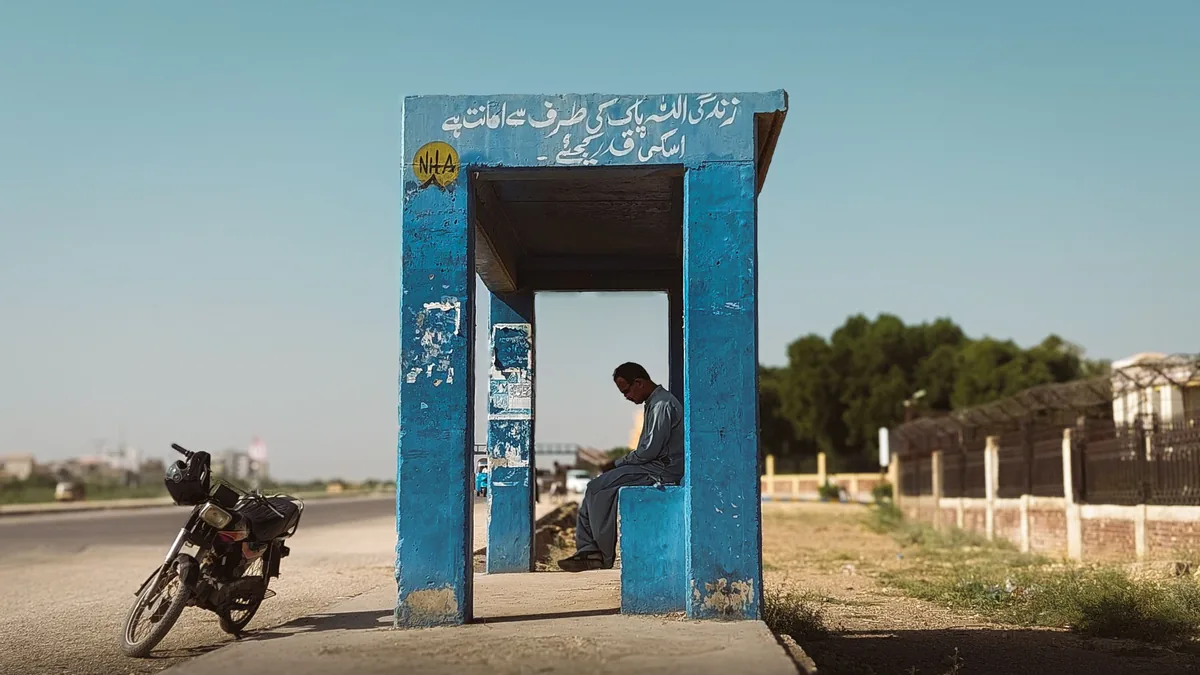
- A bus stop or chowk on the main road. Tempting because it is "on the way", but these spots are often crowded, with nowhere safe to stop, and they are exactly where most pickup confusion starts.
Exact pickup address versus "on the main road"
"We'll be standing on GT Road near Gujrat" sounds precise to the person saying it. To a driver coming up the N-5 at night, it describes several kilometres of carriageway in both directions.
Ask for, and pass on, all of the following:
- The full written address, including mohalla or colony name, street, house number and the nearest well-known landmark.
- A dropped map pin sent by the relative from the actual spot, not from memory. A pin sent from inside the house, when they plan to wait at the petrol station, is worse than no pin.
- Which side of the road they will be waiting on. On a divided highway, the wrong side can mean a long run to the next turning point.
- A description of the place, such as "the blue gate next to the pharmacy" or "the forecourt of the second petrol station after the flyover".
- A backup point if the first one is blocked, for example by a wedding tent, a market day or roadworks.
If your relative is not comfortable sharing a pin, a younger family member or neighbour can usually do it for them.
For more on planning several stops in one trip, our guide to planning a multi-stop family journey covers the order of stops and who holds each piece of information.
Seat and luggage space for the extra passenger
The easiest mistake to make is to book a car for the people leaving Lahore and forget that the vehicle has to fit everyone at the point where it is fullest. That point is usually after the pickup.
Before you ask for a vehicle, write down:
- Everyone travelling at the fullest point of the journey, including children and babies.
- Who needs which seat. An older relative may need the front seat or a seat without climbing over anyone. A child may need a car seat, which you should mention in advance rather than assume.
- The relative's luggage, specifically. "One bag" can mean a handbag or a 30 kg suitcase heading back to the UK. Ask for the number of bags and rough sizes.
- Anything unusual, such as a wheelchair, walking frame, cool box of food for the family, or gifts wrapped for a wedding.
A small saloon that works for two adults and two cabin bags out of Lahore can be cramped once a third adult and a large suitcase join in Jhelum. If the numbers are close, it is usually kinder to ask for a larger vehicle than to spend three hours with a bag on someone's lap. Our note on family luggage for intercity journeys explains what details the booking team needs to judge this properly.
Agreeing a waiting window
This is where a pickup stop turns into an argument if nobody has talked about it beforehand. A driver planning a Lahore to Islamabad run has a picture of the day in their head; an unplanned 45-minute wait in Gujranwala can clash with their next job, and families often underestimate how long "just coming" takes.
Agree three things before the trip:
- How long the driver will wait at the pickup, counted from when the car arrives at the agreed point. Write it into the booking message.
- What happens after that window. Does the driver keep waiting with an extra charge, or does the journey continue without the passenger? Families rarely want the second option, which is why it matters to agree the first in advance.
- Whether a short family stop is expected. In many families, collecting a relative from home means being invited in for tea. That is a lovely custom and a very different stop from a kerbside pickup. If you expect to go inside, say so and ask for a longer wait to be included.
A useful rule is to plan the wait around the slowest realistic scenario, not the best one. If your aunt needs help with bags and the lane is narrow, allow for it.
How the added pickup shows in the quote
When you plan a journey with Pakistan Taxi, you send the details as an enquiry and the team comes back to you. Nothing is confirmed, priced or allocated until that reply arrives and you have agreed it. For an extra passenger pickup en route, that reply is the place to check that the stop has actually been understood.
When you read the response, look for:
- The stop named as a stop, with the town and the address or landmark, not just "Lahore to Islamabad".
- The passenger count after the pickup, so the vehicle suggested fits everyone at the fullest point.
- The waiting allowance at the pickup, and what happens if the wait runs over.
- Any off-route distance, if the home is some way off the N-5. A house several kilometres into town, or on the far side of a river, is a genuine extra run, and it is fairer for everyone that it is visible up front.
- Tolls, parking and similar costs, and whether they are included or paid on the day.
If something is missing, ask before you accept, not in the car. Our checklist of what a city-to-city quote should include has a fuller list you can run through.
Lahore to Islamabad via GT Road time: what actually decides it
People search for a single number, and there isn't one worth trusting. The Lahore to Islamabad via GT Road time depends on things that change by the hour:
- Where in Lahore you start. Leaving from the south of the city means crossing a lot of Lahore before you even reach the N-5.
- Time of day. Morning and evening rush in Lahore, Gujranwala and Rawalpindi can each add a real chunk of time.
- Town traffic on the way. Unlike a motorway, the GT Road goes through the towns, so market days, school hours and local events all show up in your journey.
- Weather and air quality. Lahore has had repeated smog episodes, several of the worst in November. If you are travelling in late autumn, check conditions the day before and allow extra time.
- Where you end. "Islamabad" can mean a sector near Faizabad or somewhere much further across the city.
- Your pickup. The waiting window, plus the time spent leaving and rejoining the N-5 to reach a home address.
A worked example, for planning only. Suppose you are collecting a cousin from a house in Gujrat, about 109 km into the trip. You allow a 20-minute wait and another 20 minutes to get from the N-5 to the house and back. That is 40 minutes to add to whatever the drive itself takes on the day, before any tea. The point of the example is the method, not the numbers: list each stop, give each a realistic allowance, then add them to the driving time the booking team suggests.
If you have a fixed appointment at the far end, build the buffer in before the pickup, not after it. A relative can wait an extra ten minutes at home; a hospital slot or an embassy appointment in Islamabad usually cannot.
A pickup in Gujranwala on the way to Islamabad
Gujranwala is the pickup people underestimate most. It sits only about 57 km from Lahore, so it feels like the trip has barely started. But it is a large city, and a house in the middle of it can be a long way from the N-5 in traffic terms.
For a pickup in Gujranwala on the way to Islamabad, it helps to:
- Ask whether the relative can come to a landmark on the GT Road side of the city, if they are able and it is safe to wait there.
- Avoid scheduling the stop in school closing time or early evening if you can.
- Tell the relative the Lahore departure time, not the arrival time. Then they can watch the clock themselves.
- Agree who calls whom when the car passes Muridke or Kamoke, so the relative has half an hour's warning.
A stop at Jhelum between Lahore and Islamabad
A stop at Jhelum between Lahore and Islamabad falls around 60% of the way, which makes it a natural break for a family trip. The detail to watch is geography. Jhelum sits on its river, with Sarai Alamgir just to the south and Dina a short way north. A relative who says "Jhelum" might mean any of them.
Before the trip, confirm:
- Which side of the river the pickup is on.
- Whether they are in Jhelum city, the cantonment, Dina or a nearby village.
- The nearest landmark on the N-5 for the driver to aim at if the lanes are narrow.
If you are also planning a toilet stop, a meal or a prayer break, combining it with the Jhelum pickup often works better than stopping twice.
Calling ahead so your relative is ready
Most pickup delays are not about traffic. They are about the relative not knowing the car is close. A simple calling plan fixes that:
- The evening before: confirm the pickup address, the landmark, the approximate time and the luggage. Remind them to charge their phone.
- At departure from Lahore: a short message with the time you left and who is in the car.
- About 30 to 45 minutes out: a call so they can finish getting ready, lock up and bring the bags to the door or the landmark.
- About 10 minutes out: a final call, and, if they are waiting at a landmark, a request for them to step out so the driver can see them.
- On arrival: the driver or you calls to say exactly where the car has stopped.
Decide in advance who does the calling. If you are the organiser in the car, it is usually easier for you to phone your relative, and for the driver to concentrate on the road. If you are organising from somewhere else, perhaps from the UK or the Gulf for a parent travelling alone, make sure the relative and the passenger in the car both have each other's numbers, plus the booking reference.
For families arranging this on behalf of someone else, our guide to arranging intercity journeys for relatives covers how to share the plan so nobody is left guessing.
A message you can adapt
Here is an example of the kind of message that makes a pickup straightforward. Adjust the details to your own trip.
Journey: Lahore (Model Town address) to Islamabad (sector address).
Passengers at start: 2 adults, 1 child (car seat needed).
Pickup en route: Jhelum. Aunt, 1 adult, 1 large suitcase and 1 small bag. Address and map pin attached. She will wait at the front gate; nearest landmark on GT Road is the petrol station before the bridge.
Passengers after pickup: 3 adults, 1 child.
Waiting: please allow 20 minutes at the pickup. We may be offered tea; we will keep it short.
Contact at pickup: my cousin, who will answer the phone.
Safety and travel advice worth checking
The UK government's Pakistan travel advice (updated 22 September 2026 when we checked) advises against all but essential travel to Dera Ghazi Khan in Punjab, which is not on this route. It does not list the Lahore to Rawalpindi GT Road towns among the areas it advises against. Travel advice changes, so check it again before you travel.
The same advice's safety and security section notes that road quality outside the major motorways is variable and that local driving standards are erratic, especially at night. That is a practical reason to plan a GT Road pickup in daylight if you can, and to avoid asking a relative to wait at the roadside after dark.
If something goes wrong on the road:
- National Highways & Motorway Police: 130, listed among Pakistan's emergency numbers. NHMP is responsible for the national highway and motorway network, which includes the N-5.
- 1122: the emergency ambulance and rescue number (police is 15).
- Punjab Highway Patrol (1124): note that the Punjab Highway Patrol covers provincial highways rather than national highways, so it may be relevant if the pickup is on a provincial road off the N-5.
If the GT Road is not the right fit
Sometimes the honest answer is that a pickup on the way makes the whole journey worse. If your relative lives well away from the N-5, or the timings at the far end are tight, it may be simpler for them to travel separately and meet you in Islamabad, or for you to take the motorway and arrange their journey on its own. If you are weighing up road, coach and rail, our sister service iDrive has a straight comparison of car, coach and train between Islamabad and Lahore.
Planning the journey with us
When you have the addresses, passenger numbers, luggage and the waiting time you need, you can send your journey details through our planning page (planned link). Include the pickup as a separate stop with its own address and contact, and the team will come back to you on vehicle options and what the stop involves. Nothing is confirmed until you have that reply and agreed it, so there is time to adjust the plan if a detail changes.