
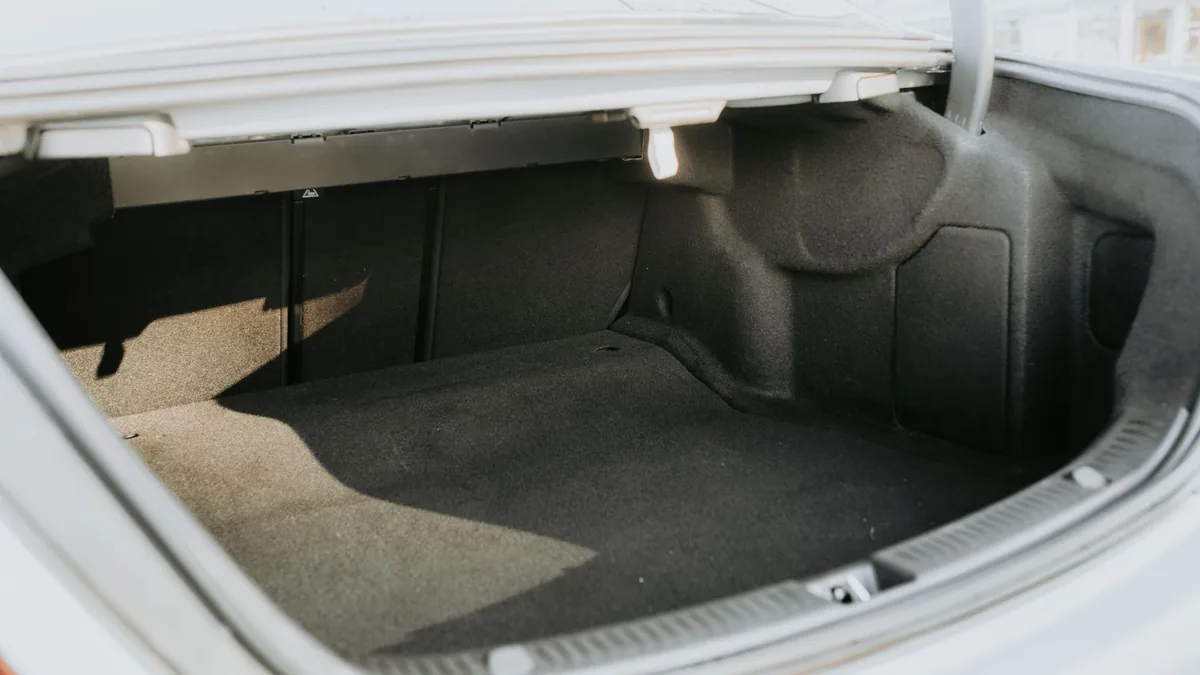
Yes, you can ask for a smaller car for the return journey, and often you should. If seven of you drove from Lahore to a cousin's wedding in Islamabad and only three are coming home on Sunday, there is little point paying for an empty van for 375 km of motorway. But count the bags before you count the heads. Families rarely come back lighter: wedding clothes, gift boxes, a mother's pressure cooker from Raja Bazaar, a sack of rice from the village. The right move is to treat the return as its own journey. Tell the planning team how many people are travelling back, how many suitcases and boxes, and roughly how big they are, and ask for the return to be quoted separately rather than assumed from the outbound booking. Then decide.
Below: when downsizing makes sense, when it backfires, what to do about relatives who stay on, and how to time the change.
Before you plan: check the route against official advice
Most family return trips run between cities where the UK Foreign, Commonwealth & Development Office does not list area-wide warnings: Islamabad, Rawalpindi, Lahore, Karachi and most of Punjab. That is not true everywhere. At the time of writing, the FCDO Pakistan travel advice advises against all travel to the whole of Balochistan, to much of Khyber Pakhtunkhwa including Peshawar city, Swat, Kohat and Bannu, to the Karakoram Highway between Mansehra and Chilas, and to within 10 miles of the Afghanistan border. It advises against all but essential travel to Azad Jammu and Kashmir and within 10 miles of the Line of Control, to Sindh north of and including Nawabshah, to Dera Ghazi Khan in Punjab, and to several further Khyber Pakhtunkhwa districts such as Mardan, Nowshera and Swabi.
The list is revised regularly, so read the live page before you book either leg. If the family home sits inside one of those areas, the size of the car is the least of the questions: the FCDO warns that travel insurance could be invalidated if you travel against its advice.
Why a smaller car for the return journey needs its own quote
The outbound and return legs of a family trip look like mirror images on a map. In practice they are two different jobs.
On the way out, the group is usually at its largest. Everyone travels together because the event has a fixed start: a mehndi on Friday evening, a funeral the next morning, a hospital appointment at 10am. On the way back, the group fragments. An aunt stays a week to help the new bride's family. A brother flies out of Islamabad instead of going back to Lahore. The grandparents want to leave early; the teenagers want the last evening with their cousins.
That fragmentation changes three things at once:
- Passenger count. Often lower, sometimes by half.
- Luggage volume. Often higher, sometimes by a lot.
- Timing. Often split into two or more departures instead of one.
A return price that was worked out when the outbound was booked assumed none of this. So ask for the return to be re-quoted on its own details. Our guide to choosing a one-way or return intercity journey explains how the two legs are usually planned together; this article picks up at the point where the second leg no longer matches the first.
When the group shrinks but the luggage does not
This is the trap. A family of six arrives in a seven-seat people carrier with six soft bags. Four of them head home a week later with the same six bags, two sealed cartons of wedding sweets, a rolled carpet and a large suitcase of clothes someone's sister-in-law is sending to relatives. Four people fit in a saloon. Their luggage does not.
A saloon boot has a limit, and the family's return pile often passes it. Anything that will not sit in the boot ends up on laps or in the footwells, which is uncomfortable for a long motorway run and unsafe if a heavy box shifts under hard braking. Roof carriers are not something to assume; many city and intercity cars do not have roof bars, and a driver may reasonably refuse loose items tied to the roof.
Before you downsize, run this quick check:
- List every item going back, not just suitcases. Include cartons, carpets, framed photos, cool boxes, walking frames, folded wheelchairs and pushchairs.
- Estimate size, not weight. A light but bulky box of wedding favours takes up as much space as a full suitcase.
- Note anything fragile or awkward: glass, sweets, a dinner set, long items such as a rolled rug.
- Ask who will be carrying what at the drop-off end. If the flat is up three flights of stairs, fewer passengers also means fewer hands.
If the honest answer is "three people and a van-load of things", then the smaller car is a false economy, and it is better to keep the larger class for the return.
When the luggage shrinks too
The opposite happens as well, and it is the easy case. Suitcases of gifts for the host family are handed over and left behind. Wedding outfits stay at the bride's house for the walima photos. A cousin takes the spare bedding back on the train. If both the group and the luggage are smaller, a return trip with less luggage is the clearest argument for a smaller vehicle. Just confirm the list rather than guessing, because the one item nobody mentions is usually the biggest.
Comparing one van both ways with two different vehicles
There is no single right answer here, only trade-offs. The table below sets out how the common choices tend to compare. It describes patterns, not prices; the actual quote depends on the route, date, vehicle availability and the details you give.
| Option | Works well when | Watch out for |
|---|---|---|
| Same van out and back | Luggage grows on the return; group size barely changes; you want one driver for both legs | Paying for empty seats if half the family stays on |
| Van out, saloon or smaller family car back | Three or four people return with ordinary suitcases only | Wedding cartons, rugs or extra bags that will not fit the boot |
| Van out, van back later for the stayers, small car back now | Two clearly separate groups with different return days | Two return bookings to manage, each with its own timings and contact person |
| Van out, one larger car back with a luggage-heavy load | Four or five people and several large cases | Legroom for older passengers on a long run; ask what "large" means in practice |
| Mix of road and another mode for part of the group | Someone is flying out, or travelling by rail with light bags | Airport timings and luggage allowances drive the plan, not the car |
The vehicle classes page (planned link) shows the categories you can plan with, from a standard taxi to a family vehicle and group van. For the wider question of whether a family travels in one big vehicle or several small ones, see our guide on a group van or several cars. If you want a numbers-first view of how many people and suitcases sit comfortably in each class, iDrive, the network behind Pakistan Taxi, has a capacity guide that is worth a look before you decide.
A worked example (hypothetical)
*This example is illustrative only.* A family of seven travels from Lahore to Islamabad on the M-2 for a Friday wedding in a people carrier. On Sunday, four return to Lahore. Two stay until Wednesday. One flies back to Manchester from Islamabad on Monday.
- Sunday return, four people: two suitcases, two cabin bags, one carton of sweets, one gift box. A family-sized car may fit this; a small saloon probably will not once the carton goes in. Ask for the return to be quoted in both classes and compare.
- Wednesday return, two people: one suitcase each plus whatever the host family sends back. Often a standard car, but only if you know about the extras.
- Monday airport run, one person: a separate local transfer in Islamabad, not part of the intercity return at all.
What looked like one return journey is three bookings. Seeing it that way early saves a lot of phone calls later.
Staying relatives who travel back later
When some of the family stay behind, the return splits into at least two trips, and it helps to plan the later one now rather than leaving it to "we will sort something out".
Decide who owns each return
Name one contact person for each return group. For the Sunday group, it might be you. For the Wednesday group, it should be someone who will actually be in the house on Wednesday with a working local number, not the organiser who will be back in Birmingham by then. Our guide to booking intercity travel for relatives covers how to arrange a journey for someone else, including the details the driver will need.
Give the later trip its own details
A later return is not a leftover of the first. It needs:
- The pickup address and a clear landmark or map pin.
- The date, and an earliest and latest time the travellers are happy with.
- Passenger names and the main contact's phone number.
- A realistic luggage list, including anything the hosts are sending back with them.
- Any mobility needs, such as a folded wheelchair or help with steps.
If the later return is on a different day, our note on an intercity return on another day explains how that booking is usually handled.
Split return times for a family group
Sometimes the group splits on the same day: grandparents want to leave at 9am before the heat, the rest after lunch. Two departures on one day can each be smaller vehicles, and that may suit everyone. But it also doubles the chance of a delay. If the two groups are going to the same destination and the gap is short, ask whether one vehicle with a sensible departure time would be simpler. If the gap is long, or the destinations differ, two bookings make sense.
Luggage left behind or added: the list that changes the car
Fewer passengers on the way back is easy to report. Luggage changes are easy to forget, because they happen gradually over a visit. Keep a running note on your phone from the day you arrive, and update it whenever something is given to you or given away.
Things that commonly get added on the return
- Gifts from the host family: clothes, sweets, dry fruit, rice, pickles.
- Items relatives in your city have asked you to bring back.
- Shopping from the trip, including kitchen items and fabric.
- Wedding outfits and jewellery boxes that travelled separately on the way out.
Things that commonly get left behind
- Gifts delivered to the hosts.
- Spare bedding or folding mattresses brought for a large gathering.
- Clothes and bags belonging to relatives who are staying on.
A quick rule of thumb: if the return pile is bigger than the outbound pile, do not downsize the car without asking the planning team to look at the list. If it is clearly smaller, downsizing is usually worth a quote.
Fragile and awkward items
Cartons of mithai, glassware and dinner sets do not like being wedged under a seat on a long motorway run. Mention them. A driver who knows there is a box of glass in the boot will load it differently from one who finds out at the gate. Long items such as a rolled carpet or a curtain pole may simply not fit a saloon, whatever the passenger count.
Timing the change with the booking team
Changing vehicle for the return is simple if you ask early and awkward if you ask at the kerb. Here is a sensible sequence.
- As soon as the group splits, tell the team. The moment you know who is staying and who is coming back, send the new passenger count and a draft luggage list. Do not wait for the day before.
- Ask for the return to be re-quoted on its own. Mention that the outbound was a larger vehicle and that you want to compare the smaller option. Any quote you receive is a planning estimate until the team confirms it; Pakistan Taxi does not promise fixed fares or guaranteed vehicles at the enquiry stage.
- Confirm the final luggage list a day or two before. Things change once the host family start packing gifts. A short message with the updated list is enough.
- Share the pickup details and contact number. If the pickup is from a relative's house rather than a hotel, give a map pin and a landmark.
- Keep the old plan in mind until the new one is confirmed. If the smaller vehicle cannot be confirmed for your time, ask whether the original class is still available rather than assuming it is.
While the return is still an enquiry, changing it is normally just a matter of updating the details you sent.
Road facts worth knowing for the return leg
A smaller car does not change the road, but a few points affect comfort and timing on the way home.
- The M-2 is long. The Islamabad to Lahore motorway runs for about 375 km, according to the M-2 motorway article on Wikipedia, with five service areas on each side, including Bhera and Kalar Kahar, so a leg-stretch stop is easy to build in. Four adults in a small saloon for that distance feel every centimetre of legroom. If older relatives are travelling, comfort may matter more than the saving.
- Other motorway returns vary a lot in length. The Motorways of Pakistan list gives the M-1 from Peshawar to Islamabad at about 155 km, the M-9 from Karachi to Hyderabad at about 136 km and the M-11 from Lahore to Sialkot at about 89 km. On a shorter run, a tighter car is easier to live with.
- Motorway tolls are electronic. The same list notes that the National Highway Authority's electronic toll tag, M-Tag, has been extended to all motorways except the M-8. Tolls are revised from time to time, so check the current rate with the planning team rather than assuming the outbound figure.
- Policing and help on the road. The National Highways and Motorway Police, founded in 1997, enforce traffic law and provide recovery on the motorway and national highway network. Their official site carries travel advisory information; it is worth checking before a long return in poor weather.
- Off the motorway, conditions change. The FCDO safety and security page says road quality outside the major motorways is variable, that local driving standards are erratic, especially at night, and that monsoon flooding typically runs from late June to early October. A daytime return in a vehicle with sensible ground clearance is a reasonable preference if the last stretch is a village road.
When you should not downsize
Saving on the return is sensible. But there are cases where keeping the larger vehicle is the better call, even with empty seats.
- Older or unwell passengers. A grandmother recovering from surgery, or a relative with bad knees, will be more comfortable with room to stretch and a higher seat that is easier to get in and out of. On a long run, comfort matters more than a small saving.
- Mobility equipment. A folded wheelchair or walking frame takes boot space that suitcases then cannot use.
- Children in car seats. If you are bringing your own seats, count them as bulky items, and check the smaller vehicle has suitable seat belts in the positions you need.
- A long run with an uncertain luggage list. If you do not know yet what the hosts will send back, a larger vehicle removes one source of stress.
- Very late or very early returns. On a night journey, you may prefer one vehicle with everyone together to two small cars leaving at different times.
A short checklist before you change the return vehicle
Use this once the group has split and before you ask for the new quote.
- Final number of passengers on each return, with names.
- Date and time window for each return.
- Pickup address, map pin and landmark for each.
- Destination address for each, including if one person now goes to an airport instead.
- Full luggage list: suitcases, cabin bags, cartons, fragile items, long items, mobility equipment, car seats.
- Any needs for older passengers or children.
- A contact person with a working local number for each group.
- Your preferred vehicle class and one fallback class.
Send that in one message and the team can compare options properly rather than guessing.
Plan the return leg
When you know who is travelling back, with what, and when, plan your journey on Pakistan Taxi (planned link) with the return details as a separate trip, or add a note to your existing enquiry. That way the options you get back are based on people and bags, not just the head count.