
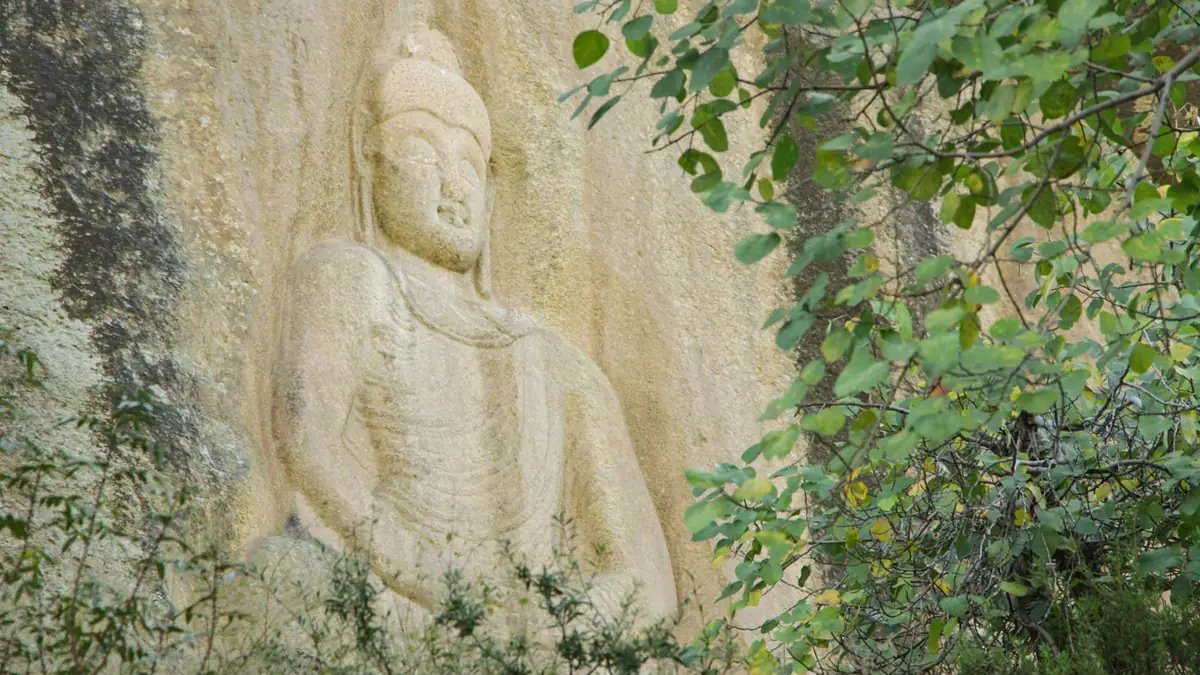
Taxila from Islamabad works well as a one-day outing. The ruins sit roughly 25 km north-west of the Islamabad–Rawalpindi metro area, in Rawalpindi District of Punjab, and one long day is enough for the Taxila Museum plus the Buddhist hill monastery at Jaulian (locally "Julian"), Mohra Moradu, the Indo-Greek city of Sirkap and the Dharmarajika stupa. The hard part is not the distance. It is getting a group of people who share no common language to the right gate at the right time, with water, before the museum shuts. The museum's own website lists winter hours of 9 am to 4 pm and summer hours of 8:30 am to 5 pm. Taxila is not in any area the UK Foreign Office advises against visiting, but its advice on protests and on the safety of visitors of East Asian appearance matters here. Both are covered below.
Is Taxila from Islamabad a sensible group day out right now?
Check this first, and check it again the week you travel.
The UK FCDO's Pakistan travel advice (updated 22 September 2026 when this guide was written) does not list Rawalpindi District or Taxila among the places it advises against visiting.
Three points in the same advice apply directly to a heritage group day:
- Protests. The FCDO notes that protests and marches are planned in Islamabad and Rawalpindi, and warns that during unrest major roads in and around cities may be shut and mobile data and internet cut without warning. Your road out of the capital is exactly the kind of route that gets closed.
- Tourist sites and East Asian visitors. The advice asks travellers to take care at tourist sites and religious sites. It also says a number of attacks have targeted Chinese nationals, and some have targeted people of East Asian appearance more generally. A Korean or Thai pilgrim group is precisely the audience that paragraph is written for.
- Checking in advance. The FCDO says you or your travel agency should contact local authorities at your destination beforehand to check the security situation. In higher-risk areas they sometimes arrange police escorts and will tell you if you need a No Objection Certificate from the Ministry of Interior.
The honest position for group leaders: Taxila itself is a mainstream, government-run heritage site that sits outside the FCDO's advise-against areas. The risk comes from travelling as a visible foreign group, and from itineraries that stretch beyond Taxila. More on that under the pilgrim section.
Road time from Islamabad and Rawalpindi
There are two sensible road approaches, and a driver who knows the area will choose between them on the morning, depending on traffic.
The N-5 (Grand Trunk Road). The N-5 runs west out of Rawalpindi towards Peshawar. Its listed points pass John Nicholson's obelisk on the Margalla pass, then Taxila, then Wah Cantt and Hasan Abdal. Expect towns, trucks, speed breakers and plenty of stop-start traffic.
The M-1 motorway. The Islamabad–Peshawar motorway is 155 km long, and the National Highways & Motorway Police patrol it. Near its Islamabad end, the Fateh Jang exit is signposted for Taxila and Wah Cantt, and the next exit leads to Rawalpindi, Islamabad and Islamabad International Airport. That makes the motorway handy if your group is staying near the airport or coming straight off a flight.
How far is it? Wikipedia's article on the Jaulian monastery puts that hilltop monastery about 35 km from Rawalpindi and 45 km from Islamabad, and Jaulian is one of the furthest sites from the city. For planning, we suggest allowing about an hour each way from central Islamabad, and more for the evening return. That is our cautious rule of thumb, not a timed figure. Weekday rush hour on the Rawalpindi side, any protest diversion, and loading a coach with thirty people all add time.
Taxila Museum timings, tickets and what to confirm
The Taxila Museum is the anchor of the day. It is a site museum: Sir John Marshall's excavations began in 1917, construction started in 1918, and it opened in 1928. The official Taxila Museum website, run under the Punjab government, says about 7,000 artefacts are on display and around 30,000 more are held in reserve.
Taxila Museum timings
What the official site says, as checked for this guide:
| Item | What the museum website states |
|---|---|
| Winter hours | 9 am to 4 pm |
| Summer hours | 8:30 am to 5 pm |
| Closures | Open every day except the first Monday of each month and all Islamic holidays |
| Header banner | "Saturday – Thursday 9 AM – 4 PM" |
| Phone | +92-51-9315476 |
| taxila.museum@punjab.gov.pk |
Notice the conflict. The footer says the museum is open every day, but the header banner only lists Saturday to Thursday. Until you have confirmed it, treat Friday as uncertain. For a group, ring or email the week before and ask three things: Is it open on your date? What is the current foreigner ticket price? Can a guide or English-speaking staff member be booked? Islamic holidays move with the lunar calendar, so an Eid closure can land on a date you fixed months ago.
Tickets
The museum website lists these entry prices: Rs 10 for children (the age limit shown is 12 years), Rs 20 for adults and Rs 500 for foreigners, and it states that the foreigner ticket covers both the museum and the archaeological sites. The website also offers online ticket booking. Prices change, so treat these as the published figures at the time of writing, not a quote, and ask when you phone whether the local-visitor tickets also cover the outdoor sites.
A practical point for mixed groups: the published categories are children, adults and foreigners. If some guests hold dual nationality, ask the museum which rate applies, and make sure whoever buys the tickets knows who is carrying which document. The FCDO also says to carry photo ID at all times, because you may be asked to show it.
Julian monastery, Dharmarajika and Sirkap: an order that works
The sites are not in a tidy line. The museum sits among them. Sirkap is about 2 km from the museum, and the museum website puts Jaulian 7 km away on a hill 92 metres high. Mohra Moradu lies in a valley about 1.6 km south-east of the old city of Sirsukh. Dharmarajika is a separate short drive. Each site involves walking on uneven ground, and none of them is a quick stop from the coach window.
| Site | What it is | Terrain for a group | Best slot |
|---|---|---|---|
| Jaulian ("Julian") | 2nd-century CE monastery: main stupa, votive stupas, 59 chapels, two quadrangles | Hilltop, uphill path and steps, little shade | First, while it is cool |
| Mohra Moradu | 2nd-century CE stupa and monastery, renovated in the 4th–5th centuries | Valley site, gentler walking | Straight after Jaulian |
| Taxila Museum | Galleries of Gandharan sculpture, coins and relics | Indoors, level, seating possible | Late morning or midday, out of the sun |
| Sirkap | Indo-Greek fortified city, founded around 180 BC; main street and stupa bases | Flat but wide open, a long walk end to end | Early afternoon if cool, otherwise late |
| Dharmarajika | The "Great Stupa of Taxila", linked to Emperor Ashoka, 3rd century BCE | Open stupa court and monastery area | Last, in softer afternoon light |
Why Jaulian goes first
The Julian monastery at Taxila is the climb of the day, so it is best done while legs are fresh and the air is cool. It also holds one of the most personal objects in the valley. A votive stupa there holds a Buddha statue with a hole in the navel, known as the "Healing Buddha": pilgrims traditionally put a finger in the navel and pray for cures. If your group includes monks or lay pilgrims who want to chant or make offerings, Jaulian is where they will want time. Build in thirty unhurried minutes rather than shepherding them on.
Sirkap and Dharmarajika later in the day
Sirkap rewards anyone with an interest in the Greek and Central Asian side of the story. According to the history of Sirkap, the Greco-Bactrian king Demetrius built it after crossing into the region around 180 BC. It is a flat but exposed walk, and it is the site where people drift apart, so agree a turn-back point before anyone sets off.
The museum describes the Dharmarajika complex as covering nearly the whole history of Buddhism in Taxila, from the 3rd century BCE to the 7th century CE. It is linked to the Mauryan emperor Ashoka, who built a stupa in the 3rd century BCE, and it was rebuilt in the Kushan era to house relics of the Buddha. For pilgrim groups, it makes a fitting last stop.
Where the museum fits
Putting the museum in the middle does two jobs. It takes the group out of the midday sun, and it lets guests see the sculptures that came out of the monasteries they have just walked round. Just make sure the museum visit starts early enough. With a 4 pm winter close, a 3:30 pm arrival is a wasted ticket.
An Islamabad to Taxila day trip, hour by hour
Here is an example timetable for a winter weekday, for a group staying in central Islamabad. It is a template to adapt, not a schedule anyone has guaranteed.
- 7:30 am – Headcount in the hotel lobby. Water, hats and printed schedules handed out.
- 8:00 am – Depart. Your driver chooses between the N-5 and the M-1 on the day.
- 9:00 am – Arrive at Jaulian. Walk up, visit and allow time for prayer, then back to the vehicles by 10:15 am.
- 10:30 am – Mohra Moradu. A shorter, gentler visit.
- 11:30 am – Taxila Museum. Ninety minutes in the galleries, plus toilets and the souvenir shop.
- 1:00 pm – Lunch and a proper rest in the shade.
- 2:15 pm – Sirkap, on foot, with a fixed regroup time.
- 3:30 pm – Dharmarajika.
- 4:45 pm – Final headcount and depart.
- 6:00 pm – Back in Islamabad, allowing for evening traffic.
In summer, move everything earlier. The museum opens at 8:30 am and the heat builds quickly, so ask the museum what time the outdoor sites open, start at Jaulian as early as that allows, and save the museum for the hottest hours.
Gandhara Buddhist sites in Pakistan: planning for pilgrim groups
Taxila is one of the best-known Gandhara Buddhist sites in Pakistan, and it links the country to several Asian Buddhist traditions. The 4th-century Chinese pilgrim Faxian and the 7th-century monk Xuanzang both wrote about it. Wikipedia's overview of Buddhism in Pakistan also notes that the monk Marananta set out from what is now north-west Pakistan and helped carry Buddhism to the Korean peninsula in the 4th century. In 2017, Thailand announced help with conservation at Taxila, and relics from Taxila were sent to Sri Lanka for Vesak.
What that means for your planning:
- Time at the stupas matters more than time in the galleries. Ask the group leader in advance how long they want for chanting, circumambulation or offerings at Jaulian and Dharmarajika, and plan the day around their answer.
- Keep offerings simple and removable. These are protected World Heritage monuments (UNESCO inscribed Taxila in 1980). Before the day, agree with the site staff what is acceptable, and ask about candles and incense in particular.
- Brief everyone on dress and conduct. The FCDO asks visitors to dress modestly in public, with shoulders and legs covered. Monks will dress according to their order. It is the lay members of the group who most need briefing on the same standard.
- Take the East Asian safety point seriously. Because of the FCDO's warning about attacks on people of East Asian appearance, a large Korean or Thai group should keep a low profile. Keep to the planned timetable, avoid lingering in the bazaar, and follow the FCDO's advice to contact local authorities in advance about the security picture.
Where pilgrim circuits go wrong
Many Gandhara itineraries join Taxila to Takht-i-Bahi and the Swat valley. Check the map against the FCDO list before you agree to that. Takht-i-Bahi is in Mardan district, where the FCDO advises against all but essential travel. It advises against all travel to Swat. Wikipedia records that in 2013 a group of about 20 South Korean monks visited Takht-i-Bahi against their own government's appeals and needed Pakistani security forces to guard them. If your insurer follows FCDO advice, going to those places can invalidate the policy. Taxila on its own is a complete and rewarding pilgrimage day.
One schedule, several languages: the written plan and the meeting point
A group that shares no common language falls apart at the moments nobody can explain out loud: "we leave in ten minutes", "the museum is closing", "the coach has moved". The fix is paper, prepared the night before.
The one-page schedule
Print one sheet per guest, in each language the group reads. Typical combinations are English with Korean, Thai, Sinhala or Urdu. Every version should use the same layout and the same numbering, so a guide can hold up the English sheet, point at line 7, and every guest finds line 7 on their own copy. Include:
- Each site name in English and in the Latin spelling on the signs, with the local pronunciation in brackets. "Jaulian (Julian)" saves real confusion.
- The time the group leaves each site, not only the time it arrives. People remember departure times.
- The meeting point at each stop, described by something they can see, such as "beside the vehicles at the car park entrance". A compass direction is useless here.
- The vehicle description and number plate, plus a photo if you can print one.
- Two phone numbers: the group leader and the driver coordinator. Write each in full international format, starting +92.
- The hotel name and address in Urdu script, so any guest who is separated can show it to a police officer or shopkeeper.
The single meeting point rule
Use one meeting point per site, always at the vehicles. Anyone who gets lost goes back to the vehicles and waits. Keep the written plan in the vehicle too: the FCDO warns that mobile coverage can drop during protests. Put that rule at the top of the sheet in every language, in bold. Do a headcount by number rather than by name. Give each guest a number on arrival in the morning and have them call it out at every departure. It is quicker than a name check in four languages.
Heat, shade and water
Taxila shares the climate of neighbouring Rawalpindi. That climate is humid subtropical, with hot, wet summers, and the record high there is 47.7°C, set in June 1954. Most of the rain falls in the summer monsoon. Jaulian's hilltop and Sirkap's long main street have very little cover, and stone ruins give off heat long after noon.
For a group:
- Water: carry more bottled water than you think you need, in the vehicle rather than in guests' bags, and hand it out at every stop. Older pilgrims and jet-lagged guests often forget to drink.
- Shade: use the museum and lunch for the hottest part of the day. Umbrellas work as parasols and are easier to hand round than hats.
- Footwear: the paths at the monasteries are uneven, so sandals that suit a temple floor are not ideal for the climb. Say so in the joining notes.
- Season: the cooler months are kinder for elderly groups. In the monsoon, a downpour can make the unpaved sections slippery, so keep a wet-weather plan that puts the museum first.
- Fasting: if your date falls in Ramadan, the FCDO notes that fasting can cause tiredness and driving can be unpredictable near dusk. Plan an earlier return, and remind guests the FCDO advises against eating, drinking, smoking or chewing gum in public in the daytime, so water breaks belong inside the vehicle.
Vehicles, drivers and one person in charge
The FCDO advises visitors to avoid street taxis and ride-hailing apps in Pakistan, and to use reputable companies where you call and the operator arranges the driver. For a group day out, that points to pre-arranged vehicles with the same drivers from morning to evening.
A few choices to settle early:
- One large vehicle or several small ones? One coach keeps everyone together and makes the headcount simple. Several cars cope better with narrow approaches and let slower walkers leave early. Our guide on choosing a group van or several cars sets out the trade-offs.
- Day hire rather than transfers. Taxila is a stop-start day with five or six stops, so a vehicle and driver held for the day is the natural fit. See how chauffeur day hire works when you plan it that way.
- Arriving on the day of the trip? If some guests land at Islamabad International Airport that morning, the M-1 route makes a direct airport-to-Taxila start possible. Read our Islamabad airport arrivals guide (planned link) before building the timetable around a flight that could be late.
- Bigger vehicles. For a larger delegation, iDrive, the network behind Pakistan Taxi, lists the group vans it can source, from people carriers to Hiace-class minibuses.
Your next step
Tell us about your group through Pakistan Taxi group travel planning: numbers, languages, pickup hotel, preferred date and any mobility needs. Or start a journey plan on the planning page (planned link). We treat every request as an enquiry. We will come back to you with options and availability to discuss, not a fixed price or a guaranteed vehicle, so allow time for that conversation before you print the schedule.