
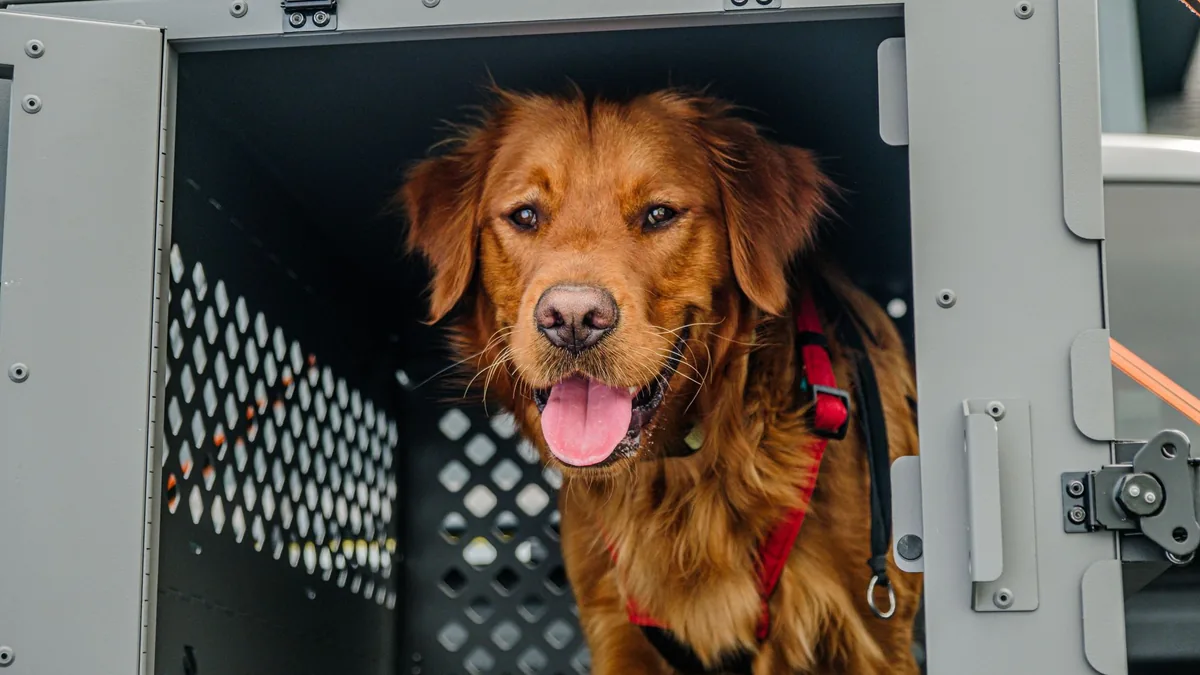
Can you get a taxi with a pet in Pakistan? Yes, but not by chance. A car you flag down or a driver who turns up expecting four adults and two suitcases may well say no to a dog on the back seat, and that refusal usually happens at the kerb, at the worst possible moment. The way round it is simple: tell whoever is arranging the car about the animal before the driver is assigned, give its size and how it will travel (crate, carrier or loose on a cover), and wait for a clear yes from the operator before you rely on it.
That one step lets the driver choose to take the job, lets the right vehicle be matched to a family plus a crate, and means nobody is arguing in an airport car park at 3am after a long-haul flight.
Why a driver may turn down a pet nobody mentioned
From the driver's side, a refusal is usually about protecting the next fare, not unkindness.
- The car is their workplace. Hair on the upholstery, a muddy paw print or a nervous accident means cleaning before the next passenger, and that is unpaid time.
- The next passenger may have allergies or simply may not want to sit where a dog has been.
- Many drivers work for owners who set the rules for the vehicle. A driver may not be allowed to accept animals even if he personally would.
- Faith and custom play a part. Views on dogs vary within Islam. The Maliki school distinguishes between wild and pet dogs and treats only the saliva of wild dogs as impure, while other schools regard dogs as unclean, as the overview of dogs in Islam on Wikipedia explains. In practice, some drivers are perfectly relaxed about a dog in a crate and uncomfortable with one licking the seats. Cats and caged birds tend to cause far less hesitation.
- Surprise is the real problem. A driver who agreed to the job in advance has already made his peace with it. A driver who discovers a 30 kg dog at pickup has had no chance to decide, and saying no is the only safe answer for him.
So the yes has to be arranged, not assumed.
Telling the driver before pickup: what to say
The single most useful thing you can do is describe the animal properly at the point of arranging the journey. A vague "we have a small pet" invites a mismatch; a Labrador is small to some owners.
When you plan your journey with Pakistan Taxi (planned link), put the pet details in the journey notes and include:
- Species and breed, and an honest weight. "Cat, 5 kg" or "Golden Retriever, around 32 kg" is exactly what a driver needs.
- How it will travel. In a hard crate, a soft carrier on a lap, or on a seat cover with a harness. A crated animal is the easiest yes.
- Crate dimensions, if you are using one. Length, width and height in centimetres decide whether it fits the boot alongside your luggage.
- Who is travelling with it. Number of adults, children and car seats, because the animal shares the space with all of them.
- Any extra stops. A vet, a relative's house to collect the pet, or a cargo terminal pickup (more on that below).
- Whether you can take a no. If the operator cannot find a driver willing to take the animal, what is your fallback? A second car for the pet and one adult is sometimes the practical answer.
Pakistan Taxi's journey flow is a planning and enquiry service. Adding a pet to your request lets the team check it with an operator; it is not an automatic acceptance, and nothing is confirmed until you are told the pet has been agreed for that specific journey. If anything is unclear, the help and journey planning page (planned link) explains how requests are handled.
A message you can adapt
*Example wording, not a template you must follow:* "Pickup for 2 adults, 1 child (needs a car seat) and 1 dog, Beagle, about 12 kg, travelling in a plastic crate 81 x 56 x 58 cm. Three suitcases. The dog stays in the crate for the whole journey. Please confirm a driver is happy to take the dog before assigning the car."
Short, specific and easy to say yes to.
Crates, covers and cleaning: leave the car as you found it
A driver who ends a pet journey with a clean car will say yes again.
For dogs
- A hard crate is the gold standard for anything bigger than a small terrier. It keeps the dog still in braking, keeps hair contained and reassures the driver. If your dog flew in one, it is already sized and familiar.
- If there is no crate, bring a full-width waterproof seat cover (the hammock type that clips to both headrests) plus a harness and a seat-belt tether. A dog loose in the footwell or on a lap is the arrangement most likely to be refused.
- Old towels, two or three, for paws, drool and spills.
For cats
- Always a carrier, closed and on the floor or strapped into a seat. Cats that escape inside a moving car are a genuine hazard to the driver.
- A puppy pad in the bottom of the carrier helps on long runs.
The clean-up kit
Keep a small bag within reach, not buried in a suitcase:
- Lint roller or rubber pet-hair brush
- Poo bags and a sealable bin bag
- Pet wipes and a small bottle of water
- Kitchen roll
- A lead, even for a crated dog, for comfort stops
Before you get out, give the seats a quick once-over with the lint roller. It takes two minutes and drivers remember it.
Pet transport from airport arrivals: what to expect
Pet transport from airport arrivals in Pakistan starts long before you land, because how the animal flies decides where you collect it. The airline's rules set that, not the airport and not your driver.
How airlines carry pets
Airline rules differ a great deal, and they change, so the only version that counts is the current policy page of the airline you are booked on. Before you pay for a ticket, find out four things from that page or from the airline directly:
- Whether your pet can fly in the cabin at all. On many long-haul routes the answer for an ordinary cat or dog is no, so do not plan the arrival around a carrier at your feet.
- Whether it travels as checked baggage in the hold or as cargo. This single answer decides where you collect it in Pakistan, as the table below shows.
- How much notice the airline needs and which documents it wants to see, typically health and vaccination records plus anything the destination requires.
- Breed and weather restrictions. Ask directly whether your breed, and the month you are flying, raise any extra conditions.
PIA, the Gulf carriers and the European airlines serving Pakistan each publish their own rules. Read the one for your actual airline and route, not a friend's.
Why this matters for the pickup
| How your pet flies | Where you are likely to collect it | What to tell your driver |
|---|---|---|
| Checked baggage in the hold | With the airline's baggage handling on arrival, alongside your own bags | Normal arrivals pickup, but allow extra time; mention the crate size |
| Cargo (air waybill) | Through the airport's cargo side, after clearance | A separate stop, possibly a later time, and a clear location from your cargo agent |
Cargo does not come out on the passenger side. Wikipedia's pages on Islamabad International Airport and Allama Iqbal International Airport in Lahore both describe a dedicated cargo terminal. If your pet is travelling as cargo, get the collection point and expected release time in writing from the airline or cargo agent, and pass it on exactly. "Cargo, Lahore airport" is not an address a driver can work with.
Import paperwork has changed hands
For years, animal imports were handled by the Animal Quarantine Department under the Ministry of National Food Security and Research, with quarantine stations in Karachi, Islamabad, Lahore, Peshawar and Quetta. In 2025 it was replaced by a new body, the National Agri-trade and Food Safety Authority, according to the Animal Quarantine Department's Wikipedia entry. Older guides and forum posts still name the old department, so check current requirements with your airline and the Pakistan embassy or high commission in the country you are flying from before you travel. Do not rely on a checklist written before the change.
On the day
- Book the car for the flight, not the pet. The pickup time is based on your landing time; the pet adds collection time on top.
- Tell the driver how long you expect to be. Baggage plus an animal crate plus any document checks can easily add a long wait. A driver who knows this in advance will wait calmly.
- Keep the crate closed until you are in the car, and ideally until you are home. Airport kerbs are noisy, and a frightened animal on a lead is hard to hold.
- Water first. Offer the animal water once it is safely in the car and the doors are shut.
For the passenger side of the arrival, meeting points and timings, the airport transfers service page sets out how Pakistan Taxi plans arrivals pickups.
Travelling with a dog in Pakistan by car on longer intercity trips
Travelling with a dog in Pakistan by car over a few hundred kilometres is very doable, but the planning is different from a 40-minute airport run. The two things that change are heat and stops.
Heat is the main risk
Pakistan's plains get extremely hot. The climate of Pakistan article on Wikipedia puts the June mean in the plains at 38 °C, with peaks above 53 °C, and the monsoon runs from late June to late September, adding humidity. A dog in a crate in the boot area can overheat even when the passengers in front feel fine under the air conditioning.
- Travel early or late in summer. A dawn departure is kinder to everyone.
- Ask whether the air conditioning reaches the rear. In an estate, MPV or SUV with the crate behind the last row, air flow can be weak. Say this when you request the car.
- Never leave an animal in a parked car, even briefly at a service area, and even with the engine running unless an adult stays inside.
- Short-nosed breeds (pugs, bulldogs, Persian cats) struggle most in heat because they cannot pant efficiently. Plan their road journeys with extra care.
Plan the stops before you set off
On the M-2 between Islamabad and Lahore, the M-2 motorway article lists service areas on both sides at Sukheki, Sial, Bhera, Kallar Kahar and Chakri, typically 60 to 80 km apart, over a route of about 375 km. That spacing is useful for a dog: roughly every hour you have a chance for water and a short walk on a lead, away from the fuel pumps and the food courts.
A sensible rhythm for a long drive:
- Walk the dog before departure, not just a garden visit.
- Stop every 60 to 90 minutes for water and a short leg-stretch.
- Keep the lead on at every stop. Motorway service areas are not places for off-lead dogs.
- Feed lightly before and during the drive; a full stomach and a warm car do not mix.
- Agree the stops with the driver at the start. A driver who knows you want three short breaks will plan fuel and prayers around them instead of feeling held up.
If you are arranging a full intercity journey rather than an airport run, the city-to-city service page explains how Pakistan Taxi handles longer routes and what information helps the team plan them.
Check where you are heading
If your trip takes you beyond the main cities, check the UK government's Pakistan travel advice before you plan it. The FCDO currently advises against all travel to some areas, including Balochistan and parts of Khyber Pakhtunkhwa, and against all but essential travel to others, including Azad Jammu and Kashmir and Sindh north of and including Nawabshah. A pet does not change that advice, and it is worth knowing before you commit a driver and an animal to a long road journey.
Vehicle choice for a family plus a pet
The car matters more with an animal than without one, because the pet competes with luggage for the same space. Here is how the common vehicle types usually work out.
| Vehicle type | Works well for | Watch out for |
|---|---|---|
| Standard saloon | One or two adults with a cat carrier or small dog in a carrier | Boot space is the limit; a crate plus two large suitcases rarely fits |
| Family vehicle (MPV or large estate) | Parents, children and a medium dog in a crate behind the last row | Third-row seating may need to be folded, which reduces seats |
| SUV | A large dog in a crate plus moderate luggage | Check rear air-conditioning and whether the crate fits under the parcel shelf |
| Van | Relocating families with a large crate, several suitcases and car seats | Book early; fewer available and less suitable for short city hops |
| Two cars | Big families, large dogs, or when no single driver will take the animal | Costs more, but often the calmest option |
The family vehicle page (planned link) describes the kind of car Pakistan Taxi plans for households travelling together, which is the starting point for most pet journeys. Always give the crate dimensions: a vehicle that seats seven may still not fit a large airline crate with the rear seats in use.
Pet friendly car hire in Pakistan: driver or self-drive?
If you are staying for weeks and the dog is coming along to weddings, family visits and the odd trip out of town, a one-off taxi is not the only choice. Pet friendly car hire in Pakistan tends to come in two forms, and each has trade-offs.
A car with a driver for the day or the week. The big advantage is continuity: one driver who has agreed to the animal, knows the crate, and does not need re-asking every morning. It also means someone local handles parking while you walk the dog.
Self-drive hire. This gives you full control over the car, the stops and the temperature, but the hire company's own rules apply. A rental agreement can include terms about animals, cleaning charges or damage to upholstery. Read the agreement, ask the question in writing, and keep the answer.
Whichever you choose, the same principle holds: ask first, describe the animal honestly, and get a clear confirmation for your dates.
Relocating with a pet, or heading back to the UK
Relocating families often need several linked car journeys, such as a vet visit for health certificates, a cargo office, then the airport. Note the pet on each one.
If the return leg is to Great Britain, start early. The UK government's guidance on bringing a pet dog or cat to Great Britain says the animal must be microchipped before its rabies vaccination, and a dog may need tapeworm treatment, given no less than 24 hours and no more than 5 days before arrival. For pets coming from countries that are not on the UK's listed-countries list, the page on rabies blood tests explains that a blood sample must be taken at least 30 days after vaccination, followed by a 3-month wait from the sample date before travel. Check Pakistan's status on that page before booking anything; getting it wrong can mean months of delay.
Other brands in our group
Pakistan Taxi is one of the passenger brands on the iDrive network. If you are comparing airport options across more cities, iDrive, the network behind Pakistan Taxi, sets out its airport transfers in Pakistan on its own site.
Some families split their year between Pakistan and the Gulf, or combine a Pakistan visit with Umrah. For road journeys between cities in the Kingdom, our sister company Saudi Cab Co covers private city-to-city transfers across Saudi Arabia, and the same advice applies there: mention any animal before a driver is assigned.
Taxi with pet: Pakistan journey checklist
Use this before you send any request:
- [ ] Species, breed and honest weight written down
- [ ] Crate or carrier dimensions in centimetres
- [ ] Travel method decided: crate, carrier or seat cover with harness
- [ ] Number of adults, children and car seats
- [ ] Number and size of suitcases
- [ ] Flight number and landing time, if it is an airport pickup
- [ ] Whether the pet flies as checked baggage or cargo, and the collection point in writing
- [ ] Current import requirements checked with the airline and the Pakistan mission abroad
- [ ] Comfort stops agreed for any drive over an hour
- [ ] Clean-up kit packed in a bag you can reach
- [ ] A fallback plan if no single car can take everyone and the animal
When you are ready, send the details through Pakistan Taxi's journey planner (planned link) with the pet described in the notes. The team will check it with an operator and come back to you; until you hear that a driver has agreed to the animal for your journey, treat it as a request, not a confirmed booking.