
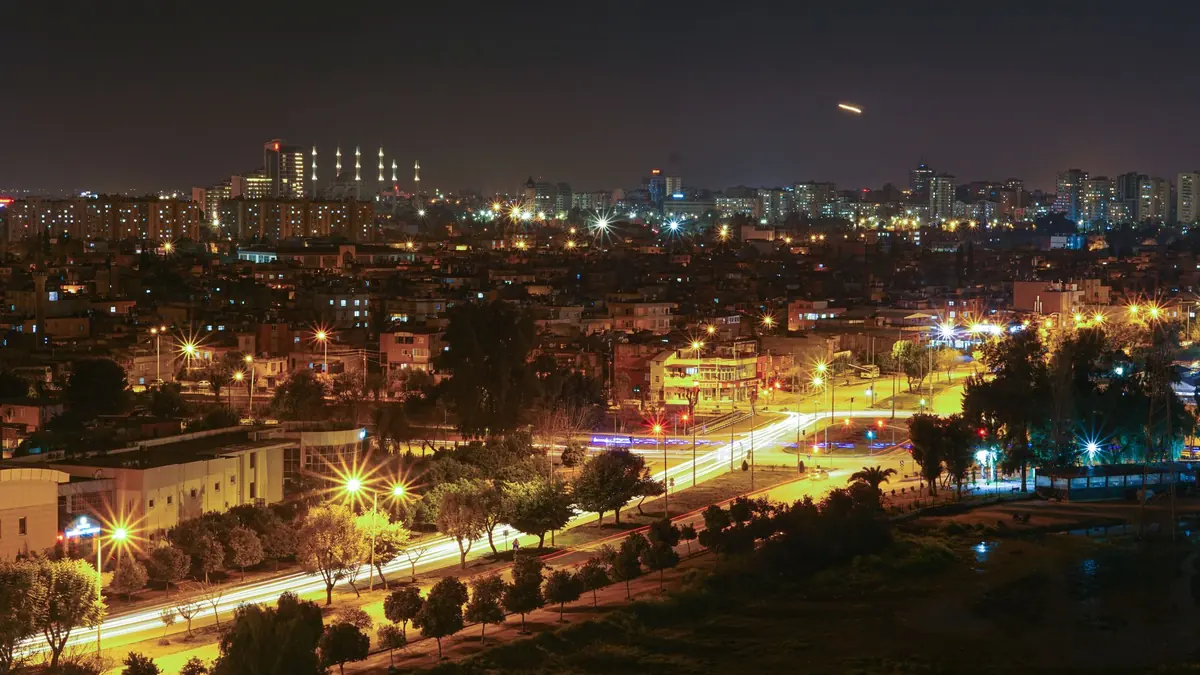
If your coach pulls into a Daewoo terminal Lahore side after dark, the single most useful thing you can do happens before you board: agree who is collecting you, from which terminal, and how they will know your bus is running late. Lahore has had more than one Daewoo terminal over the years, so check the arrival point printed on your ticket rather than assuming. Then arrange a car that is tied to your bus arrival time, not to a fixed clock time, and share the pickup details with someone at home. Stay inside the lit terminal area until your driver confirms they are at the meeting point. With bags, children or an older relative in tow, that plan matters more than the fare difference between one option and another.
The rest of this guide walks through where the terminals sit, what a late arrival actually feels like, how to book a pickup against a moving ETA, and a simple message template for keeping family in the loop.
Daewoo terminal Lahore: which one will you arrive at?
This is the question people skip, and it causes most of the confusion at 1am. Daewoo's older Lahore terminal is at Kalma Chowk on Ferozepur Road. In 2016 The Express Tribune reported that the company was building two further terminals, one at Thokar Niaz Baig and one in the Defence Housing Authority (DHA) area, partly because of space limits at Kalma Chowk and dense traffic on Ferozepur Road. Which terminals are in use, and which routes use them, can change. Your ticket or booking confirmation is the authority, not a relative's memory of where they caught a bus five years ago.
The Thokar Niaz Baig side
When people search for the daewoo terminal lahore thokar location, they usually mean the south-western edge of the city. Thokar Niaz Baig is the main entry point into Lahore from the south and west. It is the junction where the M-2 motorway from Islamabad ends and where Multan Road (the N-5) and the Lahore Ring Road meet. Lahore's Jinnah Bus Terminal is in the same locality, and Punjab's emergency service, Rescue 1122, has its headquarters there too, which tells you something about how central the junction is to road traffic.
Practical consequences for a late pickup:
- Traffic arriving from the motorway funnels through here. Your driver may be coming from the same direction as your bus, or fighting through it.
- It is well connected outward. The Ring Road links towards DHA, Ferozepur Road and Allama Iqbal International Airport, so reaching the southern and eastern suburbs does not always mean crossing the old city.
- There is an Orange Line station at Thokar Niaz Baig, but the metro runs roughly 06:15 to 22:00, so it will not help you after a late-night arrival.
The Kalma Chowk and Ferozepur Road side
Kalma Chowk sits closer to Gulberg, Model Town and the central southern suburbs. Ferozepur Road is a busy artery, and the Tribune piece quoted the company itself saying traffic there limited how often it could run buses. At night it is quieter, but a driver should still know the exact gate and side of the road to stop on. If your relatives live in Johar Town or Township, the difference between terminals can be a meaningful chunk of the journey, so it is worth getting right.
A quick way to confirm
- Open your e-ticket or SMS and read the arrival terminal line.
- If it is unclear, ask at the departure counter before you board and note the answer.
- Send that terminal name, not just "the Daewoo stand", to whoever is picking you up.
What a late-night bus arrival in Lahore is really like
A bus arrival late night Lahore has a particular rhythm. The coach doors open, most passengers already have someone waiting or a plan, and the crowd thins out surprisingly quickly. That is exactly the window when you do not want to be standing on the pavement working out what to do.
A few realities worth planning around:
- Your phone battery is at its lowest. Hours on a coach with the screen on for music or maps drains it. A dead phone turns a simple pickup into a guessing game.
- The metro has stopped. As noted above, the Orange Line closes around 22:00, and the UK Foreign Office goes further, advising visitors to avoid public transport in Pakistan generally because of crime.
- An unbooked car is the wrong fallback. The UK FCDO safety advice for Pakistan tells travellers to avoid unofficial taxis and to use reputable, licensed companies where you call and the operator contacts the driver. It also says to be cautious moving around urban areas at night, especially on foot.
- Arrival times drift. Road works, a longer stop, a slow run through the city: any of these can push a bus back. Sometimes it arrives early instead, which catches out a driver who planned to leave home at the scheduled time.
None of this means Lahore at night is something to fear. Lahore city is not among the places the FCDO travel advice warns against; in Punjab its warnings cover Dera Ghazi Khan and the strip within 5 miles of the Indian border, with the Grand Trunk road to the Wagah ceremony listed as an exception. It simply means a late arrival rewards a plan made in daylight.
Who this guide is really for
Three kinds of traveller tend to end up at a Lahore terminal close to midnight:
- Students heading home or back to hostel after a term break, often alone, often with a heavy suitcase and a laptop bag.
- Relatives visiting for a wedding, a funeral or a hospital appointment, sometimes older, sometimes unfamiliar with the city, with a family member on the phone from the house.
- Overseas Pakistanis who flew into Islamabad and took the motorway coach onward, arriving tired, jet-lagged and carrying airport luggage.
The advice below works for all three, but each has a different weak spot: students tend to under-plan, visiting elders depend on someone else's phone, and overseas arrivals underestimate how tired they will be.
Booking a car from bus terminal to home against a bus ETA
Booking a car from bus terminal to home is not quite like booking a normal town trip. You are asking a driver to meet a vehicle whose arrival time you do not control. The trick is to give the driver enough information to track your progress rather than a single time.
What to send when you enquire
Whether you use our journey planning page (planned link) or message a driver you know, include:
| Detail | Example (illustrative only) | Why it matters |
|---|---|---|
| Departure city and scheduled departure time | Islamabad, 18:00 | Lets the driver judge a realistic arrival window |
| Scheduled arrival time and terminal | Thokar Niaz Baig, around 23:30 | The anchor for the pickup |
| Passenger name and mobile number | The person on the bus, not the booker | So the driver calls the right phone |
| Second contact | A family member at home | Backup if the passenger's phone dies |
| Number of passengers and bags | 2 adults, 1 child, 3 large cases | Decides car, saloon or van |
| Drop-off address with a landmark | House number, block, nearby mosque or school | Night-time street signs are hard to read |
| Any special needs | Wheelchair, child seat, elderly passenger | Must be agreed in advance |
A pickup request against a bus is a request, not a guarantee. On Pakistan Taxi the journey flow is for planning and enquiry: you share the details, and you should wait for a clear confirmation of the vehicle, driver and price arrangements before relying on it. If nobody has confirmed, you do not have a car.
When to book
For a late arrival, arrange the car before you leave, ideally the day before. Trying to find a vehicle from the terminal pavement at midnight is exactly the scenario the FCDO advice is warning about. If you are travelling on to another city rather than home, our city-to-city service page explains how longer onward journeys are planned.
Pickup timing: a simple rule
Ask the driver to aim for the scheduled arrival time, then adjust based on live updates from you. Do not ask them to arrive "an hour after" to be safe; if the bus is on time or early, you will be waiting outside with your bags. It is better that a driver waits a little inside a parked car than you wait on the kerb.
When the bus is running late: keeping the driver updated
Delays are normal. What goes wrong is silence. A driver who has heard nothing for two hours may assume the job has fallen through, take another trip, or simply go home.
The three-message routine
Send three short messages during the journey. That is enough for most trips.
- On departure: "On the bus, left on time / left 20 minutes late. Still arriving at [terminal]."
- At the halfway stop or roughly an hour out: "Now expecting to arrive around [time]."
- Twenty to thirty minutes before arrival: "Nearly there. Please head to the meeting point."
If the passenger's phone is low, ask the family contact to send messages two and three instead, based on what the passenger tells them in a short call.
If the delay is long
For a delay of more than an hour or so, call rather than text. Agree plainly whether the driver will still come, whether any waiting arrangement applies, and what happens if the bus is later still. Ask this in advance too; our guide on booking intercity travel for relatives covers the questions to settle when you are arranging trips for someone else. Motorway conditions can also change during a trip. The National Highways and Motorway Police run an FM 95 radio service and publish travel advisories, which can help you understand why a coach has slowed down.
If the bus arrives early
It happens, especially late at night on a clear motorway. Send a message as soon as you see you are ahead of time. Stay inside the terminal building or its covered waiting area until the driver confirms they are outside. Do not walk out to the main road to "meet them halfway".
Daewoo arrival pickup: finding each other at the terminal
The daewoo arrival pickup itself is where small misunderstandings create big delays. Terminals have more than one gate, a car park that may or may not be open to private vehicles, and traffic staff who move cars on.
Agree a meeting point in words
Before the journey, agree something specific, for example: "inside the arrivals hall near the ticket counter" or "the main gate on the Multan Road side". A pin drop helps, but a spoken description helps more when two phones disagree about where the pin is.
Checks before you get in
- Match the car. Ask for the make, colour and number plate in advance and check it before you load bags.
- Ask the driver who they are collecting. Let them say your name first, rather than asking "Are you here for me?"
- Share the plate number with home. Take ten seconds to send it.
- Trust your instincts. If the car or driver does not match what was agreed, go back inside and call the person or company you arranged it with.
Where to wait
Wait where there is light, staff and other people. Inside the terminal is best. The Punjab Safe Cities Authority runs camera coverage across Lahore and dozens of other Punjab cities and operates the 15 police emergency helpline, along with a Women Safety app and a virtual women's police station. Knowing that 15 is the police number and 1122 is the provincial emergency and ambulance service, run by Rescue 1122 Punjab, costs nothing and is worth saving in your phone before you travel.
Luggage, children and family groups
A single student with a backpack fits in almost anything. A family returning from a wedding in another city does not. The vehicle choice should follow the luggage, not the headcount.
Rough matching
- One or two people, one case each: a standard saloon usually works.
- Three or four adults with full-size cases: check boot space honestly. Many saloons take two large cases and little else. An estate, SUV or small van is often more comfortable.
- Families with children, pushchairs or wedding boxes: consider a van, and mention the pushchair and any child seat when you enquire.
- Larger groups: two cars or a people carrier. Our guide to family luggage for intercity trips goes into the detail of what fits where.
At the terminal
Coach luggage comes out of the hold in no particular order. Make sure one adult stays with the children and hand luggage while another collects the cases. Count bags as they come out, then count again at the car. Midnight is when a laptop bag gets left on a luggage trolley.
Older relatives
If an elderly parent or grandparent is travelling alone, the booking should name them as the passenger but list a younger relative as the main contact. Tell the driver if the passenger has limited mobility, uses a stick or needs help with steps, so they can park as close as the terminal layout allows and help with bags.
Sharing trip details with relatives at home
The angle that most families miss is simple: someone at home should know exactly what the plan is, not just that "a car is coming". If the passenger's phone dies, the person at home becomes the coordinator.
What the family contact should have
Before the bus leaves, send your family contact:
- Bus company, departure city and the arrival terminal.
- Scheduled arrival time.
- Driver name, phone number, car make, colour and plate (once confirmed).
- The agreed meeting point.
- The drop-off address.
After you get into the car, send one more line: "In the car, plate [number], leaving now." Then a final message on arrival at the house.
A message template
Copy, edit and send this to your family contact (the details here are an example):
Bus: departing Islamabad 18:00, arriving Lahore, Thokar Niaz Baig terminal, about 23:30.
Driver: [name], [phone], white saloon, plate [number].
Meeting point: inside terminal near ticket counter.
I will message when I am in the car and when I reach home. If you do not hear from me by 00:30, call the driver first, then me.
That last line is the important one. It gives the person at home a clear trigger and a first call to make, instead of an anxious hour of waiting. For a fuller version of this idea, including what to do when an arrival is flight-based rather than bus-based, see our late-night arrival contact plan.
For students
Hostel wardens and flatmates are family contacts too. If you are returning to a hostel after the gate closing time, sort out access before you leave, and make sure the driver knows the gate you will be let in by.
Bus, then car: is the coach still the right choice?
For many people the answer is yes. A motorway coach between Islamabad and Lahore is a sensible, well-used option, and a pre-arranged car at the Lahore end simply finishes the job. The car-at-both-ends approach becomes more attractive when you are travelling as a family with a lot of luggage, when the final address is far from the terminal, or when the only seats left arrive very late.
If you are weighing the whole journey rather than just the last few kilometres, our sister service iDrive, the network behind Pakistan Taxi, has published a straight comparison of car, coach and train between Islamabad and Lahore that sets out the trade-offs.
Your late-arrival checklist
Save this, or screenshot it before you board:
- [ ] Arrival terminal confirmed from the ticket, not from memory
- [ ] Car arranged and confirmed before departure, with driver name, number and plate
- [ ] Meeting point agreed in words, inside or at a named gate
- [ ] Family contact has the full plan and the "if you do not hear from me" time
- [ ] Phone charged, with a power bank and cable in your hand luggage
- [ ] 15 (police) and 1122 (Rescue) saved in your phone
- [ ] Bags counted at the coach and again at the car
- [ ] Three update messages sent: on departure, midway, and near arrival
When you are ready to plan the pickup, share your bus details and drop-off address on our journey planning page (planned link) and wait for a confirmation before you travel.