
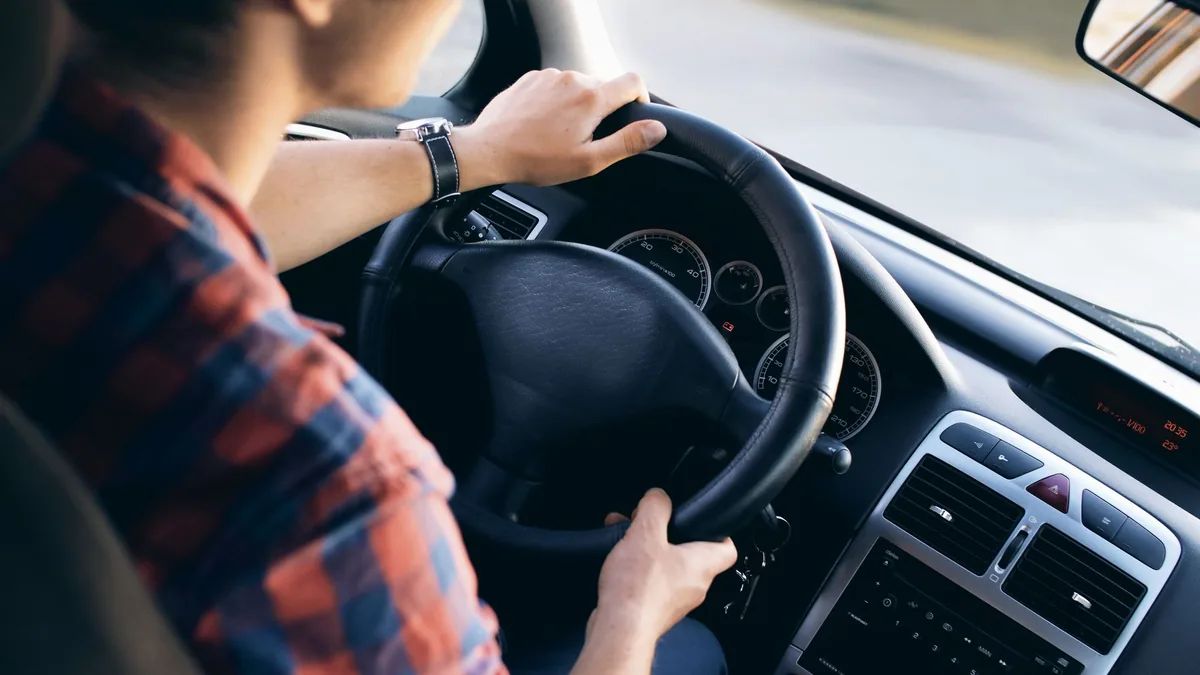
The family Corolla sits in the porch at your parents' house in Lahore or Rawalpindi. It has been serviced, the token tax is paid, and nobody at home drives any more, or the one person who did now works long hours. You are flying in for three weeks with children, a wedding and a list of relatives to visit. Hiring a driver for own car use, instead of renting a second vehicle, is often the most sensible answer.
The short version: a driver-only arrangement works best when the car is roadworthy, the insurance allows someone outside the family to drive it, and you have one household deciding the daily plan. It is weaker when the car is old, when you need a bigger vehicle for luggage or guests, or when you want someone else to own the problem if the car breaks down. In those cases, a car that comes with its own driver usually costs less in stress than it saves in rupees.
Below: the honest comparison, then insurance, licences, hours and meals, and how to record the car's condition so nobody argues about a scratch on day nine.
When a driver for own car makes sense, and when it does not
Start with the car, not the driver. A good driver cannot fix a flat battery that has been sitting since Eid, and a car that has been parked for months often needs a proper check before it takes on the Motorway.
A driver for own car tends to suit you when:
- The car is in regular use or recently serviced. Tyres, battery, brakes and the air conditioning have been checked this season.
- It fits your group. Everyone plus luggage fits without someone sitting on a suitcase. A five-seat hatchback that is fine for the school run may not cope with a family of six heading to a mehndi.
- The trips are mostly local. Visits across the city, shopping, a hospital appointment for an elder, drop-offs at the wedding venue.
- One person at home coordinates. Usually a parent or sibling who knows the driver's phone number and can say "tomorrow we leave at ten, not eight."
It is less suitable when:
- The car has not been driven for months, or a warning light "has always been on".
- You need a vehicle for airport runs with several suitcases, or a van for guests.
- You plan long intercity drives and the car has no recent service history.
- Several branches of the family all want the car at the same time, and the driver ends up taking orders from three aunties at once.
If you recognise yourself in the second list, it is worth reading our guide to self-drive and chauffeur choices in Pakistan before deciding. For many visits the realistic answer is a mix: the family car and a local driver for everyday errands, and a separately arranged vehicle for the airport and the big days.
Driver-only hire versus a car with driver versus renting
Three options come up in almost every diaspora family conversation. None of them is automatically best, so here is how they compare on the points that actually cause trouble.
| Question | Driver for your own car | Car with driver | Self-drive rental |
|---|---|---|---|
| Who owns and maintains the vehicle? | Your family | The operator | The rental company |
| Whose insurance applies? | The family's policy, if it allows the driver | The operator's arrangements, which you should ask about | The rental company's cover, with its own conditions |
| What if the car breaks down? | Your family arranges the repair and a backup | You ask the operator about a replacement | You follow the rental company's process |
| Who drives in Lahore traffic? | Someone you hire | A driver supplied with the car | You, with the right documents |
| Fits big groups and luggage? | Only if the family car does | You can request a larger vehicle | Depends on the fleet |
| Main risk | Insurance gaps and the car's condition | Clear terms on hours and extras | Driving documents, deposits and damage terms |
The driver-only route keeps money in the family car and avoids handing over a deposit. The trade-off is responsibility. If the car overheats on the way to Sialkot, it is your family's car and your family's phone call, not an operator's.
If you would rather the vehicle and the driver arrive together, our car and driver service is built around that model. If you are licensed and confident on Pakistani roads, the self-drive hire page explains that route instead.
Full days, part time or on call: choosing the pattern
Families searching for a "driver for my car daily" usually mean one of three quite different arrangements. Be clear which one you want before you speak to anyone, because it changes what is fair to agree.
A full-day driver
The driver arrives in the morning and stays available until an agreed finishing time. This suits wedding weeks, when the day starts with a parlour appointment and ends after a late reception. It also suits families with elderly parents who need several short trips spread across the day.
A part time driver for own car
A part time driver for own car use covers a fixed block, say the school run and an afternoon errand, or a set number of hours on agreed days. It is common when someone at home can drive short distances but does not want to face the motorway or a crowded bazaar.
On call, trip by trip
Some families prefer a driver they phone when needed. This is the most flexible arrangement and the easiest to fall apart: the driver may already be committed elsewhere when you ring at short notice for a hospital visit.
A driver on daily basis in Pakistan is still a working person with a family of their own, and the clearer the pattern, the more reliable the service. Write the pattern down, even in a WhatsApp message: days, start time, latest finishing time, and what happens if the day runs over.
Insurance: who is actually covered?
This is the question most visiting families skip, and it matters most if something goes wrong.
Pakistani insurers generally offer comprehensive policies and third-party policies. EFU General, for example, lists both on its motor insurance page. What each policy says about who may drive the car is set out in the policy wording and schedule, not on a brochure page, so read the actual documents your family holds.
Questions to put to the insurer or the agent, in writing if possible:
- Does the policy cover any licensed driver, or only named people? If it is limited to named drivers, ask how to add the person you are hiring and whether there is a cost.
- Does it matter that the driver is paid? Ask directly whether a paid private driver is treated differently from a family member.
- What licence category does the insurer expect? Pakistani licences have separate categories, and it is worth confirming that the driver's licence satisfies the policy (more on this below).
- What must happen after an accident? Ask who must be informed, how quickly, and which documents a claim needs.
- Is the policy current? Many insurers run an online policy check. EFU, for instance, offers a motor policy verification page. If your family uses a different insurer, look for the equivalent on its official site or call its helpline.
If the answers are vague, do not treat the car as covered. A driver-only arrangement with a hole in the insurance is the one situation where renting a vehicle, or using a car that comes with a driver, is clearly the safer choice.
Licence and documents to check before the first drive
You are letting someone drive a car registered to your family, often with your parents and children inside. A few checks take less than an hour and are worth every minute.
The driver's licence
Pakistan issues licences through provincial and district authorities, and there are separate categories. According to the Wikipedia summary of driving licences in Pakistan, the motorcar/jeep category is described as not valid for commercial transport, while the LTV (light transport vehicle) category covers commercial cars, taxis and minibuses. Whether a paid driver of a private family car needs a particular category is a question to put to the driver and to your insurer, rather than one to guess at.
In Punjab, the provincial licensing system DLIMS includes a licence verification function. Other provinces run their own systems. Ask the driver for the licence and the CNIC, check the name matches, check the expiry date, and use the relevant official verification service where one exists.
The car's papers
Before the car leaves the gate, find:
- The registration book or smart card, and confirm the number plate matches.
- Proof that motor vehicle tax (token tax) is paid. In Punjab, the Excise and Taxation Department offers online verification of registered vehicles. In Sindh, the Excise department runs an online vehicle verification service.
- The insurance certificate or policy schedule, with a copy kept in the car.
- A copy of the owner's CNIC, if the owner is not travelling in the car. Keep this with care and never hand originals to anyone.
Keep photos of all of these on your phone and on the phone of the person at home who coordinates the driver.
Traffic fines and camera tickets
Punjab uses camera-based e-challans. The Punjab Safe Cities Authority says its system uses AI-based surveillance to detect traffic violations and issue electronic tickets, and it lets you check tickets through its e-challan verification portal. Agree at the start who pays a fine caused by the driver's own driving, and check the portal before you fly home so nothing surprises your parents a month later.
If you plan to drive the car yourself as well
Some visitors want to take the wheel for part of the trip. The UK Foreign, Commonwealth and Development Office says that visitors driving in Pakistan need both the 1968 version of the international driving permit and their UK driving licence, that an IDP cannot be bought outside the UK, and that driving without the correct documents can lead to detention and a police report. The full wording is on the FCDO safety and security page for Pakistan. Visitors from other countries should check the rules for their own licence before travelling.
Daily hours, meals and overtime
Money disagreements with drivers almost never start with the day rate. They start with the eleventh hour of a day that was meant to end at eight.
Agree these points before the first morning:
- Start and finish time. "From 9 in the morning to 8 at night" is clearer than "full day".
- What counts as overtime. Is it every hour after the agreed finish, or only after a grace period? How is it paid, and when?
- Meals. Will the driver eat with the household, receive meal money, or make their own arrangements? At a wedding with a late reception, make sure somebody actually feeds the driver.
- Rest. A driver who has been on duty since morning should not be the person driving tired relatives home long after midnight. Plan a break, or plan a different driver or vehicle for the late return.
- Fuel. Usually the car owner pays for fuel in a driver-only arrangement. Decide who fills up, how receipts are shared, and whether you expect the tank to be topped up at the end of each day.
- Days off and weekly pattern. If you need the driver on Friday for Jumu'ah drop-offs and on Sunday for a family lunch, say so now.
- Payment timing. Daily, weekly or at the end of the visit, and in what form.
We have not quoted rates here because they vary by city, experience and the hours involved, and any figure would date quickly. Ask for the arrangement in writing and compare like with like.
For the same checklist applied to a supplied vehicle, our hourly chauffeur duty sheet covers times, changes and cost approval in more detail.
Keeping the family car at home in documented condition
A family car at home with a driver changes hands every morning and evening. That is when small disputes are born: a dent in the rear bumper, a new rattle, a cracked wing mirror after a narrow street in the old city. Nobody need be at fault for the question "was that there before?" to sour a good arrangement.
A simple routine prevents most of it.
On day one
- Walk round the car with the driver and take a short video in daylight: each side, bumpers, wheels, mirrors, windscreen and the roof if you can see it.
- Photograph the dashboard with the engine running, showing the odometer, fuel level and any warning lights.
- Note tyre condition and whether a spare, jack and wheel brace are actually in the boot.
- Check that the air conditioning works. In summer this is not a luxury for elderly passengers.
Send the video and photos to a family WhatsApp group so the timestamp is shared, not held on one phone.
Every day
- A quick photo of the odometer and fuel gauge at the start and end of the day takes ten seconds and settles most questions about distance and fuel.
- Ask the driver to mention any new noise, warning light or knock straight away, not at the end of the week.
If something happens
- If there is a minor scrape, photograph it where it happened if safe, and note the time and place.
- For anything more serious, follow what your insurer told you about reporting, and keep all receipts for repairs.
At the end of your visit
Repeat the day-one walk round and odometer photo. Hand the keys back to the named family member, not to a neighbour. Check the e-challan portal where it applies, settle any overtime, and thank the driver properly. A good driver is someone you will want to call on your next visit.
Safety, routes and where the car should not go
A driver-only arrangement does not change the security picture. As at September 2026, the FCDO advises against all travel to parts of Pakistan, including Balochistan, most of Khyber Pakhtunkhwa and areas within 10 miles of the Afghan border and of the Line of Control. It advises against all but essential travel to some other areas, including Azad Jammu and Kashmir, parts of Sindh north of and including Nawabshah, and Dera Ghazi Khan in Punjab. The advice changes, so read the current FCDO Pakistan travel advice before any trip outside the cities you know, and check what your travel insurance says about advised-against areas.
The FCDO also describes road quality outside the major motorways as variable and local driving standards as erratic, especially at night. In practical terms:
- Plan long drives for daylight hours where you can.
- Treat a family day trip up to the northern areas as its own decision, not an extension of city errands. Mountain roads can close in bad weather, and a family car that copes with city traffic may not suit them.
- Keep the driver's number, the coordinator's number and the insurer's helpline saved on every adult's phone.
A realistic plan for a typical visit
Here is one illustrative way a three-week family visit might be split. It is an example, not a recommendation for every family.
| Part of the visit | Suggested arrangement | Why |
|---|---|---|
| Airport arrival with luggage | A separately arranged vehicle sized for the group | The family car may not fit everyone and every suitcase |
| Everyday visits and errands | Family car with a hired local driver | Familiar car, flexible days, no rental deposit |
| Wedding days | Family car and driver for close family, plus extra vehicles if needed | One car rarely covers every guest and every venue |
| An intercity day | Decide case by case: family car if recently serviced, otherwise a supplied vehicle | Breakdown risk falls on whoever owns the car |
| Departure day | Plan early, with spare time for luggage and traffic | A missed flight costs more than any transfer |
If you already have a driver for the family car but need something extra for the airport or a wedding day, you can plan a journey with Pakistan Taxi (planned link) and describe what you need. We review requests and come back to you; nothing is confirmed until the details and any price have been agreed.
For longer arrangements, such as a driver engaged for a month or more while an elderly parent needs regular hospital visits, iDrive, the network behind Pakistan Taxi, has a page on monthly driver hire in Pakistan.
Families who split their year between Pakistan and a pilgrimage trip face a similar question in Saudi Arabia, where hiring a car is not always simpler than booking the ride. Our sister company Saudi Cab Co explains when a pre-booked transfer beats a hire car in Saudi Arabia.
Questions families ask
Is a driver for our own car cheaper than renting?
Often, because you are not paying for a second vehicle or a deposit. But you are carrying the risks that come with the family car: breakdowns, repairs and any gap in the insurance. Compare the whole picture, not just the daily figure.
What should I do if the driver cancels on the morning of a wedding?
Have a backup in mind before the big days: a second driver the family trusts, or a supplied vehicle arranged in advance. Wedding mornings are the worst time to start looking.
Does the driver need to carry anything?
At minimum, their licence and CNIC, with the car's registration and insurance papers kept in the vehicle. Ask your insurer if the policy expects anything else to be carried.