
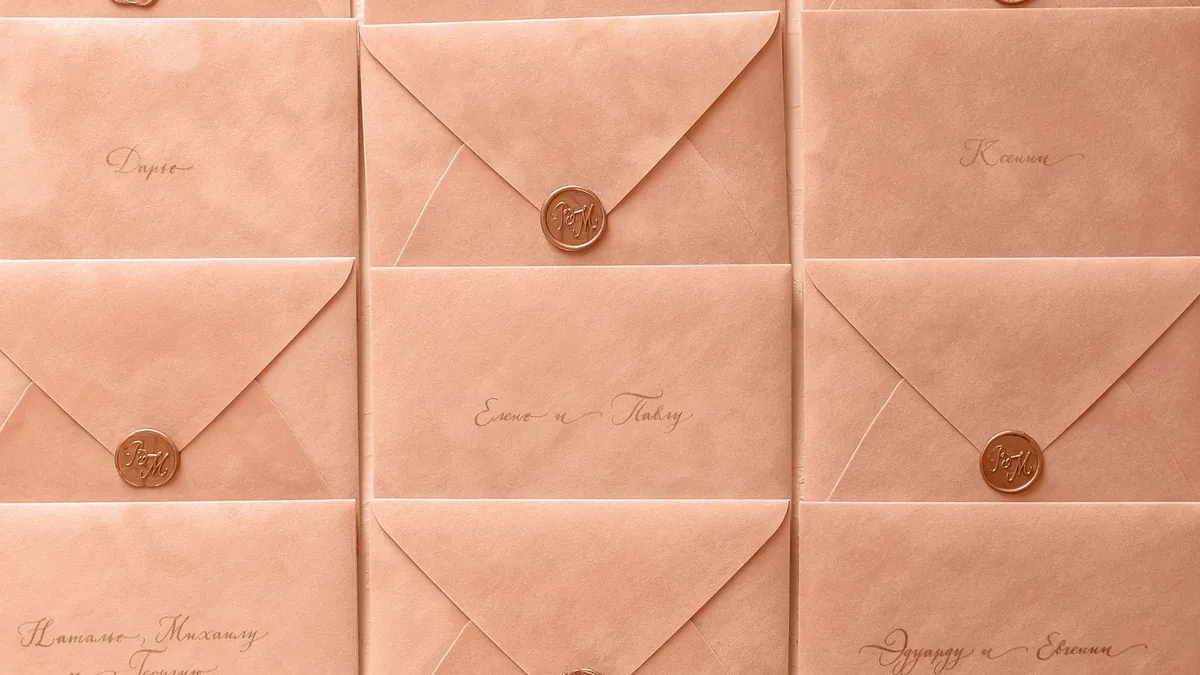
A baraat invite tells people who is getting married and where. What it rarely tells them is how to arrive on time, where to leave the car, which gate to walk through and who to ring when the driver is circling a marquee strip at 8pm. The fix is a short travel block, sent about a week before the day, alongside or after the card. It needs six things: three clear times (when to arrive for the baraat, when the nikkah happens, when the rukhsati is expected), an exact map pin to the gate you want guests to use, parking instructions, pickup points with departure times if you are running shuttles, a separate note for guests flying in or staying in hotels, and one named transport contact with a phone number. Then send a two-line reminder the evening before. A copyable template is further down.
Why the printed card is not enough on its own
A traditional baraat invitation card is built for ceremony, not logistics. It carries the families' names, the date, the event and a venue name, often in calligraphy that looks lovely and scans badly on a phone. Guests who have lived in the city for decades may know exactly which hall you mean. Your cousin landing from Manchester, or an uncle driving in from another district, will not.
The gaps usually fall into four areas:
- Ambiguous venue names. A hall name on its own is not an address, especially where a venue has more than one branch or sits in a row of similar halls and marquees.
- Loose timings. A single printed time leaves every guest guessing whether it means "doors open", "baraat arrives" or "food is served".
- No parking plan. Guests find out about the parking situation when they are already in it.
- No one to call. When something goes wrong, people phone the groom's father, who is busy being the groom's father.
The travel block is the practical page the calligrapher never had room for.
The three timings every baraat wedding invitation should separate
Most confusion on the day comes from one time trying to do three jobs. Split them.
1. Arrival time for guests
This is the time you want people through the gate, not the time the baraat is expected. If the groom's party is due at 8:00pm, ask guests to arrive by 7:30pm so they are seated when the dhol starts. Write it as "please arrive by", which people treat as a real instruction, rather than a bare time, which many will read as a suggestion.
2. Nikkah time and place
In many families the nikkah is held separately: earlier in the day at a mosque or at home, sometimes a day before. If it is at a different location from the baraat function, say so plainly, with its own pin. If only close family are expected, say that too, so wider guests do not turn up at the mosque and wait.
3. Expected rukhsati time
Guests need this more than you might think. It decides when elderly relatives can leave, when drivers should be ready, and whether a return shuttle is worth running. You do not need to promise a minute. "Rukhsati expected around 11:00pm" is honest and useful. If the venue has its own closing time, ask the venue what it is and plan around it.
Here is how the three look side by side, using an example only:
| Guests want to know | What to write | Example wording |
|---|---|---|
| When should I be there? | An arrival time that sits before the baraat | "Please arrive by 7:30pm. Baraat expected 8:00pm." |
| Where and when is the nikkah? | Time, place and who is invited | "Nikkah 4:00pm at the family home (close family). Pin below." |
| When can I leave? | An honest expected rukhsati time | "Rukhsati expected around 11:00pm." |
| Is there a return option? | Last departure from the venue | "Last shuttle back to the hotel leaves at 11:45pm." |
Keep the times in one format throughout, 12-hour with "am/pm" or 24-hour, not a mix. Relatives abroad will be converting from their own time zone as they read it.
The venue pin, the gate and the parking
A map link is the single most valuable line in your baraat invite. A good one saves dozens of calls. A bad one, pinned to the middle of a building or to the wrong branch, creates them.
Drop the pin at the entrance you want used
Open the map yourself, zoom right in and place the pin on the gate guests should walk through, not the roof of the hall. Then share that exact point. Google's own help pages explain how to share a place or a set of directions as a link you can paste into a message. Test the link from a different phone before you send it to anyone.
If the function is at a farmhouse or a lawn on the edge of town where the street address is vague, add a Plus Code as well. Google describes Plus Codes as addresses for places that do not have one: a short string of letters and numbers generated from the location. Drivers can paste it straight into the map.
Say which gate, and what it looks like
Many venues have more than one entrance: a main gate, a service gate, sometimes a separate family or ladies' entrance. Write one sentence that tells people which to use and how to recognise it, for example: "Use Gate 2 on the service road, next to the petrol pump, with the lights over the arch." A landmark the driver can see from the road beats any amount of description of the building.
Tell guests what to do with the car
Parking questions are the ones hosts forget and guests remember. Cover these in two or three lines:
- Is there parking inside the venue, and roughly how many cars fit?
- Is there valet parking, and where do guests hand over the keys?
- If the main lot fills, where is the overflow, and is it safe to walk from?
- Where should hired drivers wait, and can they get food or tea while they do?
- Is there a drop-off point close to the door for elderly guests and anyone using a wheelchair?
If you do not know the answers, call the venue manager before you write the message. It is a five-minute call that stops fifty.
Pickup points and shuttle times
If you are moving guests yourself, with coaches, hired cars or a relay of family vehicles, the invite has to say where each ride starts and when it leaves. Vague phrasing such as "transport will be arranged from the hotel" produces a lobby full of people at the wrong time.
For each pickup point, give:
- The name of the place and the exact meeting spot, such as the hotel's main porch, not "the hotel".
- The departure time, and a firm note that the vehicle leaves on time.
- The return times, including the last departure from the venue.
- Who is in charge at that point, with their first name, so guests know who to look for.
- Any limits, such as seats being for listed guests only, or children needing to be counted.
If you have guests spread across several hotels, it is usually cleaner to publish one short timetable than a paragraph for each. Our guide to planning guest transport between hotels and venues covers vehicle sizes, loop timings and headcounts in more depth. For the end of the night, when some guests want to leave after dinner and others stay for the rukhsati, see event return transport when guests leave at different times.
A short sample timetable, as an example of layout only:
| Pickup point | Meeting spot | Leaves | Returns from venue |
|---|---|---|---|
| Hotel A | Main porch | 6:45pm | 10:30pm and 11:45pm |
| Hotel B | Lobby, by reception | 7:00pm | 10:30pm and 11:45pm |
| Family home | Front gate | 7:10pm | After rukhsati |
A separate note for guests flying in and staying in hotels
Overseas relatives need a slightly different message from local guests. They are planning flights, visas and hotel nights around your dates, and they will be reading your baraat invite weeks before anyone else. Send them their own version of the travel block, with these additions.
Before they book
- Documents. The UK government's entry requirements for Pakistan say British visitors need a visa, applied for in advance, and a passport with at least six months' validity from the date of the visa application. The same page notes that British citizens who hold a NICOP can enter Pakistan without a visa. Point guests to the official page rather than repeating rules that can change.
- Which airport. Families in Sialkot or Gujranwala, for example, may be choosing between Sialkot and Lahore; Rawalpindi families use Islamabad. Name the airport you recommend and why. Our Islamabad Airport journey guide (planned link) and the other airport guides explain what the onward drive involves.
- Where to stay. If you have a block of rooms or a preferred hotel, say so, and say whether shuttles run from it.
Where the wedding is matters for safety
Check the UK Foreign, Commonwealth and Development Office travel advice for Pakistan for the city and the roads your guests will use, and share the link. At the time of writing, the FCDO advises against all travel to Balochistan, to a list of Khyber Pakhtunkhwa districts that includes Peshawar, and to within 10 miles of the Afghanistan border and of the Line of Control. It advises against all but essential travel to Azad Jammu and Kashmir, to Sindh north of and including Nawabshah, to Dera Ghazi Khan, to further Khyber Pakhtunkhwa districts such as Mardan and Nowshera, and to within 5 miles of the India border (with exceptions for the Wagah crossing and the Kartarpur Corridor). The list changes, so check the live page. If your family function is in one of these areas, tell overseas guests that plainly in the note, because it can affect their travel insurance and their own decision to come. Do not soften it.
The FCDO's safety and security page also warns that local driving standards are erratic, especially at night. That is a good reason to plan late returns after the rukhsati with a rested driver rather than a tired cousin.
At the airport
Guests often assume half the family will be waiting inside arrivals. At Islamabad International Airport, the official entrance gate guidance says visitors need a passport, airline ticket or CNIC to get through the gate, that everyone is screened by the Airport Security Force, and that only one greeter is permitted per passenger because of space. Tell families to send one person and a driver, not a welcoming committee. If a relative is collecting by car, the airport's parking page lists current car park charges, which were revised from 1 July 2026 and are scheduled to change again, so check before you quote a figure.
For arrivals across several days and flights, our guide to organising airport arrivals for overseas wedding guests goes through who meets whom and how to share flight numbers.
Hotel guests on the day
For anyone staying in a hotel, the note should say which lobby to wait in, what time the ride leaves, and whether they need to be ready in formal clothes at that point or will change elsewhere. It sounds obvious. It is also the most common reason a shuttle leaves late.
Getting them home
The same entrance gate page recommends arriving four hours before an international departure. If guests are flying out the morning after the walima, mention that in their note so nobody books a 6am flight after a 1am finish without thinking it through.
One transport contact, one number
Pick one person to handle transport questions on the day and put their name and number in the travel block. It should not be anyone with a starring role. Not the groom, not the bride's mother, not the person doing the nikkah paperwork.
A good transport contact:
- has the full guest list for each vehicle and each pickup point;
- knows the venue gate, the parking plan and the drivers' numbers;
- is reachable on a normal call and on WhatsApp for the whole evening;
- speaks the languages your guests speak, which in many families means Urdu, Punjabi and English;
- has a named backup, in case their phone dies at the worst moment.
Write it simply: "Transport questions on the day: Bilal, 03XX-XXXXXXX (calls and WhatsApp). Backup: Sana, 03XX-XXXXXXX." Those are placeholder names and numbers; use your own. Overseas guests should save the number in international format with the +92 prefix before they fly.
Pairing the travel block with an e wedding card
Most families now send an e wedding card on WhatsApp as well as, or instead of, the printed one. That is useful, because the card and the travel details can travel as a pair. A few habits make the pair work:
- Send the card first, the travel block second, as plain text. An image with text baked into it cannot be copied, searched or tapped. A text message with a live map link can.
- Keep the travel block short enough to read without scrolling twice. If it runs long, split it into "the venue" and "getting there" messages.
- Pin the message in family groups so it stays at the top of the chat through the week.
- Send the overseas version separately, to the people who need it, instead of adding visa notes to a message your local aunties will read.
- Use the same wording everywhere. If the printed card says "Grand Marquee" and the message says "the hall on Canal Road", someone will assume they are two places.
About a week before the event is a sensible time for the main travel message. It is close enough that guests are thinking about the day, and far enough ahead that they can ask questions and you can answer them calmly.
The reminder message the day before
The evening before, send a short reminder. It is not a repeat of the full block; it is the three things people will need in the car:
- The arrival time.
- The map link to the gate.
- The transport contact's name and number.
As an example, adapt as you like:
Assalamu alaikum. A reminder for tomorrow's baraat: please arrive by 7:30pm. Gate 2 on the service road, map pin here: [your link]. Shuttles leave Hotel A at 6:45pm. Any transport questions tomorrow, call or WhatsApp Bilal on [number]. JazakAllah.
If anything has changed since the main message, such as a new pickup time, a different gate or a later rukhsati, say so in the first line, in plain words: "One change: shuttles now leave at 7:00pm." Do not make people compare two messages to find the difference.
A travel block you can copy into your baraat invite
Here is a full template. Fill in the square brackets, delete what does not apply, and keep the order: people read top to bottom and stop once they have what they need.
Getting to [Couple's names] baraat, [day and date]
Arrive by: [time]. Baraat expected [time].
Nikkah: [time], [place], [who is invited]. Pin: [link]
Rukhsati expected: around [time].
Venue: [venue name and branch], [area, city]
Map pin to the gate: [link] | Plus Code: [code]
Which gate: [gate name or number, landmark]
Parking: [inside / valet / overflow location]. Drivers wait at [place].
Drop-off for elderly guests: [where]
Shuttles: [pickup point] leaves [time], [pickup point] leaves [time]. Returns from the venue at [times]. Last return [time].
Flying in? [recommended airport], [hotel], [who meets arrivals]. Official travel advice: [FCDO link].
Transport questions on the day: [name], [number] (calls and WhatsApp). Backup: [name], [number].
That fits on one phone screen. If yours does not, move the long paragraph into its own message.
Mistakes that cause phone calls on the day
- A pin on the wrong branch. Test the link yourself, from a phone that has never searched for the venue.
- "Evening" instead of a time. Evening starts at different hours in different households.
- No last return time. Guests without a car leave early because they are not sure how they will get back.
- Two contacts who both think the other is handling it. One name, one backup, clearly labelled.
- Shuttle times that assume traffic will be kind. Build in slack on a wedding-season Saturday night.
- Nobody told the drivers. The people behind the wheel need the same pin, gate and contact as the guests, ideally a day earlier.
- Changing plans without saying what changed. Lead with the change, every time.
If the evening could run long, it is worth reading about wedding transport when the reception finishes late before you finalise return times.
When you want help planning the transport itself
Writing the travel block often exposes a gap: you know where guests need to be, but not yet how they will all get there. If you are organising from abroad, our guide to arranging family wedding transport in Pakistan from overseas walks through who to brief and what to confirm in writing.
Pakistan Taxi can help you think through the journeys. You can describe your pickups, times and passenger numbers through our journey planning page (planned link), or read about wedding transport planning first. An enquiry is a planning conversation, not a confirmed booking: fares, vehicles and availability are only settled once an operator has reviewed the details and agreed them with you. For larger events, including multi-car convoys, our sister service iDrive handles wedding and event car and driver requests on the same network.