
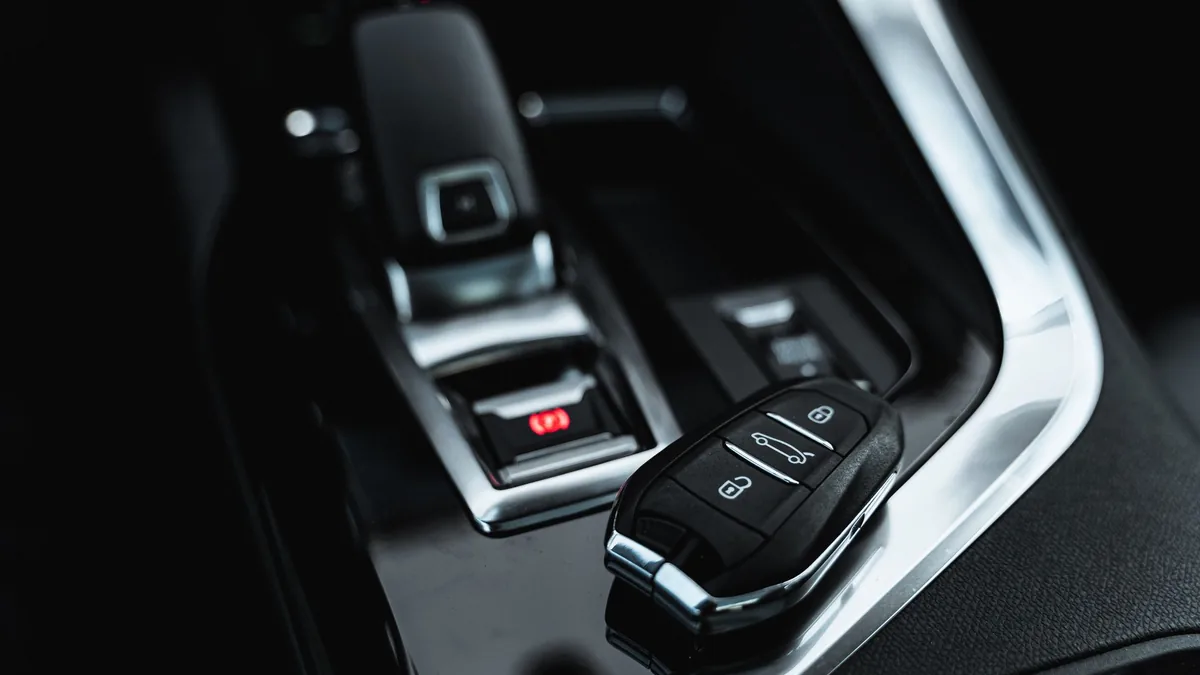
You have landed, collected the hire car, and by the second evening a cousin is standing by the gate with a perfectly reasonable request: "I just need it for an hour, the pharmacy is round the corner." So, can someone else drive my rental car? Only if the rental company has named that person on the agreement before they take the wheel. Anyone else driving it, however close the relationship, however short the trip, is an unlisted driver, and that is usually the fastest way to turn a normal holiday rental into an uninsured problem that lands on you, the hirer.
The good news is that you rarely have to choose between the rules and your family. There are three clean ways out: add the relative properly as a second driver, keep the keys and drive them yourself, or book a car with a driver for their errand. This guide walks through why the rule exists, what actually happens when it is broken, how challans and police checks play out, and how to say no in a way that nobody at the dinner table takes personally.
Can someone else drive my rental car? Only listed drivers
A rental agreement is a contract between the hire company and the people it names. The company has checked those people: their licence, their age, sometimes their driving history, and the documents that let them drive legally in Pakistan. Everyone else is a stranger to that contract, even if they share your surname and your grandmother.
In practice that means:
- The main hirer is the person who signed and whose licence was checked at handover.
- Additional drivers are people the company agreed to add, normally after seeing their licence as well. There may be a charge, and some companies set a minimum age or a minimum number of years holding a licence.
- Everyone else is not covered to drive, full stop. The insurance and damage terms were priced for the named people, not for whoever happens to be in the house.
Read your own agreement rather than relying on memory or on what a previous rental allowed. Wording differs between companies, and some tie cover to the named driver so tightly that even a short move out of a parking space by someone else can put the protection at risk. If you are planning a self-drive rental through us, start with the self-drive hire page, and read our booking terms (planned link) for how journey requests are handled before anything is confirmed.
Why "family" is not a loophole
Relatives often assume a family exception exists. Rental agreements do not normally include one, and if yours does, it will be written down rather than implied. The company is not judging your cousin's character; it simply has no record of them. If they have a Pakistani licence, the company has not verified it. If they are visiting from abroad, the company has not checked whether their licence and permit are valid here. The contract cannot protect someone it does not know about.
Driving a rental car not in your name: what the documents actually say
Before you can decide whether a relative *could* be added, it helps to know what a legal driver in Pakistan needs, because the rental company will ask for the same things.
If the relative lives in Pakistan
Pakistani licences are issued by districts, provinces and territories, and the provinces recognise each other's licences. Categories matter: a motorcycle or rickshaw licence does not cover a car. If your relative holds a Punjab licence, its status can be checked through the Punjab government's DLIMS licence verification service, and a rental company may do exactly that before agreeing to add them.
A driver who has "been driving for years" but never actually obtained a car licence is a bigger risk than they sound. No company will add them, and an insurer is very unlikely to treat them kindly after an incident.
If the relative is visiting from abroad
The UK Foreign, Commonwealth and Development Office says UK visitors driving in Pakistan need their UK licence and the 1968 version of the International Driving Permit, and warns that you cannot buy an IDP outside the UK, so it has to be sorted before the flight. GOV.UK's international driving permit guidance explains that UK drivers get one in person from certain shops that offer PayPoint; check the current fee there, as it can change.
So the brother-in-law who flew in from Birmingham last week without an IDP is not only an unlisted driver; on the FCDO's reading he is not properly documented to drive in Pakistan at all. The FCDO adds that failing to carry the right documents can lead to detention and a police report.
What happens if an unlisted driver crashes
This is the question people only ask afterwards, so ask it now. The details depend on your agreement and the company's insurer, but the pattern is predictable enough to plan around.
- The cover you paid for may not apply. Damage waivers, excess reductions and insurance are normally conditional on the car being driven by a named driver. Break that condition and the company can treat the damage as your responsibility.
- You, as the hirer, are the one they come to. Your name is on the contract and your card is usually behind the deposit. The company will not chase your cousin; it will chase you, and it may keep the deposit while the damage is assessed.
- Third-party costs can follow. If another vehicle, a motorbike, a shopfront or a person is involved, the question of who pays becomes much harder when the driver was not authorised. That is the scenario that turns an awkward conversation into a serious one.
- The car may be off the road. Many agreements charge for the days a damaged car cannot be rented out. Your holiday transport stops, too.
- Family relationships take the hit. The relative who crashed may genuinely want to pay but not be able to, or may dispute how bad the damage was. Money disputes between cousins outlast the dent.
Road conditions make none of this hypothetical. The US State Department says roads can be crowded, with drivers who can be aggressive and poorly trained, and flags poor vehicle lighting and road lighting as a night-time risk; the FCDO calls local driving standards erratic, especially after dark. A relative who drives well at home in Leeds or Dubai may still be rattled by a Lahore roundabout at 9pm.
A worked example
*Example only, to show how the pieces fit together.* You hire a hatchback for a fortnight in Islamabad. Your uncle, who has a valid local licence but is not on the agreement, borrows it to fetch sweets for a mehndi and clips a parked car while reversing. Even a small scrape now raises three questions the company will ask you: who was driving, why were they not listed, and who pays for both cars. If the agreement says cover applies only to named drivers, you may be facing the repair bill, the other owner's claim and the days the car is out of service, and your uncle's valid licence does not change that, because he was never part of the contract.
Challans and police stops with an unlisted driver
The accident is the headline risk. The quieter one is enforcement.
Camera challans find the car, not the driver
In Lahore, the Punjab Safe City Authority's cameras use number-plate recognition, and e-challans are sent to the address registered against the vehicle. Anyone can look them up on the PSCA e-challan portal by plate number or CNIC. For a rental car, the registered owner is usually the rental company or its fleet partner, and the company knows exactly who had the car on that date: you.
Expect the fine, and possibly an administration fee, to come back to the hirer under the agreement. Whether the actual driver was your cousin makes no difference to that chain, and "he said he'd pay" is not a line most rental desks accept.
Roadside checks
On a long drive you may well meet a police or motorway check, and the first things an officer is likely to ask for are the driver's licence and the car's documents. The FCDO also advises carrying photo ID at all times, because you may be detained until you can show it.
A driver who is not on the rental agreement, and who may not be carrying a valid licence for the car, is not a good position to be in at a checkpoint, especially with the car hired in someone else's name. At best it is a long conversation at the roadside. At worst it is a fine, a call to the rental company, and the car staying put until a listed driver arrives.
| Situation | Who the problem lands on | How avoidable |
|---|---|---|
| Camera challan while cousin drives | The hirer, via the rental company | Fully, if only listed drivers drive |
| Scrape in a car park, unlisted driver | The hirer, possibly without cover | Fully |
| Checkpoint, driver has no car licence | Driver and hirer both | Fully |
| Visitor without IDP driving | The visitor, and the hirer under the agreement | Fully, if IDP sorted in the UK |
| Listed second driver has a minor bump | Handled under the agreement's normal terms | Covered as agreed |
The last row is the point: the fix is not to avoid driving, it is to make sure whoever drives is on the paperwork.
Lending a hire car to family: how to say no without offending anyone
In a lot of Pakistani households, refusing to lend the car to your khala's son sounds like refusing hospitality. The request usually comes in public, with an audience, and with the unspoken assumption that what belongs to one of us belongs to all of us. Saying "it's against the rules" can come across as cold, or as a comment on their driving.
What tends to work is moving the conversation away from trust and towards paperwork, and then offering something better than the keys.
Lines that keep the peace
- Make the contract the villain. "The company only insured me. If anything happens, even a scratch, they won't cover it and it all comes to me. I can't risk that on your behalf." This frames the refusal as protecting them, which it is.
- Offer to drive. "Give me five minutes, I'll take you." Most errands are short, and driving them yourself removes the problem entirely.
- Offer a better car. For a longer job, "Let me book you a car with a driver, it's easier than parking in Anarkali anyway" lands as generosity rather than refusal.
- Bring in the elder early. If a respected uncle or your mother understands the risk, one quiet word before the request becomes a family debate can save a lot of awkwardness.
- Agree the rule before you arrive. If you know a particular relative will ask, a message from home, "the hire car is insured only for me this trip", sets expectations before anyone is standing at the gate.
When your cousin wants to borrow the rental car for something big
Weddings are where the pressure peaks. A cousin wants to borrow the rental car for the baraat, to fetch the dulha's family from the airport, or to run a dozen late-night errands before the walima. These are exactly the trips where an unlisted driver is most likely to be tired, rushed and driving somewhere unfamiliar. It is also exactly when a dedicated car and driver is the more generous answer: nobody has to stay sober-headed and alert after midnight except someone who is being paid to.
Adding them properly instead
If a relative genuinely needs to share the driving over the trip, the honest solution is to make them a listed driver. Do it at the start rather than mid-holiday, because adding someone later can mean returning to the desk with them and their documents.
A short checklist before you ask the rental company
- Confirm they hold the right licence category for a car, not only a motorcycle licence.
- For overseas relatives, check the IDP now. A UK visitor needs the 1968 IDP from the UK; it cannot be bought once they have left.
- Have the licence and ID ready at handover, originals rather than photos.
- Ask the company directly whether there is an extra-driver charge, a minimum age, or a minimum period of holding a licence.
- Ask whether the damage cover and excess apply the same way to the additional driver as to you.
- Get the name written into the agreement, not just agreed verbally at the counter.
- Tell the added driver the car's rules you already know: fuel type, where the documents are kept, and what to do if a light comes on.
If you have not booked yet, our guide to self-drive questions for overseas bookers goes through eligibility, deposits and handover in more detail, and it is worth reading before you commit to self-drive at all.
When adding a driver is the wrong answer
Sometimes a second driver is technically possible but still a poor idea. A relative who has not driven in Pakistan for years, or who only knows motorway driving abroad, may simply not be ready for Rawalpindi's Saddar at rush hour or a mountain road in the north. For mountain routes the FCDO advises using experienced local drivers and travelling only in clear weather, and warns that landslides frequently block or destroy roads in remote areas. In those cases, the kinder offer is a professional driver for that leg, and you keep the hire car for the easy days.
Booking a driver for their errand
The easiest way to say yes to the errand and no to the keys is to hand the job to someone whose job it is. A car with a driver changes the conversation from "can I borrow it?" to "where do you need to go?"
It suits a few situations particularly well:
- One-off errands that would take you away from a family gathering, such as collecting a relative from the station or picking up an order from a tailor across town.
- Wedding days, when several people need to move at once and the hire car is already committed to the immediate family.
- Airport runs at awkward hours, where the person asking to borrow the car would otherwise drive home tired.
- Longer trips out of the city, where you would rather keep your hire car within the area you know.
Our car and driver service is set up for exactly this kind of flexible day or part-day use. You can plan the journey online (planned link) with the pick-up point, timing and passengers, and the team will come back to you; requests remain requests until the booking team accepts them, and prices are confirmed at that point rather than promised upfront.
If the family would rather keep a self-drive car but you need more choice of vehicles or longer hire periods, our sister service iDrive, the network behind Pakistan Taxi, explains how its self-drive car rental in Pakistan is arranged.
Before you travel: two quick checks
Two points apply to every self-drive trip, whoever ends up driving.
First, check the FCDO's current Pakistan travel advice. At the time of writing it advises against all travel to areas including all of Balochistan and most of Khyber Pakhtunkhwa, and against all but essential travel to others such as Azad Jammu and Kashmir and parts of Sindh; those lists change, so read the current map. A relative's suggestion of a day trip is worth checking against it before anyone gets in a car.
Second, check the road conditions for where you are going. The FCDO notes that outside the major motorways road quality is variable, and that landslides can block remote mountain roads. The US State Department's Pakistan page makes similar points about potholes, barriers that are not signposted, and the extra risk of night driving.
Questions people ask
Can my husband or wife drive the rental car if I booked it?
Only if they are added to the agreement as a driver. Being married to the hirer does not make someone a listed driver. Ask at handover whether there is a charge, and bring their licence and, if they are visiting from abroad, their IDP.
What if my relative only moves the car a few metres?
It is still driving. Moving a car out of a tight gali so another car can pass is exactly when bumps happen, and cover conditions do not usually carve out short distances. If the car has to be moved and you are not there, it is better to wait or to call.
Who pays a challan if my cousin was driving?
Camera challans go to the vehicle's registered owner, which for a hire car is usually the rental company or its fleet partner. The company will usually pass the fine back to the hirer named on the agreement, which is you. Sorting out repayment with your cousin is then a private matter.
Can a relative with a Pakistani licence drive my hire car?
A valid Pakistani car licence makes them eligible to be added, but it does not make them a listed driver on its own. Ask the company to check the licence and write their name into the agreement before they drive.