
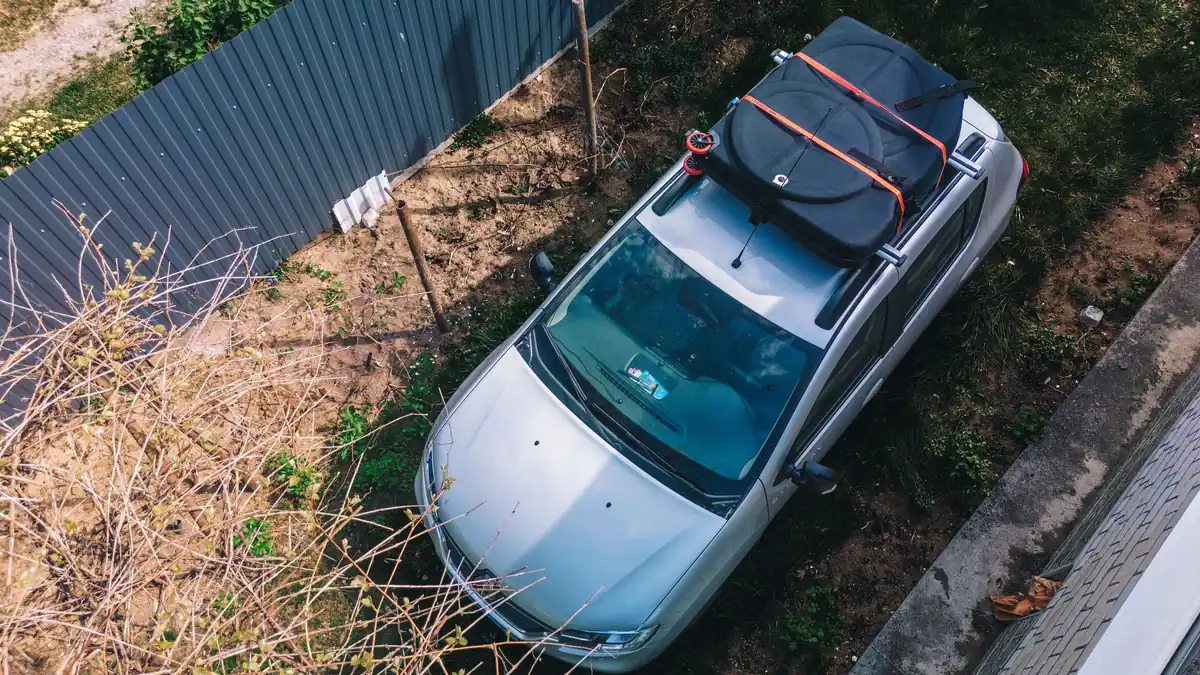
Your cousin has offered to bring his car to the airport, your uncle insists on driving to the wedding, and everyone is grateful. Then you count heads. Family car not enough seats for everyone? The answer is usually not to squeeze in a fifth adult "just for the short run", and it is rarely to cancel the relative and hire a big van nobody asked for. The calmer fix is to keep the family car and add one booked car alongside it. That way the relative's kindness is accepted, every passenger gets a proper seat with a belt, and the suitcases stop fighting the children for space. Below: how to count seats honestly, who goes in which car, how to split the bags, how two cars reach one door together, and when a single van is still the smarter call.
Family car not enough seats? Count belted seats, not bodies
The first mistake happens before anyone leaves the house. People count the number of people who "can fit" in a car. That number is always bigger than the number of seats with a working belt.
Do the count the other way round:
- Look at the car, not the family. How many seats have a belt that clicks shut and a head restraint? In most saloons and small hatchbacks that is five including the driver, and the middle rear seat is often a lap belt or a narrow perch that only suits a child.
- Take the driver off the total. A five-seat car carries four passengers, not five.
- Treat every child as a passenger. A toddler on a lap is not "free". If a child needs a car seat or booster, that seat takes up a whole position, and sometimes blocks the one next to it.
- Check the boot at the same time. If the boot will be full of suitcases, the back seats cannot also be used for bags.
Here is a simple worked example (it is an example, not a rule). Your relative's Corolla-size saloon has five belted seats. He is driving. You have arrived with your spouse, two parents and two children aged four and nine. That is six passengers for four seats. Even if the nine-year-old "squeezes in the middle", you are still over by at least one, and the four-year-old should not be travelling on anyone's lap. You need one more car.
If you are unsure how many people and bags a particular type of vehicle will hold, iDrive, the network behind Pakistan Taxi, has a practical explainer on how many people and suitcases fit in each vehicle type that is worth a look before you decide.
Why squeezing everyone in is a bad plan
It is tempting to think a short drive from the airport to a house twenty minutes away does not matter. It does, for a few plain reasons.
Unbelted passengers are the ones who get hurt
The World Health Organization's road-traffic fact sheet states that wearing a seat belt can reduce the risk of death among vehicle occupants by up to 50%, and that child restraints can lead to a 71% reduction in deaths among infants. An extra person wedged in the back has no belt at all, and a child on a lap has nothing between them and the seat in front. The same fact sheet names road traffic injuries as the leading cause of death for children and young adults aged 5 to 29.
The UK Foreign Office's advice for Pakistan also says, bluntly, that local driving standards are erratic, especially at night, and asks visitors to take care on long road journeys. If your flight lands after dark, the airport run is exactly the kind of drive that advice has in mind.
What the law actually says, and where it stops
It is worth being accurate here, because relatives will tell you all sorts of things.
- Seat belts. According to the Pakistan Safety Council's summary of seat belt law, Section 89-B of the Provincial Motor Vehicles Ordinance requires the person driving a motor car to wear a fastened seat belt. The same page says the national law covers the driver only, and it campaigns for rear-seat and child-restraint rules. Rules and enforcement can change, so treat that as the legal floor, not the safe standard.
- Passenger numbers. The National Highways Safety Ordinance, published by the motorway police, requires a vehicle's registration to record the number of passengers it is built to carry. For transport vehicles on national highways, Section 75 sets a fine or short prison term for carrying more than 30% over the prescribed number, and a uniformed officer must have the extra passengers unloaded before the vehicle can continue.
That rule targets commercial carriers rather than a family saloon, so do not quote it at your uncle. The practical point: nobody wants a roadside stop with jet-lagged grandparents in the back.
Comfort matters too. Overloaded car passengers are usually the elders fresh off a long-haul flight, folded into the worst seat.
One family car and one hired car: why it usually works best
Once you know you are over, you have three realistic choices. Here is how they compare for a typical family of six to eight people.
| Option | What it keeps | What it costs you in effort | Best for |
|---|---|---|---|
| Squeeze into the family car | The relative's offer, nothing else | Unsafe seating, no luggage room, possible police stop | Nobody, honestly |
| One family car and one hired car | The relative's offer and everyone's dignity | A little coordination between two drivers | Most airport runs, family visits, wedding guests |
| Politely decline and book one larger vehicle | Everyone together in one cabin | Some awkwardness with the relative; you need a van that suits the roads | Big groups, lots of luggage, long intercity legs |
For most families the middle row wins. The relative still drives, still gets to be the first face at arrivals, and still takes the people who most want to ride with him. The booked car absorbs the overflow and most of the luggage. You also have a second vehicle if the first one is delayed, has a flat, or needs to peel off to drop someone at a different house.
If you are weighing a single van against two or more cars in more detail, our guide to choosing a group van or several cars goes through the trade-offs. This article is about the specific case where one of those cars already belongs to the family.
Who rides in the booked car
This is the question that causes the most quiet tension, so settle it before the day rather than at the kerb. Deciding who rides in the booked car is partly practical and partly diplomatic.
Put these people in the family car
- The relative's own household. If his wife or children came to welcome you, they ride with him. Splitting them up feels odd.
- The guest of honour, if the relative asked for them. Often the whole point of the offer is that your uncle wanted to collect his sister himself. Let him.
- Anyone who gets anxious with strangers. An elderly parent who speaks little English or Urdu may be happiest with family at the wheel.
Put these people in the booked car
- Confident adults who travel often. A spouse, a grown-up child, a cousin who has done the trip before.
- Anyone who needs specific seating. If a child seat is needed, a booked vehicle is where you can ask for it in advance and state the child's age. Ask when you enquire; do not assume one will be fitted.
- The person holding the address and phone numbers. Whoever rides in the booked car should be able to talk to that driver, give directions to the house, and call the family car if plans change.
- Most of the luggage, which we come to next.
A useful rule of thumb: every car should have at least one adult who knows the destination and has a working phone with the other car's number. Never send a car full of children and grandparents with nobody who can speak for them.
Families with small children
The Pakistan Safety Council recommends that children under 12 travel in a rear seat rather than the front, and that children up to five years old are secured in a child restraint. Those are recommendations, not national law, but they are sound. If the family car has no child seat and the booked car can provide one, put the youngest child and one parent in the booked car and let the others ride with the relative.
Splitting the luggage between the two cars
Suitcases decide more seating plans than people do. Arrivals from the UK, the Gulf and North America often travel with large checked cases, plus gifts for the family, plus a pushchair. An ordinary family saloon's boot fills up fast, and once it is full, bags start occupying seats.
Plan the split like this:
- Count every item at the belt, including hand luggage, pushchairs and boxes. Tell the booking the real number, not the number you hope for.
- Give the family car the light load. One or two cases in the boot keeps the rear seats free for people.
- Send the heavy load in the booked car. If you expect more than the booked car's boot can hold, say so when you enquire so a vehicle with a bigger boot or roof space can be suggested. Our page on family vehicles (planned link) explains what those larger cars are designed for.
- Keep essentials with their owners. Medicines, passports, phone chargers, baby milk and wedding outfits travel in the same car as the person who needs them, not wherever there was a gap.
- Label or photograph the split. A quick phone photo of which bags went into which boot saves a lot of searching at the house.
Two cars, one destination: meeting point and arrival order
Two cars going to the same place sounds simple until one of them is stuck in the car park queue and the other is already on the motorway. A little structure makes it painless.
Agree one meeting point at the airport
Pick a single, named spot outside arrivals where both drivers and all passengers gather before anyone loads a bag. Big airports have separate arrival exits, car parks and pick-up lanes, and relatives often wait somewhere different from where a booked driver has been told to stand. Our airport transfer service page explains how meeting arrangements are planned for a booked pickup; share the same spot with your relative so everyone ends up in one place.
A few habits help:
- Send the flight number, not just the landing time, to both drivers so they can follow delays.
- Let one person be the coordinator. Usually the most organised traveller in the group. Both drivers message that person, not each other and not six different relatives.
- Load both cars at the same time. Do not let the family car leave with half the group while the rest wait for the booked car to arrive; you lose the point of travelling together.
Decide the arrival order before you set off
At a family home it rarely matters who arrives first. At a wedding, a mehndi, a funeral or a hotel check-in, it can matter a great deal.
- Weddings and events: the car carrying the people who are expected to be seen first (parents of the bride or groom, the elders) should arrive first. The booked car with the luggage and the rest of the group can follow a few minutes behind.
- Hotels: send the car with the person whose name is on the booking first, so check-in can start while the second car unloads.
- Homes: let the relative's car lead. He knows the lanes, the gate and where to park; the booked driver can follow or navigate to the pin you shared.
Keep the cars in contact, not in convoy
You do not need the two cars bumper to bumper. Tailgating a relative through city traffic is how people get separated at a signal or take an unsafe overtake. Share a live location from one phone in each car, agree a stop if the journey is long, and let each driver drive normally. If one car stops for fuel or a toilet break, the coordinator tells the other.
When one van is still the better answer
The two-car plan is flexible, but it is not always right. Consider a single larger vehicle instead when:
- The group is big. Once you need two booked cars on top of the relative's car, one van is usually easier to coordinate than three drivers.
- Everyone must arrive together. A baraat party, a group of guests for a photo session, or a delegation that needs to walk in as one.
- The trip is long or intercity. On a multi-hour road trip, a single vehicle with room to stretch can be kinder to older passengers than two cars that have to keep stopping for each other.
- There is a lot of luggage and several children. A proper group vehicle with belted seats for each child can beat two cramped cars.
- The relative's car is unsuitable. If it is old, has faulty belts, or he is tired after a night shift, it is kinder to thank him and let him meet you at the house instead.
If you do go that way, our vehicles overview (planned link) sets out the classes that can be requested, from standard cars to group vans. Declining a relative's car can be done gracefully: invite him to meet the group at the house, or ask him to take the most important passenger while everyone else travels together.
Before you travel: a ten-point checklist
- Count belted seats in the family car, minus the driver.
- Count every passenger, including babies and small children.
- List child ages and any car seats or boosters you need.
- Count every bag, pushchair and box.
- Decide who rides with the relative and who rides in the booked car.
- Decide which bags go in which boot.
- Pick one named meeting point at the airport or pickup address.
- Name one coordinator and share their number with both drivers.
- Agree the arrival order at the destination.
- Share the destination pin and a backup contact with everyone.
How to add one booked car to the family plan
When you are ready, the practical part is short.
- Open the journey planner on our plan a journey page (planned link) and enter the pickup, destination, date and time. If it is an airport pickup, add the flight number.
- Enter only the overflow. Give the number of passengers and bags the booked car needs to carry, not the whole family. Mention that a second, family-driven car is travelling with you.
- Add the notes that matter: child ages and any seat you need, older passengers who need help with bags, the named meeting point, and the coordinator's phone number.
- Wait for a reply before you rely on it. A journey request is an enquiry; nothing is confirmed until you hear back with the details, and vehicle availability depends on the date and place. Only tell the relative the plan is final once it has been confirmed.
- Share the confirmation details with the coordinator and with the relative who is driving, so both cars are working from the same times and meeting point.
A final word on travel advice. The UK Foreign Office advises against all or all but essential travel to several parts of Pakistan, including all of Balochistan, most of Khyber Pakhtunkhwa, northern Sindh from Nawabshah northwards, and the border areas. The seating advice in this guide applies anywhere, but check the FCDO's current warnings for Pakistan before planning a family trip outside the main cities, as it can also affect your travel insurance.
Questions people ask
Is it illegal for a passenger to ride without a seat belt in Pakistan?
The Pakistan Safety Council's summary says the existing law makes the driver wear a belt, and it campaigns for rear-seat rules. Legal or not, an unbelted passenger is far more likely to be hurt, so give every person a belted seat.
Can a child sit on an adult's lap for a short journey?
It is not safe. An adult cannot hold a child in a sudden stop. Ask for a suitable child seat when you plan the booked car, give the child's age, and seat them in the back.
Will my relative be offended if I book another car?
Usually not, if you frame it as help rather than replacement. Let him take the people he offered to collect, and say the booked car is for the extra people and the luggage.
Can both cars leave from different places and meet at the house?
Yes. That is a common way to handle split arrivals, for example one car from the airport and one from a hotel. Agree the destination pin and arrival order, and keep the coordinator in touch with both drivers.