If this is your first time visiting Pakistan, the part that catches people out is not immigration or the baggage belt. It is the two minutes after you walk out of the terminal, when you are tired, holding a trolley, and several people are offering you a car at once. The fix is simple. Before you fly, get three details for your booked ride: the driver's name, the car's make and colour, and the full number plate, plus a phone number that will answer when you land. Outside, match the plate first, then the car, then the name. A name board on its own proves nothing, because anyone can write a name on a piece of card. If a detail doesn't match, don't get in; step back, call the number you were given, and wait somewhere visible. This guide walks through what the arrivals exit is like, what to ask for in advance, how to say no politely, and what family back home can check for you.
What to expect arriving in Pakistan, from the aircraft door to the kerb
At the big international airports the sequence usually runs like this.
- Immigration. Have your passport and visa ready. The UK Foreign, Commonwealth and Development Office (FCDO) tells travellers to make sure the passport is stamped on entry, because a missing stamp causes trouble when you leave. Holders of a NICOP can enter without a visa, according to the same page.
- Baggage reclaim. Islamabad International Airport's passenger guidelines remind arriving passengers to collect bags after screening by Customs, the Anti-Narcotics Force and the Airport Security Force, so allow time for checks before the exit.
- Customs. The same guidelines state that importing liquor is banned and it will be confiscated in the arrival lounge. Leave the duty-free bottle behind.
- The exit. This is where you meet the outside world, and where your plan matters most.
What the arrivals exit looks like at the major airports
- Islamabad International Airport is not in Islamabad itself. It sits near Fateh Jang in Attock District, roughly 25 km from the city, and opened in 2018, according to its Wikipedia entry. It is linked to Islamabad by the Srinagar Highway and to Rawalpindi by the GT Road, and a metro bus has served it since April 2022. It is a large modern terminal, so the walk from the aircraft can be long.
- Allama Iqbal International Airport, Lahore is about 15 km from the city centre. Its main passenger terminal opened in 2003, and there is a separate Hajj terminal.
- Jinnah International Airport, Karachi has used the Jinnah Terminal since 1992 and is reached from Shahrah-e-Faisal.
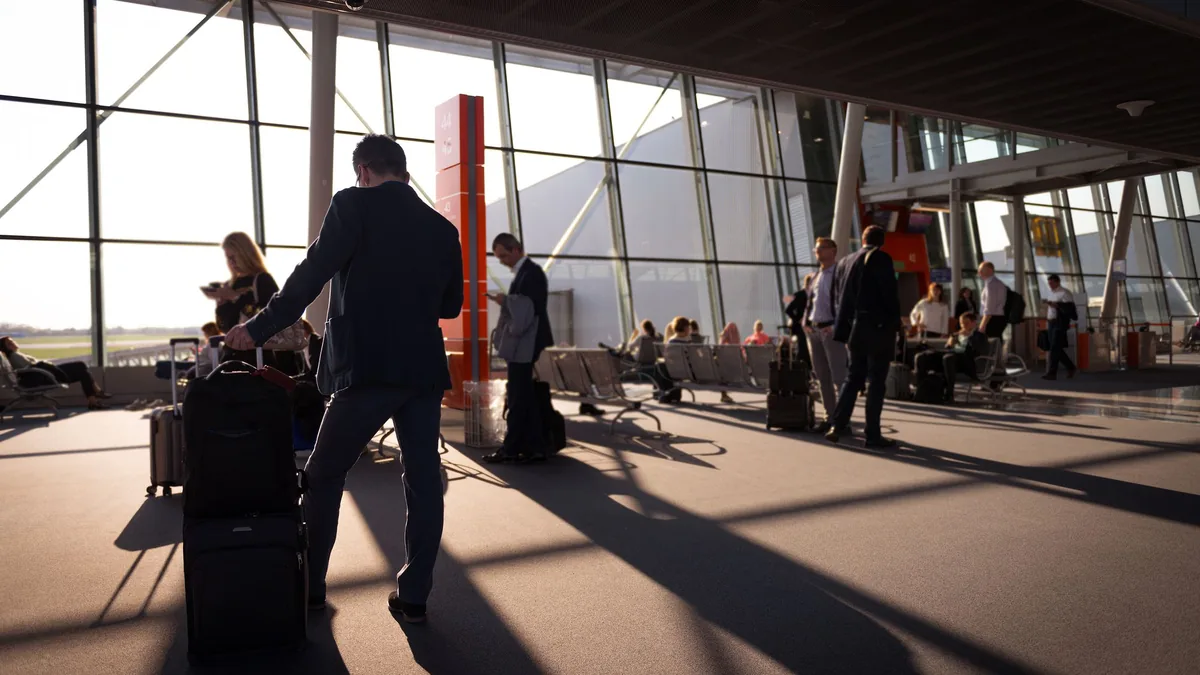
What you will almost always find is a crowd. Families come in numbers to meet relatives, especially around wedding season and Eid, and drivers holding boards stand among them. The FCDO's safety and security page notes that airports can be crowded at times and that baggage may need to go through screening and checks. Expect noise and people calling out.
Don't count on your driver being able to come inside to the baggage hall. Access for people who are not travelling is set by the airport and can change, so plan to meet at the exit or at a spot the operator names in advance.
Why a name board is not enough
A name board feels like confirmation. It is not. The board may show the booker's name rather than yours, the same name can be spelled several ways, and a common surname could be on three boards at once. Anyone standing nearby can also read a board and repeat the name.
The number plate is different. It is fixed to one vehicle, it is hard to fake on the spot, and you can check it from a distance before anyone touches your bags. That is why the plate comes first in the check, not last.
The three details, in the order you check them
| Order | What you check | Why it matters | Where it comes from |
|---|---|---|---|
| 1 | Full number plate | Tied to one vehicle; the strongest single check | Operator, before you land |
| 2 | Make, model and colour | Lets you spot the car from further away | Operator, before you land |
| 3 | Driver's name | Confirms the person, once the car is right | Operator; ask the driver to say it |
| Backup | Phone number that answers | Lets you confirm if anything is off | Operator or your booking team |
Notice what is missing: you never have to say your own name first. Ask the driver who they are there to collect, and let them tell you.
What to get before you land: driver name and car colour are only the start
The best time to collect these details is before you board, not while your phone is searching for a signal in the arrival hall. Ask whoever is arranging the ride, whether that is you, a relative or an operator, for the following.
- Driver's name, spelled the way it will be written or said.
- Car make, model and colour. "White Corolla" is useful. "A car" is not.
- The full number plate, letters and digits, exactly as it appears.
- A contact number for the driver or the dispatcher, with WhatsApp if possible.
- The agreed meeting point outside arrivals, described in words: which exit, which pillar or landmark, which side of the road.
- What the driver will do if your flight is late, and how long they will wait.
- What the board will say. If it will show a relative's name, you need to know.
Save all of it somewhere you can reach offline. A screenshot in your photos folder works better than an email you have to load. If your phone may not have a local SIM or roaming data when you land, write the plate and phone number on paper as well and keep it in your passport wallet.
Details can change on the day. A car may be swapped, or a different driver may take the job. A well-run operator will tell you, with the new details, before you arrive. If you hear nothing, assume the original details still stand and treat any difference at the kerb as a reason to check, not to guess.
If you haven't arranged anything yet, our guide on what to arrange before you fly to Pakistan sets out the booking side.
A photo of the booking, sent to a relative
Many first-time visitors are met not by family but by a driver the family has arranged. That creates a useful safety net: someone who knows the booking and is awake when you land.
Here is a simple way to use it.
- Take a screenshot of the booking details once you have them: driver's name, car, plate and phone number.
- Send it to one relative who will be reachable at landing time, in Pakistan or back home.
- Message them when you clear customs. A single line is fine: "Out of customs, heading to exit."
- Send a photo of the car's plate once you are standing next to it. The relative can compare it with the screenshot in seconds.
- Share your live location for the drive, if your phone and data allow.
- Message again when you arrive.
Two people are now checking the plate, and someone knows where you are if your battery dies.
Families arranging a pickup for someone else can find a fuller walkthrough in our guide to arranging an airport pickup for parents while you are abroad.
The number plate check before boarding, step by step
When you walk out, don't rush towards the first board with your name on it. Take a breath and run the check.
- Stop somewhere visible. Stand near the exit doors or the meeting point you agreed, away from the kerb edge.
- Call or message the number you were given. Say you are out and where you are standing. Let the driver come to you or tell you where the car is.
- Ask who they are collecting. Let them say the passenger's name before you say anything.
- Walk to the car with your bags still with you. Keep the trolley in your hands until the check is done.
- Read the plate against your saved details. Every letter and every digit.
- Check the car. Make and colour should match.
- Confirm the driver's name. Ask, politely, "Are you [name]?"
- Then load the bags and get in. Send the plate photo to your relative.
It takes about a minute. A professional driver will not mind; if anyone objects to you checking a plate, that tells you something.
What a good driver will usually do
A driver who is expecting you will often call or message soon after your flight lands, tell you where they are waiting, and confirm the car. They will know the name of the person who arranged the ride. They will not ask for payment in cash at the kerb unless that was agreed in advance, in writing, with the booking. If you want to know how our journey planning handles this side, see airport transfer planning.
Politely declining touts and unbooked offers
At a busy exit you will probably be approached by people offering a taxi, a porter service, help with your bags or a "better price". Most are simply trying to earn a living. Still, you have already arranged your ride, and the FCDO's advice is clear on unbooked transport: it tells visitors to avoid street taxis, e-taxis and online taxi apps, and to use reputable, licensed companies where you call and the operator contacts a driver. The US State Department goes further for its own staff, whom its Pakistan country page says are barred from using taxis, rideshare and public transport.
A few habits help.
- Have a short phrase ready. "No thank you, my car is booked" works in English. "Nahin, shukriya" is polite in Urdu. Say it once, smile, keep walking.
- Don't hand over your trolley or bags to anyone who is not your confirmed driver or an airport porter you have chosen to use. Islamabad airport's guidelines tell passengers not to hand their hand-carry bags to anyone else.
- Don't say your name or destination out loud to people who ask. Let your driver say it.
- Don't argue. You don't need to explain. A firm, friendly no is enough.
- Stay near other people and the terminal doors while you wait, rather than wandering into a car park to look for the car.
The FCDO also notes that street crime is a risk in crowded areas. An arrival exit is a crowded area, so keep your phone and passport in a zipped pocket rather than your hand.
What to do if the details don't match
Sometimes the car is the right colour but the plate is wrong. Sometimes the driver has the right name on the board but a different car. Usually there is an innocent reason. The only safe response is the same every time.
- Don't get in and don't load your bags. Politely say you need to check.
- Step back to the meeting point or the terminal doors, where you are visible.
- Call the number you were given, not a number the person at the car offers you.
- Ask the operator to confirm the current plate and driver. If they tell you it has been swapped, ask them to send the new details in writing.
- Compare again. Only get in once what you see matches what the operator has sent.
- Tell your relative what has happened, so someone else is aware.
If you cannot reach anyone, stay inside the terminal area or at the exit doors, and ask airport staff for help. Don't accept a lift from someone who approached you while you were waiting, however helpful they seem.
Common mismatches and what they usually mean
| What you see | Likely reason | What to do |
|---|---|---|
| Right name, wrong car | Vehicle swapped on the day | Call the operator and get the new plate in writing |
| Right car, different driver | Driver changed | Ask the operator to confirm the new name |
| Your name on a board, no car details | Someone may have seen your name | Don't engage; call your booked number |
| Right plate, name misspelled | Normal spelling variation | Ask who they are collecting; fine if it matches |
| No one there | Traffic, parking or flight delay | Call, then wait at the agreed point |
Meeting point outside arrivals: agree it in words
"I'll be outside" is not a meeting point. At a terminal with several exits and a long kerb, it can mean anywhere across a very wide area. Agree something specific in advance, and write it down.
A good meeting point has three parts:
- Which door. International arrivals, not domestic, and which exit if there are several.
- A landmark. A pillar number, a sign, a café or a bank counter you can see from the door.
- What happens next. Does the driver bring the car to you, or do you walk to the car park together?
At Islamabad, the airport's parking page describes a general car park for about 2,200 vehicles, with charges and a fine for illegal parking. That is one reason drivers may wait in the car park, or circle, rather than stop at the kerb. If that's the plan, agree that the driver will walk to meet you at the exit, then walk you to the car.
If you're flying into Lahore, our Lahore airport journey guide (planned link) sets out what to confirm for that terminal, including how you will meet and where the car will wait.
When family and a driver are both there to meet you
A common first-visit pattern is a cousin or uncle turning up to greet you as well as the booked car. That's lovely, and it also muddles the plan. Suddenly there are three people on the phone, everyone is waving, and someone has already put your suitcase in a boot that isn't the booked one.
Settle it before you fly.
- Decide who is in charge at the exit. One person meets you and one person talks to the driver.
- Share the plate with the relative who is coming. They can find the car while you clear customs.
- Agree who travels where. If the relative has their own car, is your luggage going with you or with them?
- Keep your passport, phone and hand luggage with you, whichever car the suitcases end up in.
Our sister service iDrive, the network behind Pakistan Taxi, explains how a family pickup works in its guide to meeting family at Islamabad or Sialkot airport, which is worth passing to whoever is coming to the airport.
First time visiting Pakistan: facts that affect the pickup
These points are not about the car itself, but they change how the first hour goes.
- You need your documents in order before the ride matters. The FCDO says British visitors need a visa applied for in advance, through Pakistan's official visa portal, and that the passport must be valid for at least six months after the date of the visa application. Rules can change, so check the official pages close to travel.
- Check the latest travel advice for where you're going next. The FCDO advises against all travel to some parts of Pakistan, including all of Balochistan and several districts of Khyber Pakhtunkhwa (Peshawar city among them), and against all but essential travel to further areas such as parts of Sindh and Azad Jammu and Kashmir. If your onward journey goes anywhere near those areas, read the FCDO's Pakistan advice before you plan it.
- Protests can close roads at short notice. At the time of writing (September 2026), the FCDO mentions planned protests and marches in Islamabad, Rawalpindi, Peshawar and other cities, with possible road closures and mobile or internet interruptions. If roads are blocked, your driver may be late or may ask you to meet at a different spot. That is exactly when the plate check matters most.
- Your phone may not work straight away. Have the key details on paper as well as on screen.
Your first-arrival checklist
Copy this into your notes before you fly.
Before you board
- Driver's name, as it will appear on the board
- Car make, model and colour
- Full number plate
- Driver or dispatcher phone number, with WhatsApp
- Meeting point outside arrivals, in words
- What happens if the flight is late
- Screenshot sent to one relative
At the exit
- Stop somewhere visible
- Call or message the number you were given
- Let the driver say who they are collecting
- Read the plate, then the car, then the name
- Bags go in only after everything matches
- Photo of the plate to your relative
If anything is off
- Don't get in
- Step back and call the booked number
- Get new details in writing
- Ask airport staff if you can't reach anyone
Planning your first pickup
If you would like help setting up an airport arrival for your first trip, you can plan your journey with Pakistan Taxi (planned link). Tell us your flight, the airport, how many people are travelling and how much luggage you have. We will come back to you about what may be available. Nothing is arranged until a journey is confirmed, so ask for the plate, car and driver details at that point, and don't assume a car is waiting until you have them.