
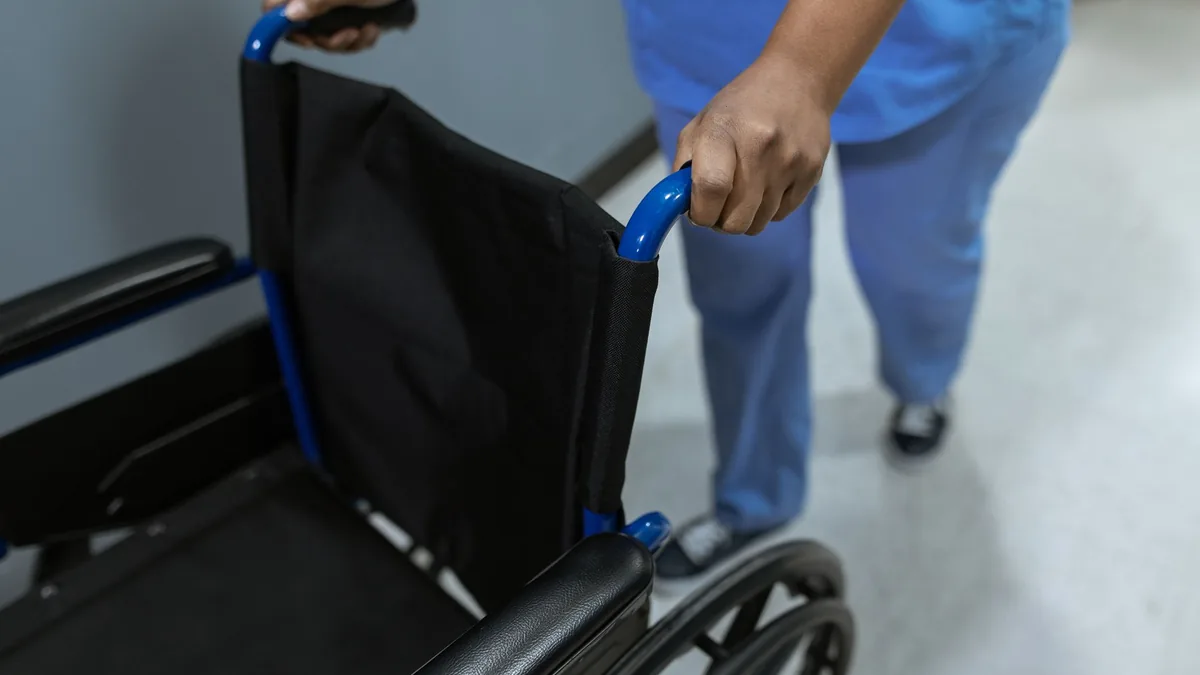
If someone in your family is flying to Pakistan after surgery, the order of decisions matters more than any single booking. First, the treating doctor or surgeon says whether they are fit to fly and when. Second, the airline says whether it needs medical clearance, which for many carriers means a MEDIF form signed by that doctor. Only then does the ground plan start: who meets them at arrivals, what car they sit in, how far they travel on day one, and where the nearest hospital is at every stop.
This guide covers that third part. It is not medical advice, and nothing here replaces what the clinical team tells you. What it does is take the question "they've been cleared, now what?" and turn it into a short, calm plan: a pickup that doesn't involve a long walk to a car park, a vehicle that is easy to get into, road legs that are short enough to be comfortable, and a written list of emergency numbers at each address. One more check before anyone books: the UK FCDO advises against all or all but essential travel to several parts of Pakistan, including all of Azad Jammu and Kashmir, and travelling against that advice can void insurance. The details are in the hospital section below.
Flying to Pakistan after surgery: the doctor and the airline first
Two separate people have to say yes before you plan a single kilometre of road.
The clinical view
Only the person's own medical team can judge when flying is sensible after an operation. Recovery depends on the procedure, on how it went, and on the individual. Ask them directly, and ask them in writing if you can: "Is a long-haul flight on this date reasonable, and is there anything the journey should avoid?" Their answer may cover seating, walking, dressings, medicines or how soon they should rest after landing.
One risk comes up again and again in general health guidance. The NHS lists both recent surgery and long journeys of more than four hours by plane, car or train among the things that raise the risk of a deep vein thrombosis, and for longer journeys it suggests loose clothing, plenty of water, avoiding alcohol and walking around when possible (NHS guidance on DVT). Notice that the NHS names the car as well as the plane. A flight from Manchester or Dubai followed by a five-hour road transfer is, from that point of view, one long journey rather than two short ones. Mention the road part to the doctor too.
The airline view: fit to fly after surgery
Being told by a surgeon that you are fit to fly after surgery is not the same as the airline accepting you. The UK Civil Aviation Authority explains that passengers with a stable condition generally do not need clearance, but that if an airline has concerns about how flying might affect a condition, it will ask for a further form, and it may ask for medical proof such as a doctor's note (CAA: getting medical clearance to fly).
That further form is usually the airline medical clearance form, often called a MEDIF (Medical Information Form). Emirates, as one example, lists recent major surgery among the conditions that need assessment before travel. Part 1 of its MEDIF is for the passenger, Part 2 must be completed by the treating physician, and the form should be submitted at least 48 hours before the flight and completed within one month of the travel date (Emirates medical information forms).
Every airline sets its own rules and deadlines, and they change. If the flight is on PIA, a Gulf carrier or a European airline, read that airline's own special assistance or medical pages and call them if anything is unclear. PIA's special assistance page, for instance, says all its aircraft carry on-board wheelchairs, and that a passenger travelling on a stretcher or needing medical attention during the flight needs an attendant capable of providing that care (PIA special assistance).
A practical tip: once the MEDIF is approved, keep a copy of the approval email on your own phone as well as the traveller's. If the flight is rebooked, you may need to show it again.
Medicines, dressings and hand luggage
Recovery kit belongs in the cabin bag, not the hold. If a suitcase goes missing between Heathrow and Lahore, nobody should be hunting for a pharmacy on the first night.
The CAA says a medical certificate is mandatory for liquid or gel medicines over 100ml going through security, that you should tell the airline you are carrying them, and that you should carry a doctor's letter or the prescription because security staff may ask to see it (CAA: travelling with medicines and medical equipment). It also advises checking requirements at the departure, arrival and any connecting airports, which matters on a route through Doha, Dubai, Jeddah or Istanbul.
At the Pakistan end, the UK Foreign, Commonwealth & Development Office warns that there are often shortages of medicine in Pakistan and that the legal status of some UK-prescribed medicines can differ. It advises keeping a good supply of any medicine and medical supplies you need (FCDO Pakistan health advice). For a post-operative traveller, "a good supply" should mean the full stay plus a few days' margin in case the return flight moves.
A simple cabin-bag checklist:
- All prescribed medicines in original packaging, with the prescription or doctor's letter.
- Dressings and anything else the ward sent home, for at least the first couple of days.
- The discharge summary, or a short letter from the surgeon describing the operation and date. A doctor in Pakistan will want this if anything goes wrong.
- Travel insurance documents, with the operation declared to the insurer before departure.
- A refillable water bottle (empty through security) and a light snack.
- Phone numbers for the surgeon's team in the UK or Gulf, written down, not just saved in a phone.
What to tell the booking team: the help, not the diagnosis
When you plan a recovering relative airport pickup, you do not need to share medical details with a transport provider, and in most cases you shouldn't. The driver doesn't need to know what the operation was. They need to know what help makes the journey work.
Describe the passenger's needs in practical terms:
- "She walks slowly and will need to stop for breath between the arrivals hall and the car."
- "He can't lift anything. Please handle all bags."
- "She needs to sit with her right leg straight, so the front passenger seat pushed back is better than the rear."
- "He will be using an airport wheelchair to the exit and can transfer to a car seat with a little support."
- "Please avoid sharp braking where you can, and keep the air-conditioning on."
- "We will want a comfort stop every hour or so."
Also tell the booking team who is meeting the traveller, who is the contact on the ground, and who to call if the passenger feels unwell on the way. If you are arranging this from abroad, our guide to arranging an airport pickup for parents while you are abroad covers the contact chain in more detail.
The arrivals end: shorten every walk
The hardest stretch of the whole trip is often the few hundred metres between the aircraft door and the car. Arrivals halls can be busy, and families often turn out in numbers to meet a flight.
Some ways to make that stretch easier:
- Book airline assistance, not just a seat. Ask the airline for wheelchair or mobility help from the aircraft to the exit, even if the traveller can walk at home. Long corridors, queues at immigration and baggage belts add up. The airline arranges this; the transport provider cannot.
- Agree one meeting point in advance. A named pillar, exit door or café is better than "outside". Give the driver the flight number so they can follow delays.
- Send one person, not the whole family, to the kerb. A large welcome party is lovely, but it slows everything down and makes it harder for the driver to bring the car close.
- Have the car's air-conditioning running before the passenger gets in. In summer, a car that has been parked in the sun can be very hot inside.
Choosing a car that is easy to get into
For someone recovering, the right vehicle is the one they can get into and out of without twisting, climbing or ducking. That is personal. A tall passenger with a knee repair and a short passenger with abdominal stitches may prefer completely different cars.
| What matters | Saloon or standard car | Family car / MPV | SUV |
|---|---|---|---|
| Seat height | Low; can mean lowering down and pushing back up | Usually mid-height | Higher; a step up for some, easier for others |
| Space to stretch a leg | Front seat pushed back can work | Often good, depending on model | Often good in the front |
| Luggage plus mobility aid | Tight if there is also a wheelchair | Usually more room | Usually more room |
| Ride on rough roads | Depends on model and road | Depends on model and road | Depends on model and road; ask |
Ask the family member what their clinical team said about sitting, bending and lifting, then describe that when you plan the journey.
Reclining seat for a long drive
If the road leg is long, being able to lean back makes a real difference to comfort. Front passenger seats in many cars recline further than rear seats, and rear recline varies widely between models. If a reclining seat for a long drive matters, say so clearly when you enquire, ask what vehicle types could suit, and ask the operator to confirm the specific model before the day. Our premium SUV journeys (planned link) page describes the larger vehicles that can be requested, but no model or feature is guaranteed until it is confirmed for your booking.
If the traveller will stay in a wheelchair for the journey, a normal car is the wrong answer. Our sister service iDrive has an accessible vehicle category where you can ask which vehicles might suit and how the chair would fit.
Shorter legs, fewer transfers
The instinct of many families is to get the traveller "home" as fast as possible: land in Islamabad at dawn, drive straight to the village near Jhelum or Gujrat, and rest there. After surgery, that is often the wrong way round. The long-haul flight has already used up a day of energy.
Think about the journey as a series of legs, and ask whether each one is necessary on day one.
Choose the arrival airport with the road in mind
If the family home is in Sialkot, Faisalabad or Multan, check whether a flight into the nearer airport exists, even with a connection. One extra short flight may be easier than several extra hours on the road. The reverse can also be true: a direct flight into a larger airport, with a single rest stop before the road leg, may beat two flights and two sets of queues. Put the options to the doctor and let comfort, not habit, decide.
Break a long road leg
If there is a long drive after landing, consider an overnight stop near the airport and continuing the next day. Where that isn't wanted, plan regular stops. The NHS advice on walking around during long journeys applies in a car as well as on a plane, and a service area stop lets the passenger stretch, use a toilet and drink water. Our guide on asking for breaks and stops on an intercity journey explains how to write stops into your plan so the driver expects them.
Avoid changing vehicles
Every change of car means another lift, another step, another bag moved. If you can, keep one vehicle and one driver from airport to door, even if the route has a stop.
Example: two ways to plan the same trip
This is a hypothetical example, not a recommendation for any particular person:
- Plan A: Land at Lahore in the early hours, drive straight to a family home several hours away, arrive in the midday heat.
- Plan B: Land at Lahore, stay one night at a hotel close to the airport or a relative's home in the city, then travel in the cooler early morning with two planned stops.
Plan B is slower on paper. For a recovering traveller, it may be the gentler choice. Ask their doctor which suits them.
For more on pacing longer road trips with family members who need extra care, see our guide to planning intercity travel with older relatives.
Heat, water and the time of day
Pakistan's plains get very hot in the summer months, and heat is harder on anyone who is recovering. The NHS lists the signs of heat exhaustion as including tiredness, dizziness, headache, nausea, heavy sweating, pale clammy skin, cramps and strong thirst. Its advice for someone showing signs is to move them to a cool place, remove unnecessary clothing, give them plenty of water and cool their skin, and to get emergency help if they are not feeling better within 30 minutes or show signs of heatstroke (NHS heat exhaustion and heatstroke). The NHS also suggests avoiding the sun between 11am and 3pm.
For road travel, that points to a few habits:
- Travel early in the morning or later in the day in hot months.
- Keep chilled water in the car, and remind the passenger to drink, since DVT is more likely if you're dehydrated.
- Ask for the air-conditioning on before the passenger gets in, and stop in shade.
- Don't let a long wait in a hot car park happen at pickup. Timing the car to the actual arrival matters.
In winter, the concern is different. The FCDO notes that air pollution is a serious problem from October to February, especially in Punjab and Lahore. If the traveller has a breathing condition, ask their doctor about it before booking dates.
Nearest hospital and emergency numbers at every stay
Before the traveller leaves home, write down, for each address they will sleep at:
- The full address and a nearby landmark, in English and Urdu if possible.
- The nearest hospital with an emergency department, and roughly how long it takes to reach by car at night.
- A private hospital or clinic the family trusts, if there is one.
- The name and number of a local relative who can drive there.
- The emergency number: 1122.
The FCDO's Pakistan health page says to dial 1122 and ask for an ambulance, and warns that in remote or mountainous areas an ambulance could take over an hour. It also says local medical facilities are of a lower standard than in the UK, especially in remote areas, and that private care is expensive but available in all major cities (FCDO Pakistan health advice). Rescue 1122, the service behind that number, began as a pilot in Lahore in 2004 and now operates in Punjab, Sindh, Khyber Pakhtunkhwa, Balochistan, Islamabad, Gilgit-Baltistan and Azad Kashmir (Rescue 1122 on Wikipedia).
Those facts make the case for a plan. If the family home is some distance from a hospital, a relative with a car on standby for the first few nights is worth more than any amount of reassurance.
Also check the FCDO's main Pakistan page for the area you are going to. The FCDO currently advises against all travel to Balochistan and to many districts of Khyber Pakhtunkhwa, including Peshawar, and against all but essential travel to all of Azad Jammu and Kashmir, Sindh north of and including Nawabshah, and Dera Ghazi Khan in Punjab (FCDO Pakistan travel advice). That AJK line includes Mirpur. The FCDO also warns that travelling against its advice could invalidate travel insurance, which matters most for someone recovering from an operation. The advice changes; read the live page before you book.
The first few days after landing
The ride home is the start of the ground plan, not the end. A few things help:
- Keep day one empty. No visits, no shopping. The traveller rests.
- Plan short outings for the next days. If they need to see relatives across town, a car and driver for a few hours with a set pickup time is calmer than improvising.
- Keep the return journey in view. The airport drop-off on the way home will need the same care as the pickup: early start, airline assistance booked, medicines in the cabin bag.
When you are ready, you can plan the journey with Pakistan Taxi (planned link). You describe the flight, the addresses, the passengers and the help needed, and we come back to you. Nothing is booked, charged or guaranteed until a vehicle and fare are confirmed with you.
Questions people ask
Is there a standard waiting time before flying to Pakistan after surgery?
No single rule applies to everyone. It depends on the operation and the person. The treating surgeon decides, and the airline decides whether it needs medical clearance.
Does every airline need a MEDIF after an operation?
Not always. The CAA notes that people with stable conditions generally don't need clearance. Airlines such as Emirates ask for a MEDIF where fitness to travel is uncertain after recent surgery. Check your airline's own page.
Should I tell the driver about the operation?
You don't need to. Tell the booking team about practical needs, such as help with bags, a slower walk, a seat to stretch out in or regular stops.
What number do we call in an emergency in Pakistan?
Dial 1122 and ask for an ambulance, as the FCDO advises. Keep the address and nearest hospital written down at each place you stay.