
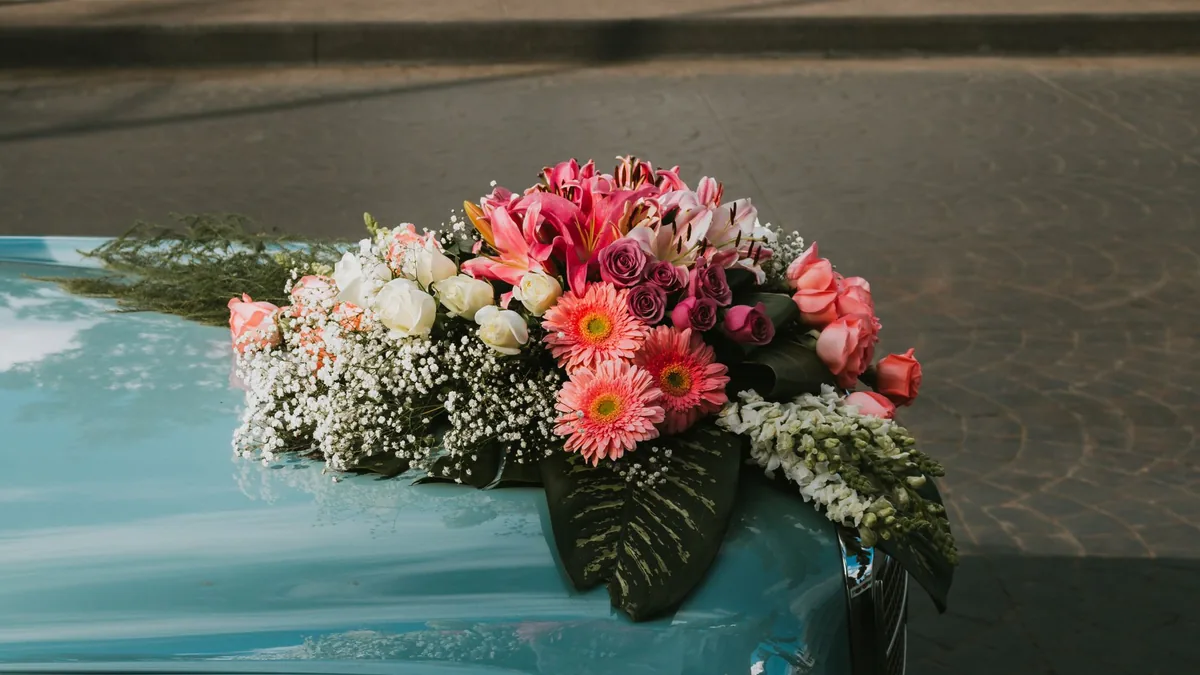
Most families start by asking for a car for baraat day and end up needing five, eight or twelve. The quickest honest way to get the number is this: count everyone who has to travel from the groom's side to the venue, give each of them a proper seat (children included), divide by what each vehicle comfortably holds rather than what the brochure says, and then add two. One of those two is the groom's car, which should never be packed to the doors, because on the way back it has to carry the bride. The other is a spare seat buffer for the aunt who decides at the last minute that she is coming after all.
Once you have the number, the harder part is deciding who sits where. That is where most baraat days go wrong: not because there were too few vehicles, but because nobody knew which car they belonged to, the elders were left standing by the gate, and the only person with the drivers' numbers was the groom's cousin, who was busy with the dhol.
Step 1: Count seats for the baraat car list, not guests
A guest list is not a seat list. Before you think about vehicles at all, turn your baraat headcount into a seat count. Sit down with whoever holds the family list (usually one of the groom's parents or an elder sibling) and go through it in four passes.
Adults
Count every adult who will travel in the procession from the groom's home or gathering point to the venue. Leave out anyone who is making their own way, such as relatives already staying near the venue or friends driving their own cars. Then ask each of them directly. "Your uncle's family will probably come with us" is not a number.
Children
Every child who travels needs a seat of their own on your list, even if the family has always put them on a lap. Pakistan's seat-belt law does not cover every seat in the car, and the country has no national child-restraint law, according to the World Health Organization's road safety country profile for Pakistan. That tells you what the law requires, not what is safe. Planning a seat per child also stops a family of five being squeezed into a car sold to you as a four-passenger vehicle. If a baby or toddler is coming, the parents should bring their own car seat and check with the booking team that the vehicle has belts it can be fitted to.
Elders
Mark every elder with one of three notes: fine in any seat, needs the front seat or an easy door, or uses a walking aid or folding wheelchair. This one column will shape your whole plan. An elder with bad knees may find a tall SUV step or a van's rear row harder than a low sedan's front seat. A folded wheelchair takes up boot space that you would otherwise use for gifts.
Things that travel with the baraat
Baraat day is light on suitcases, but it is rarely empty-handed. Count what has to go in the vehicles:
- mithai boxes and gift trays for the bride's family
- the sehra, garlands and any flowers that must stay uncrushed
- outfits or accessories for the return, if anyone is changing at the venue
- a bag for the groom: water, tissues, phone charger, spare cufflinks, cash envelopes
Band members, dhol players and photographers usually arrange their own transport, but confirm it. If the photographer expects a seat in the groom's car to film the arrival, that seat is gone.
Turning the count into a number
Here is a simple worksheet. Fill it in, then use the capacities in the next sections.
| Line | What to count | Your number |
|---|---|---|
| A | Adults travelling with the baraat | |
| B | Children (one seat each, whatever their age) | |
| C | Elders needing front seat or easy access | |
| D | Wheelchairs or walkers to carry | |
| E | Gift trays and boxes (rough count) | |
| F | Seats needed in total (A + B) | |
| G | Vehicles needed (F divided by comfortable seats per vehicle, rounded up) | |
| H | Final vehicle count (G + groom's car + one buffer) |
Step 2: The wedding car for the groom, and who travels with him
The groom's car is the one everyone photographs, but in planning terms it is the car with the strictest rules. Book it first, fill it last.
Who normally rides in it
Families differ, and your own customs come first. A common pattern looks like this:
- The groom, usually in the rear seat on the side that opens towards the venue entrance, so he steps out facing the welcome party rather than the traffic.
- The sarbala, if your family has one: the young boy, often a nephew or younger brother, who accompanies the groom.
- One trusted adult, typically a brother, close cousin or best friend, who holds the groom's phone, the cash envelopes and the timetable.
- The front passenger seat, which many families give to the groom's father or another senior male relative, or leave free for the photographer if one has been promised a place.
That is three or four people in a car that could take more. Leave it that way.
Why the groom's car must not be full
On the return, after the rukhsati, the bride travels in this car. Depending on your families' customs, she may be joined by a sister, sister-in-law or another woman from either side. If you fill every seat on the way out, somebody will have to be moved to another car at the venue gate, at night, in their wedding clothes, while both families watch. Decide now who gets out of the groom's car for the return and which car they move to, and write it on the plan.
Look and fit
A decorated sedan and a decorated SUV say different things in photographs, and the right choice depends on the bride's outfit as much as the groom's. A heavy lehenga needs a wide door opening and a flat rear seat, and a very low sports-style car can make getting in and out awkward. Ask the booking team to confirm the class of vehicle, the decoration arrangements and who is responsible for fitting the flowers, then treat any named model as a preference until it is confirmed in writing.
Step 3: Allocating cars between the bride's and groom's families
The baraat is the groom's family's procession, so most of the outbound seats are theirs. But the day involves both families, and cars that serve the bride's side are easy to forget until 11pm.
What each side usually needs
| Leg | Who travels | Usually arranged by |
|---|---|---|
| Outbound baraat | Groom and his family and guests | Groom's side |
| Bride's family to venue | Bride's parents, siblings, close relatives | Bride's side (often on their own) |
| Bride to venue, if she is getting ready elsewhere | Bride, one or two companions | Agreed between families |
| Rukhsati return | Bride and groom, plus any companion | Groom's side, in the groom's car |
| Guests home after dinner | Everyone from the outbound cars, plus anyone who came separately and now needs a lift | Groom's side, with bride's side for their own guests |
Talk through that table with both families at least a week before. The awkward moments tend to sit in the middle rows: the bride travelling from a salon across town, and the bride's elderly grandmother who came in a relative's car that has already left.
A fair way to split the outbound cars
"Fair" on a baraat day is less about who gets the best vehicle and more about nobody feeling left behind. A few rules keep the peace:
- Allocate by household, not by importance. Put each family unit together first, then fill the gaps. People are far happier in a plain car with their own children than in a smart SUV beside strangers.
- Never split a young child from their parent. If a family of six will not fit in one car, put the parent and small children in one, and older teenagers with cousins in the next.
- Give elders first pick. Seat everyone flagged in the elders column before anyone else, in the front seats or the easiest doors.
- Name a car captain for every vehicle. One responsible adult per car, who knows the plan, the stops and who should be in that car.
- Keep one car flexible. Your buffer vehicle takes the late additions and anyone who needs to leave early.
A worked example (hypothetical)
Take an example baraat of 34 people: 26 adults, 6 children and 2 grandparents, one of whom uses a folding wheelchair. Here is one way to seat them, assuming comfortable loads of four passengers per sedan and around eight to ten per van:
- Groom's car (sedan or SUV): groom, sarbala, elder brother. Front seat left free for the return.
- Car 1 (sedan): both grandparents, with the wheelchair folded in the boot and their son as car captain in the front.
- Van 1: two families with four children between them, plus one aunt. Nine people.
- Van 2: the groom's friends and cousins. Ten people, the loudest car in the procession.
- Car 2 (SUV): the groom's parents, a sister and her toddler in a car seat, with the mithai trays in the back.
- Car 3 (sedan): buffer car, carrying the groom's uncle and two late additions, with a seat to spare.
That is six vehicles for 34 people, and on the way home the sister moves across from the groom's car to Car 3 to make room for the bride's companion. Your own numbers will differ, but the shape is typical: one or two vans carry the bulk, and the sedans and SUVs handle elders, parents and the groom.
Step 4: Mixing sedans, SUVs and vans for your baraat vehicles
There is no single right baraat vehicle. Each class does a different job, and most processions work best as a mix.
| Vehicle | Best used for | Watch out for |
|---|---|---|
| Sedan | Elders who need a low, easy seat; the groom's car if you want a classic look; buffer car | Four passengers is the comfortable load; boot fills quickly with trays or a wheelchair |
| SUV | The groom's car; parents; families with a baby seat and gifts | High step can be hard for elders and for a bride in heavy clothes |
| Baraat van | Keeping cousins, friends or whole families together; reducing the number of vehicles in the convoy | Rear rows are harder to reach; ask how many seats are usable once bags are in |
| Coaster or larger | Very large baraats travelling a long way to a single venue | Harder to park at many wedding halls; everyone arrives and leaves together |
Two practical points tip the balance. First, every extra car in a procession is another vehicle that can be separated at a signal, a toll plaza or a turning. A baraat van keeps ten people together as one unit. Second, sedans are more forgiving at the venue: they can drop close to the entrance and pull away quickly, which matters when a hall has one narrow gate and three other weddings that night.
Our guide on comparing a group van with several cars goes through that trade-off in more depth, and the van journeys page (planned link) explains how passenger and bag counts are checked against a van class before anything is confirmed. For published seat and boot figures by model, from a Suzuki Alto up to a Coaster, see how many people and suitcases actually fit from iDrive, the network behind Pakistan Taxi. Its loading guidance is a better planning figure than the number printed on a seat.
Step 5: Who holds each driver's number
On baraat night, phone numbers are the difference between a small delay and a lost car. Decide in advance who holds which numbers, and keep the circle small.
- One transport lead. A calm adult who is not the groom, not a parent and not in charge of anything else. They hold every driver's name, mobile number and vehicle registration, plus the booking contact.
- Each car captain holds one number: their own driver's. They also have the transport lead's number, and nobody else's.
- Drivers get one contact: the transport lead. Drivers should not be taking instructions from six different relatives.
- Guests get their car number, not a phone number. "You are in Car 4, the white van, captain is Bilal" is all most guests need.
A short group chat between the transport lead and the car captains works well for last-minute changes. Keep drivers out of the family chat. Before anyone sets off, the transport lead should check that every captain can reach their driver, and that overseas relatives' phones have a working local SIM or roaming, not just Wi-Fi at the house.
What the transport lead should have written down
- Driver name, mobile and vehicle registration for every car
- Vehicle colour and type, so captains can spot their car in a crowded car park
- The pickup point, departure time and venue address, with a landmark
- The return plan: who swaps cars after the rukhsati, and where everyone is dropped
- The booking contact, and what to do if a vehicle is running late
Step 6: A printable baraat seating plan
Print this, fill it in, and give one copy to each car captain and one to the transport lead the night before. If the plan lives only on one person's phone, it will be on that phone when that person is dancing.
| Car | Vehicle | Driver and mobile | Captain | Passengers (outbound) | Seats free | Return changes |
|---|---|---|---|---|---|---|
| Groom's car | Groom, sarbala, ... | Bride and companion join; ... moves to Car ... | ||||
| Car 1 | ||||||
| Car 2 | ||||||
| Van 1 | ||||||
| Van 2 | ||||||
| Buffer |
Add a line underneath for the essentials: gathering point, departure time, venue name and address, expected return time, and the transport lead's number.
This plan is about who sits where. If your baraat collects relatives from several homes before setting off, you will also need a pickup list with addresses and times; our guide to making a pickup manifest for an event with several vehicles covers that side of it.
Timings, roads and the journey home
A baraat that stays within one city is mainly a question of traffic and parking. One that crosses between cities, say from the groom's family town to a hall in another district, needs more thought.
- Plan long legs in daylight where you can. The UK government's Pakistan travel advice on safety and security notes that local driving standards are erratic, especially at night. A late return after dinner is often unavoidable, so keep the long stretch for the outbound leg if the timings allow.
- Allow for winter fog. The National Highways and Motorway Police temporarily close motorway sections during fog for safety, as its press releases from January 2026 describe. If your wedding falls in the fog months and the baraat relies on a motorway, agree a fallback timing and route with the drivers before the day.
- Check where overseas guests are travelling. The FCDO advises against all or all but essential travel to some parts of Pakistan, including Balochistan, several districts of Khyber Pakhtunkhwa such as Peshawar, and Dera Ghazi Khan in Punjab. The current list is on the FCDO warnings and insurance page, which also notes that travel against that advice can invalidate travel insurance. If either family lives in or near a listed area, relatives travelling from the UK should read it before committing to the journey.
- Agree the return time before you leave. Drivers need to know whether they are waiting at the venue or coming back for a second pickup, and how late the dinner is likely to run.
Keep one seat free in the buffer car on the way home as well. Someone will need to leave early with a tired child, and that is far easier when there is already a plan for it.
Before you contact us
Once you have the worksheet and seating plan, the conversation with a transport team gets much shorter. Have these ready:
- Date of the baraat and the gathering time
- Gathering point and venue addresses, with landmarks
- Total seats needed, with the number of children, elders and any wheelchair
- Your preferred mix of vehicles, and which one is the groom's car
- Whether you need vehicles waiting through dinner or returning later
- The transport lead's name and number
You can share all of that when you plan your wedding journey with Pakistan Taxi (planned link). The team checks your details, vehicle classes and availability for the date and comes back to you; nothing is confirmed until you have that in writing. Our weddings page explains how we plan transport across a wedding, from the baraat to the walima.
A few last questions families ask
Is one van better than three cars for the baraat?
For a group of cousins or one large family, often yes: they arrive together and the convoy is shorter. For elders, small children or the groom, cars are usually easier. Most baraats use both.
Can children sit on laps if we run short of seats?
Pakistan's national law does not require child restraints, but that is a legal floor, not a safety standard. Plan a seat for every child, and bring a car seat for babies and toddlers. If you find you are short on the day, the buffer car is there for exactly that.