
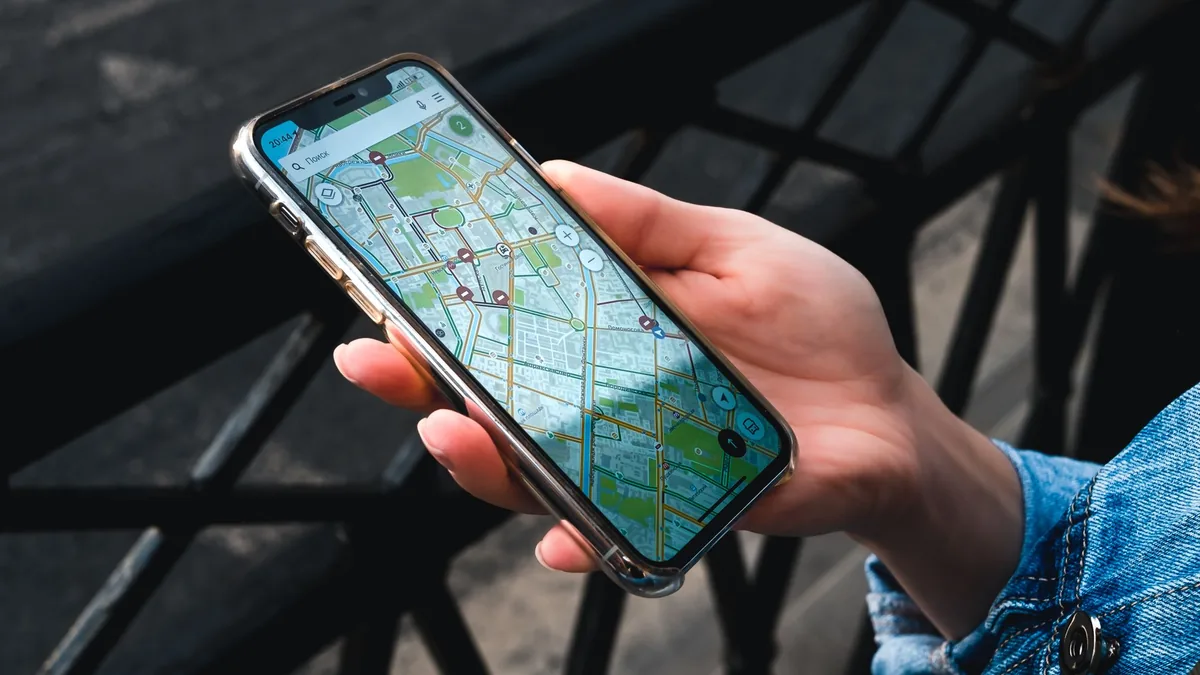
Type "Islamabad airport" into a map app and you get one red pin for a site that covers a terminal, a drop lane, entrance gates and a car park for 2,200 vehicles. That pin is fine for a relative setting off from Rawalpindi. It is useless for the last hundred metres, which is where most arrival-day phone calls happen. The fix is simple: before anyone leaves home, agree on one named spot just past the Islamabad airport exit, drop a precise pin at that spot rather than on the airport name, write a one-line landmark description that works without mobile data, and send all three to everyone involved: the passenger, the relatives and the driver. Keep the waiting party small, too. The airport's own security page allows only one greeter per passenger, citing space, and every vehicle goes through an Airport Security Force search on the way in.
This guide walks you through each part of that routine, with wording in English and Roman Urdu you can copy into the family WhatsApp group.
Why the airport pin on its own lets families down
The address the airport publishes is short: Airport Ave, Islamabad, Attock, Punjab. That last detail matters. The address places the airport in Attock district of Punjab rather than inside the capital itself. Treat it as its own destination, not a neighbourhood of Islamabad, and plan the approach like any out-of-town drive: a vague destination gives a driver plenty of road on which to drift.
Three things usually go wrong when a family relies on the default pin:
- The pin marks the whole site, not a door. Navigation gets the driver to the airport road and then stops being helpful.
- People describe the same place differently. One cousin says "outside arrivals", another says "near the parking", the driver says "at the gate". All three are true and none is specific.
- The passenger has no data yet. Many overseas travellers land with a home SIM on expensive roaming, or a new local SIM that is not active. They cannot open a live map at the moment everyone is asking "where are you?"
So the aim is not a better map. It is a shared agreement that still works when one person's phone is off.
What happens between landing and the Islamabad airport exit
It helps relatives to know why the passenger goes quiet for a while after the flight shows "Landed". The airport's passenger guidelines tell arriving travellers to collect baggage after it has been searched and screened by Customs, the Anti-Narcotics Force and the Airport Security Force. Add immigration, a baggage belt that may take a while for a full wide-body flight, and possibly a lost-bag report at the airline desk, and the gap between touchdown and walking out can be long.
A few rules from the Islamabad International Airport passenger guidelines are worth passing to the traveller before they fly:
- Keep your CNIC (or passport, for foreign nationals) handy. The airport asks passengers to carry it.
- Report lost or damaged bags to the airline immediately on arrival, before you walk out to the family.
- Liquor is banned and is confiscated in the arrival lounge.
- Do not accept food or drinks from strangers, and do not hand carry-on bags to people you do not know.
For the family outside, the practical point is this: "Landed" on the flight tracker is the cue to leave the car park café or finish parking, not the cue to start calling. The time to expect a call is once the passenger says they have their bags. Our guide to arranging an airport pickup for parents while you are abroad covers how to organise that call chain when you are the one coordinating from another country.
Who can wait for you, and how many
Pakistani families like to turn out in force for an arrival. The airport and the Airport Security Force both push the other way, and it is better to know the limits before six relatives pile into one car.
The airport's entrance gate and security check page says that visitors must show a CNIC, an airline ticket or a valid passport, that ASF staff carry out body and under-vehicle searches at every entry point, and that only one greeter is allowed per passenger because of space constraints. It also advises people arriving by taxi or private car from the twin cities to approach Gate-I, where entry is subject to body and baggage search. The ASF's own frequently asked questions add that, with a private vehicle, only three persons including the driver are allowed with one passenger, to avoid crowding in the concourse halls and car park.
Here is what those rules mean in practice:
| Who | What the official pages say | What to plan for |
|---|---|---|
| A relative on foot | One greeter per passenger; CNIC, ticket or passport shown at entry | Choose one person to stand at the meeting spot. Everyone else waits in the car or at home. |
| A family car | Up to three persons including the driver per passenger; body and vehicle search at entry | Leave space in the car for the traveller and their bags. Allow time for the queue at the gate. |
| A booked driver | Drivers in the drop lane are listed as exempt from the entry fee; searched like everyone else | The driver still needs your agreed spot, the passenger's name and a working number. |
| Anyone without ID | CNIC, ticket or passport required | Remind older relatives to carry their CNIC. No card, no entry. |
The airport's fee exemptions cover ticket holders, senior citizens and drop-lane drivers, so other visitors may be charged. Rules change; recheck the airport's page close to the date.
Building a meeting point that survives a flat battery
A good meeting point has three layers. If one fails, the other two still work.
Layer 1: a named spot
Pick something with a name or a number that the passenger will physically see after walking out: a numbered gate, a signed car park entrance, a pillar number, a named café or bank counter. Do not settle on "outside". Ask the driver or the relative who will be waiting to confirm the spot on the day, when they arrive, because works and security arrangements can move barriers and queues.
Layer 2: a precise pin at that spot
The default "Islamabad International Airport" pin is a label for the whole site. What you want is a pin dropped by a person standing at the actual spot, or a pin placed carefully on the satellite view at the exact kerb or entrance. That pin can be sent as a link. It can also be written down as a Plus Code.
Google describes Plus Codes as addresses for places that do not have one, based on latitude and longitude and written as a short string of letters and numbers. Two details make them handy for arrivals: Google says they work whether you are online or offline, and the code represents an area whose size shrinks as you add characters after the plus sign. A longer code points to a smaller patch of ground. Copy the full code, not a shortened one.
Layer 3: a one-line description
Write a sentence that someone could follow with no phone at all. Keep it to what can be seen: which way to turn after the exit doors, what colour or sign to look for, what the relative is wearing, what they are holding.
*Example only, with made-up details:* "Come out through the arrivals doors and stop under [the sign or number Bilal confirms on the day]. Bilal is in a grey shalwar kameez holding a card with your name."
That sentence saves the day when roaming has not switched on and the relative is stuck in the Gate-I queue.
Google map Islamabad airport pins: the general pin versus a precise one
People searching for the "new Islamabad airport location on Google Map" are really trying to do one of three different jobs, and it is worth separating them.
| Job | Which pin to use | Who needs it |
|---|---|---|
| Getting to the airport from home | The standard airport place listing | The relative driving, or the driver coming from Rawalpindi or Islamabad |
| Finding each other at the exit | A dropped pin or full Plus Code at the agreed spot | The passenger, the waiting relative and the driver |
| Getting home afterwards | A dropped pin at the house gate, not just the sector or mohalla name | The driver taking the family home |
The first pin is easy; the airport's access page offers a directions link and an embedded map. The second and third are the ones families forget.
How to share the precise pin
- The person at the spot opens Google Maps and presses and holds on their exact position (or taps the blue dot) until a dropped pin appears.
- Check the pin on satellite view. It should sit on the kerb or entrance you agreed, not in the middle of the car park or on the roof of the terminal.
- Tap Share and send the link to the family group and to the driver individually. Google's help page on sharing places and directions from Google Maps describes the Share and "Send a link" options.
- Also copy the Plus Code shown for that pin and paste it as text underneath the link. If the link fails to open, the code still works.
- Send the home pin too, taken at the actual gate of the house, before the day. Drivers in Pakistan often work from landmarks; a pin at the gate removes the "which street after the masjid?" call at midnight.
If the traveller's phone will work on arrival, live location sharing is useful for the final approach. Google's location sharing help page notes that people you share with can see your real-time location and battery status. Treat it as a bonus, not the plan. Batteries run down on long-haul flights, and a live dot is no help if the phone is off.
Islamabad airport ka rasta: briefing the relative who is driving
"Rasta" is the question every uncle asks the night before: which way, how long, where to park. You can answer the logistics part without pretending to predict traffic.
- Use the airport's own place listing to navigate, then switch to your agreed spot for the last stretch.
- Head for Gate-I if you are coming from the twin cities. That is the airport's own advice for taxis and private cars from Islamabad and Rawalpindi.
- Budget time for the security check. Every entry point has body and under-vehicle searches, and the ASF notes that queues build when several flights operate at once.
- Know the parking rules before you go. The airport's car parking page lists hourly charges for cars and a daily pass, and a fine for vehicles lifted from no-parking areas. It also says charges rise each year, so check the current figures on that page rather than relying on what someone paid last time.
- Do not wait in a no-parking area "for two minutes". Lifting is the airport's stated penalty, and it turns a pickup into a separate errand.
- Keep the car light. Three persons including the driver, per passenger, is the ASF's stated limit for a private vehicle.
Arrivals late at night bring their own considerations. Our late-night arrival contact plan goes through who stays awake, who holds the passenger's details and what happens if the driver and the family lose each other.
Words to send: English and Roman Urdu templates
Most arrival confusion is a wording problem. Here are messages you can paste and edit. The names, flight number and details are placeholders.
To the family group, the day before
English: "Ammi lands tomorrow on flight [number], due [time]. Only Bilal goes to the exit to meet her. Meeting spot: [named spot]. Pin: [link]. Plus Code: [code]. Bilal will wear [colour]. Nobody else needs to come inside the gate."
Roman Urdu: "Ammi kal flight [number] se [time] par aa rahi hain. Exit par sirf Bilal jaye ga. Milne ki jagah: [jagah ka naam]. Pin: [link]. Plus Code: [code]. Bilal ne [rang] kapre pehne hon ge. Baaqi sab gaari mein ya ghar par intezar karein."
To the passenger, before boarding
English: "After you collect your bags, walk out and go to [named spot]. If your phone doesn't work, stay at that spot. Bilal will come to you. Don't go into the car park looking for us."
Roman Urdu: "Samaan lene ke baad bahar aa kar seedha [jagah ka naam] par ruk jana. Agar phone na chale to wahin khari rehna, Bilal khud aa jaye ga. Parking mein hamein dhoondne mat jana."
To the driver
English: "Passenger: [name], arriving on [flight]. Meeting point: [named spot], pin [link], code [code]. Contact on the day: [relative's name and number]. Home drop pin: [link]."
Roman Urdu: "Sawari: [naam], flight [number]. Milne ki jagah: [jagah], pin [link], code [code]. Rabta: [naam aur number]. Ghar ka pin: [link]."
Send the driver's version separately rather than adding them to the family group. It keeps their instructions short and stops the thread of forty "InshaAllah" replies from burying the pin.
When the exit is crowded, moved or silent
Plans slip. Decide in advance what everyone does, so nobody improvises.
- The passenger stays put. The single most useful rule. If the agreed spot is too crowded to stand at, move the shortest possible distance and stay in sight of it.
- The greeter walks, the passenger waits. The person who knows the area and has a working phone does the searching.
- Set a time trigger. For example: if there is no contact twenty minutes after the passenger's "I have my bags" message, the greeter checks the second spot you agreed. Pick your own number; the point is that it is agreed.
- Agree a second spot. Name it in the day-before message, with its own pin.
- Ask staff as the fallback. For a passenger with no phone, the airline's own desk or uniformed airport staff are a reasonable last resort, and a number written on paper gives them something to act on.
- Write the key numbers on paper. One card in the passenger's pocket with the greeter's number, the driver's number and the home address in Urdu and English.
If the airport rearranges barriers or access because of works or a security operation, the landmark layer of your plan matters most. Ask the greeter to send a quick photo of the new spot to the group; a photo describes a place faster than any sentence.
Before you leave the airport: the onward journey and current advice
Where the family goes after the meeting point shapes the rest of the plan. A drive into Islamabad or Rawalpindi is one conversation; a long road journey the same night is another, with its own questions about rest, luggage and daylight. Our guide to planning an onward road journey after landing in Islamabad works through those choices.
Check official travel advice before you commit to any onward route. At the time of writing, the UK government's FCDO travel advice for Pakistan does not place Islamabad or Rawalpindi under an "advise against travel" warning, but it does warn of planned protests and marches in Islamabad, Rawalpindi and other cities and tells visitors to stay away from demonstrations and large public gatherings. It also advises against all travel to Balochistan, a long list of Khyber Pakhtunkhwa districts (Peshawar among them), and areas within 10 miles of the Afghan border and the Line of Control, and against all but essential travel to other listed areas, including the rest of Azad Jammu and Kashmir and parts of Sindh and Punjab. If a family home or event is in one of those areas, read the current advice in full, consider what it means for your travel insurance, and do not treat a relative's reassurance as a substitute for it. Advice changes, sometimes quickly, so check it again the day before you fly.
On arrival day itself, glance at local news. If a march or rally is reported in the twin cities, add a second route to the driver's brief and allow for a longer wait at the exit.
Travelling on to Saudi Arabia for Umrah
Plenty of families fly into Islamabad for a visit and then out again to Jeddah for Umrah, or the other way round. The same three-layer habit works at the other end. Our sister company Hajj Umrah Taxi has a page on where to meet your driver at Jeddah Airport, worth sending to whoever meets the group in Saudi Arabia.
Putting the plan together with Pakistan Taxi
If you would rather not rely on a relative making the drive, you can plan the pickup with Pakistan Taxi. Start with our Islamabad Airport journey guide (planned link) and the airport transfers service page. When you plan your journey (planned link), include the flight number, the agreed meeting spot, its pin and Plus Code, the passenger's contact on the day and the home drop pin. Planning a journey with us is an enquiry, not a confirmed booking: availability, the vehicle and the price are all still to be agreed, and nothing is fixed until you have agreed the details.
Pakistan Taxi is part of the iDrive network. If you are comparing options or want the professional-buyer view of the same airport, our sister service iDrive has a page on Islamabad Airport taxis and transfers.
Whichever way the family travels, the routine does not change: one named spot, one precise pin with its Plus Code, one plain sentence that works with no signal, and one greeter standing where everyone expects them to be.