
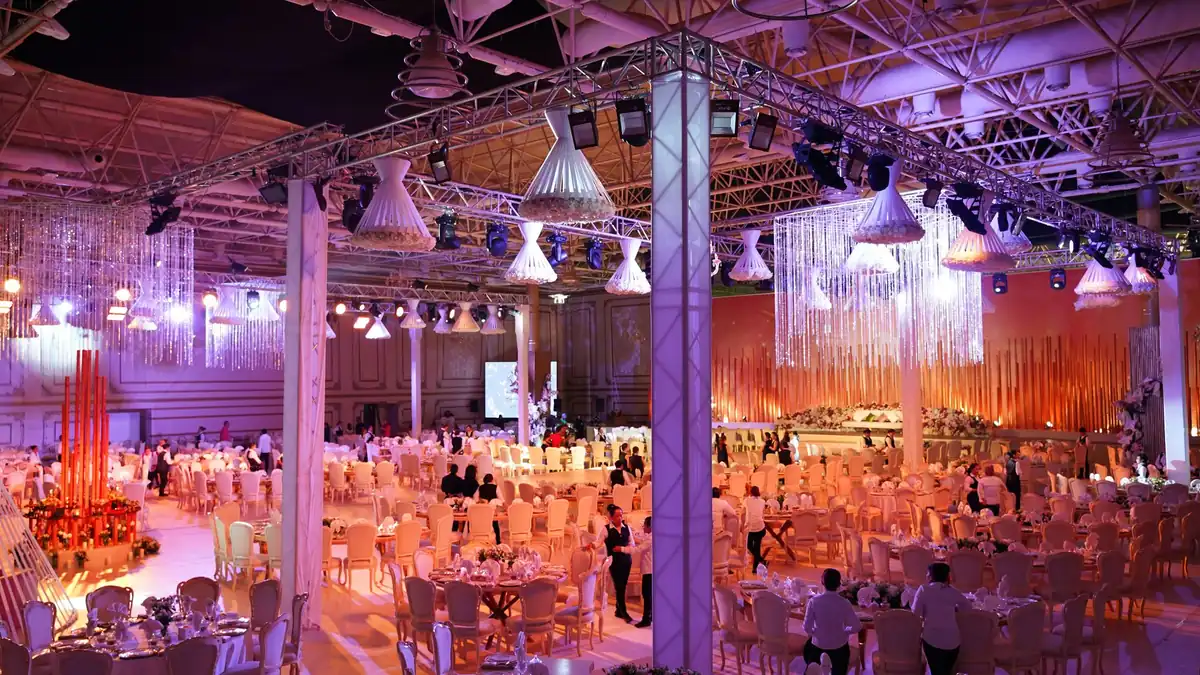
The marriage hall closing time is now 10pm under the federal austerity notification of 17 September 2026, and halls are also expected to serve a single dish at wedding functions. For transport, the rule that matters is the hard stop. When the lights go off, a few hundred guests reach the car park within the same fifteen minutes, and the ones without a confirmed seat are the ones still standing by the gate at 10:40. The fix is simple to describe and easy to skip: decide who rides in which vehicle before the walima starts, park the cars and vans where they can load without blocking each other, run a queue with one person holding the list, group drops by area, and have one named organiser who does not leave until every guest on that list is accounted for. The rest of this guide shows you how to set that up, with a timeline you can copy.
A quick safety note before the detail. This guide assumes a walima in a city such as Lahore, Islamabad, Rawalpindi, Karachi, Faisalabad or Multan. The UK FCDO travel advice for Pakistan advises against all travel to most of Khyber Pakhtunkhwa, including Peshawar, and to Balochistan, and against all but essential travel to other areas, including Dera Ghazi Khan and parts of Sindh north of Nawabshah. Its update of 22 September 2026 also warns of planned protests in Islamabad, Rawalpindi, Peshawar and other cities, with possible road closures. Check it on the day of the function, not just when you book the hall.
What the marriage hall closing time is right now
According to Dawn's report on the 17 September 2026 notification, the Cabinet Division set these closing times as part of fuel-conservation measures, effective immediately:
- Markets, shops and malls: 9pm
- Marriage halls and marquees: 10pm
- Restaurants: 11pm, with takeaway and delivery exempt
- Marriage-related functions: a single dish only
Enforcement in practice sits with provincial governments, district administrations and the police, and local orders can be tighter or can add their own detail. Dawn reports the fuel measures as running for three months, and notifications like this can be revised at short notice, so treat 10pm as the figure to confirm, not assume. Three questions to put to the hall manager, ideally on WhatsApp so you have the answer in writing:
- At what time do the lights and sound go off on our date?
- How long after that can guests stay in the car park or at the gate?
- Is there anywhere cars can wait off the main road, and who controls it?
The answer to the second question is often the one that catches families out. Some halls clear the forecourt quickly once the function is over, which means your waiting area may be a service road or a stretch of kerb outside.
Wedding function time limit versus the time the building empties
A wedding function time limit of 10pm does not mean guests start leaving at 10pm. Staff begin stacking chairs, the stage lights dim, and older guests who have been sitting for three hours stand up well before the cut-off. In practice you are managing a departure window that opens after the meal is served and closes some minutes after the official time. Plan your vehicles for that whole window, not for a single moment.
Why everyone leaves at the same moment
At a wedding with no closing rule, guests drift away over an hour or two. A hard close compresses that into a short burst, and a walima adds its own pressures:
- The meal is the natural end. Dinner is usually the last thing on a walima programme, and under a single-dish rule there is little left to linger over. Once plates are cleared, the room reads it as the signal to go.
- Photos run late. The couple and close family are often the last to finish photographs, so the people who most need their cars ready are the ones who leave last.
- Everyone plans the same exit. Relatives who drove themselves all walk to the car park together, and that traffic blocks the drivers you have hired.
- Roads outside fill up at once. If your hall shares a stretch of road with other halls, they all close at the same hour, and the road outside is busy for everyone. Drive past on an earlier evening if you can, and see what the gate looks like at closing.
- Children are tired and elders need help. A family of six with a wheelchair and two sleeping children takes much longer to load than a group of young cousins.
The result is predictable. Without a plan, cars circle, phones ring, and whoever shouts loudest gets the first seat. With a plan, the same crowd leaves in orderly groups and the car park empties while the hall is still switching off its lights.
Build the walima guest return plan backwards from the close
Start with the closing time and count backwards. The example below is for a walima where the hall confirms lights off at 10pm. Your times will differ, but the order of the steps holds.
Example timeline (illustrative, adjust to your hall and guest list):
| Time | What happens | Who owns it |
|---|---|---|
| Two days before | Seating list for return vehicles finalised and shared with drivers | Transport lead |
| 6:30pm | Drivers arrive, park in the agreed waiting area, confirm by message | Transport lead |
| 8:45pm | Meal served; transport lead checks every driver is still on site | Transport lead |
| 9:15pm | First departures: elders, families with small children, anyone unwell | Queue marshal |
| 9:30pm to 9:50pm | Main departures in area groups | Queue marshal |
| 9:50pm | Couple and close family finish photos | Family elder |
| 10:00pm | Hall closes; last vehicles loading | Transport lead |
| 10:15pm | Final guest check; organiser leaves with the last car | Transport lead |
Two things make this work. First, the earliest departures go to people who need the most time and help, not to whoever is ready first. Second, the couple's car is kept back and not used for a quick guest run, because the moment it leaves, it will be needed.
If your walima is large or overseas relatives are staying in hotels, write this timeline into your booking request. Our guide to wedding transport when the reception finishes late covers what to agree with operators if the function runs past the booked hours.
Staging vehicles and a pickup queue
Most of the chaos at a hall exit is caused by cars in the wrong place. Staging simply means deciding where each vehicle waits and in what order it comes forward.
Pick the waiting area before the day
Ask the hall where hired vehicles can wait. The best spot is off the main road, within a short walk of the gate, with room for vans to turn. If the hall has nothing, agree a nearby spot and share a location pin with every driver. Tell drivers not to double-park at the gate while they wait, because a single blocked lane can hold up everyone behind it.
Give each vehicle a number
Put a simple number on a card on the dashboard: 1, 2, 3 and so on. Every guest on your list is assigned a number. When the marshal calls "Van 3", everyone knows who is meant to walk to the kerb and which vehicle to look for.
Run a queue, not a scrum
Set up one loading point. The queue marshal, usually a cousin who knows most of the guests by face, stands at the gate with the list on their phone. Vehicles come forward one or two at a time from the waiting area, load, and leave. Nobody walks into the car park to hunt for a car. If you have more than about four vehicles, a second helper in the waiting area who sends cars forward on a phone call keeps the flow steady.
For a larger event, our guide to making a pickup manifest for an event with several vehicles shows how to lay out the list so a marshal can use it in the dark with one hand.
Hold one spare
If your budget allows, keep one car unassigned. It covers the guest who turns up unexpectedly, the driver who is stuck in traffic, or the elderly aunt who needs to leave half an hour early. A spare seat at 10pm is worth more than an extra van at 7pm.
Staggered drops by area
The single biggest time saver is grouping guests by where they are going, not by which side of the family they belong to. A van that visits three houses in the same neighbourhood is back in twenty minutes. A van that crosses the city twice is gone for the rest of the night.
Sort your list into areas first. In Lahore that might be DHA, Johar Town and the Walled City; in Islamabad, the F and G sectors against Bahria Town and the Rawalpindi side; in Karachi, Clifton and DHA against Gulshan and North Nazimabad. Then match vehicles to areas.
| Approach | Works well when | Watch out for |
|---|---|---|
| One vehicle per area, single run | Guests are spread across three or four clear areas | Vehicles sit half empty if an area is small |
| Looping van, two runs | Most guests live within a short drive of the hall | Second-run guests wait at a hall that is closing |
| Hotel shuttle plus family cars | Overseas guests are in one or two hotels | Hotel run must leave early so it can return |
| Dedicated car per household | Elders, VIPs or families with a lot of help needed | Cost and car park space |
A looping van looks efficient on paper but has a weakness under a hard close. If the first run takes 35 minutes, the second-run guests are waiting at a hall that has already switched off its lights. Only use a loop when the drive is short and you have somewhere indoors, or at least lit and supervised, for the second group to wait. Otherwise, add a vehicle.
Our guide to event return transport when guests leave at different times goes into more detail on splitting a guest list into waves.
The drop order inside each vehicle
Inside each vehicle, drop in this order: elders and anyone unwell first, then families with young children, then everyone else. Ask the driver to wait until the front door is open before pulling away. It adds a minute per house and removes most late-night worries.
Overseas relatives and hotel guests
If family have flown in from the UK, the Gulf or North America for the wedding, the walima is often their last big evening before the flight home. Build their return into the plan properly:
- Name the hotel exactly. Many cities have similarly named hotels and guest houses. Put the full name and a location pin on the list.
- Check the next morning. If someone flies out the following day, note the flight time on the list so the organiser knows who cannot afford a late night.
- Carry the luggage question forward. Walima guests heading straight to the airport overnight need a vehicle with boot space, not the decorated car.
- Keep a local phone number. Overseas guests may not have a working local SIM. Give their driver a relative's number as the contact.
The UK FCDO's safety and security guidance for Pakistan advises visitors to avoid street taxis and online taxi apps, and to use reputable, licensed companies they call for a car. For overseas guests at a walima, the practical reading is that a pre-arranged vehicle with a named driver is the sensible default, especially late at night.
Late-night safety for women and elders
A 10pm close means most drops happen between 9:30pm and 11pm. That is late enough to take seriously, especially for women travelling without a male relative and for older guests. The FCDO notes that local driving standards are erratic, especially at night, and that street crime is a risk in crowded areas. Neither is a reason to panic; both are reasons to plan.
For women guests
- Seat women travelling alone or in pairs in vehicles with other family members, not in a car on their own with a driver they have never met, unless they are comfortable with that and the driver's details have been shared.
- Send the driver's name, the vehicle number and the drop address to a relative at home before the car leaves.
- Ask the guest to message the family group when she is inside the house.
- In Islamabad, ICT Police list 15 for emergencies and 1815 for the Online Women Police Station on the Islamabad Police website. Save the numbers that apply in your city before the evening, not during it.
For elders and anyone with limited mobility
- Load them first, from the kerb closest to the gate, before the main crowd reaches the car park.
- Choose a vehicle with an easy step height. A tall van can be hard for someone with bad knees.
- Fold a wheelchair or walker into the boot before other bags go in.
- Put a family member in the same car where possible, so there is someone to help at the front door.
- Keep any regular medication in the car, not in a bag left in the hall.
If someone becomes unwell, in Punjab Rescue 1122 handles medical emergencies and road traffic crashes. Other provinces run their own emergency services, so check the right number for your city.
Traffic on the way home
In Lahore, the City Traffic Police offer the Rasta app for jam updates and alternative routes, according to the City Traffic Police Lahore site. In Islamabad, the ICT traffic helpline is 1915. If a protest or road closure is announced on the day, reroute drops before the first car leaves rather than halfway through the run.
The last guest check before the organiser leaves
The walima is not over for the organiser until the list is complete. Choose one person, in writing, who stays until the end. That person should not also be the groom's father, who will be thanking guests and settling the hall bill.
Last guest checklist:
- Every number on the vehicle list has been ticked as "left" or "not attending".
- Every elder and every woman travelling alone has messaged to say she or he is home, or the family has confirmed it.
- Nobody is waiting at the gate, in the ladies' seating area, in the prayer room or in the washrooms.
- Lost property is collected: phones, shawls, children's shoes, gift envelopes.
- The couple's car has left, with their bags and gifts.
- Every hired driver has been told they are released, and any extra time is recorded for the bill.
- The organiser leaves in the last vehicle, not before it.
It sounds fussy. It is the step that stops a grandmother being left in a darkened hall because everyone assumed a cousin had taken her.
When the plan slips at 9:55pm
Something usually goes wrong. Decide the answers now so nobody has to argue at the gate.
- A driver is stuck in traffic. Move his guests to the spare car, or split them across vehicles going to the same area. Do not hold a full van for one late car.
- Photos overrun. The close does not move for the couple. Send guests on time and let the family car wait for the couple.
- More guests than seats. Offer the extra guests to relatives who drove themselves and are going the same way, with the driver's consent. Note who went with whom.
- A guest refuses to leave early. Older relatives sometimes want to stay to the end. Let them, but move them to the last vehicle and tell the driver.
- The hall clears the car park early. Move the queue to your agreed outside spot and send a single message to every guest: where to walk, which number vehicle to look for.
One dish wedding rule and what it changes for transport
The one dish wedding rule mainly affects the menu and the caterer, but it has two small transport effects worth planning around. A single-dish meal can be served and cleared faster, so the departure window may open earlier than you expect; have drivers on site well before the food comes out. And if your family decides to start the walima earlier to fit the shorter evening, your arrival run moves into late afternoon traffic.
Planning the return with Pakistan Taxi
If you want help putting this together, describe the evening on our plan your journey page (planned link): hall name and city, the closing time the hall has confirmed, rough guest numbers, and the areas guests are going to. Pakistan Taxi treats this as a planning enquiry. We will come back to you on vehicle options and what can be arranged; nothing is confirmed until you have a reply, and fares are not fixed at the enquiry stage. Our wedding transport service page explains what we can help with across mehndi, baraat and walima.
For larger events with a convoy or several hotels, our sister service iDrive, the network behind Pakistan Taxi, takes the same details on its weddings and events booking page.
Whatever you arrange, send the vehicle list to every driver and to the organiser by the afternoon before the walima. On the night, the list is the plan. Everything else is just people in a car park.