
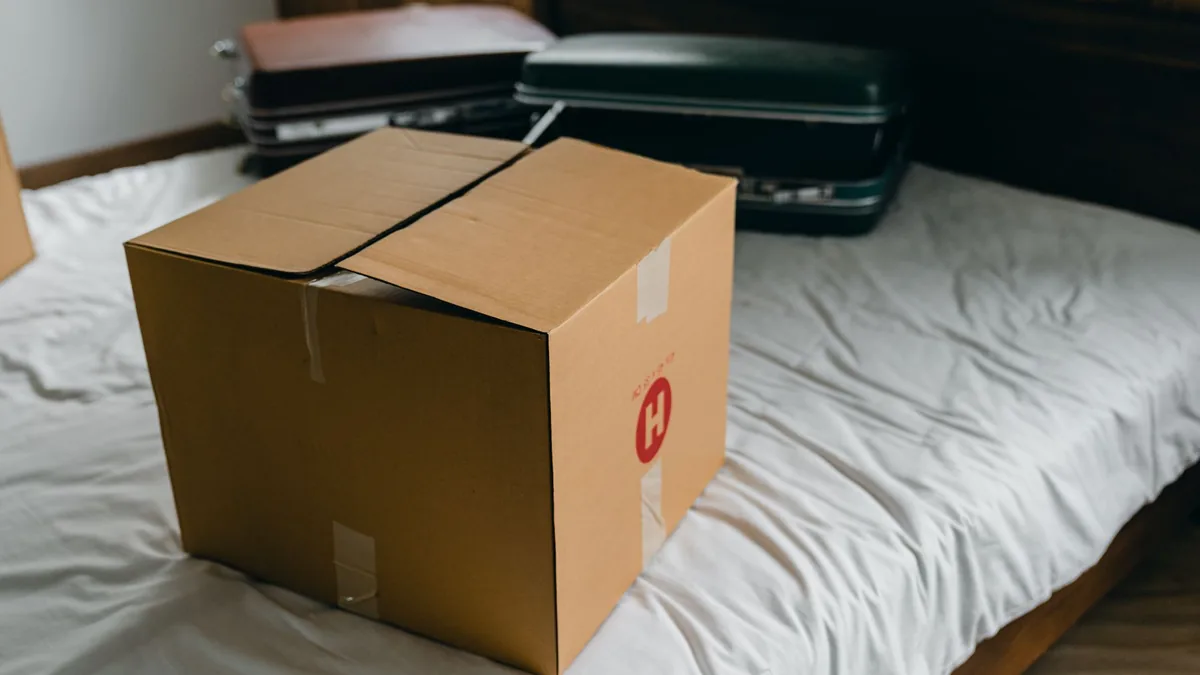
Moving to Islamabad for university is mostly a question of space and timing. First count what is actually going: suitcases, the bedding roll, boxes of books and kitchen things, and every person who wants to come along. That count decides the vehicle. One student with two cases and one parent fits in an ordinary car. Add a mattress topper, a study lamp, three boxes and two cousins who have promised to carry things up the stairs, and you need a people carrier or a van, not a second trip. Then fix the day around the hostel's own check-in window, which is in your admission or hostel allotment letter rather than on any general website. Plan to arrive in daylight, with time to spare, so the helpers can get home the same evening.
Below you will find a packing count you can fill in, a straight answer on how many helpers are worth bringing, what to expect at the hostel gate, a car-versus-van table, and a plan for the trip back at the end of term.
Start with the letter, not the road
Shifting to a hostel in Islamabad starts with paperwork, not packing. Before anyone arranges a vehicle, read what your child has been sent. Each university sets its own hostel rules, and they can change from one intake to the next. The allotment letter, the hostel office email or the student portal will normally tell you:
- the date and hours when new residents can move in
- which documents the warden's office wants to see on arrival (often the admission letter, fee receipt, CNIC or B-form copies and photographs)
- whether parents or relatives may enter the building, and whether that differs for girls' and boys' hostels
- what can and cannot be brought: cooking appliances, heaters, extension leads and furniture are common restrictions
- whether rooms are shared, and so how much floor space you really have
If any of this is missing, ring or email the hostel office a week before. A two-minute call can save you carrying a microwave 300 kilometres only to be told it is not allowed.
It is also worth a quick check that the institution is one the Higher Education Commission recognises. The HEC is the statutory body that funds, oversees, regulates and accredits universities in Pakistan, and its official website covers degree attestation and student services you will need later.
Counting boxes, bedding and suitcases
Families tend to underestimate the load on a university hostel move with luggage. Clothes are easy to picture; the awkward things are not. Do the count at home, a few days before, with everything stacked in one corner of a room.
A checklist you can copy
Tick each line and write a number beside it:
- Large suitcases (checked-bag size)
- Cabin-size cases and holdalls
- Bedding: a rolled mattress topper or foam mattress is the bulkiest item most students bring, followed by the quilt or razai, pillows and sheets
- Boxes: books, stationery, shoes, toiletries
- Kitchen bag: kettle, plates, a small pan, dry food from home, if the hostel allows them
- Awkward shapes: a pedestal fan, a study lamp, a floor mat, a prayer mat, a small bookshelf, a bicycle
- Electronics: laptop bag, printer, monitor — these travel inside the cabin, never under heavier bags
- Hand luggage for the helpers if they are staying overnight
Now photograph the pile. That one photo, sent with your enquiry, tells the booking team more than any list. Our guide on what to tell the booking team about family luggage explains which details matter most and why.
Two rules that save the day
- Soft beats hard. A foam mattress that is rolled and tied, or bedding packed into large woven bags, squeezes into gaps that a rigid box will not. Pack bedding soft and books hard.
- Label by room, not by owner. Write "hostel room" on everything going up the stairs and "stays in car" on the helpers' overnight bags, so nothing is unloaded twice.
How many family helpers really need to come
In Pakistani families the instinct is to send a delegation. A mother, a father, an uncle who knows someone in Islamabad and a younger brother who wanted the day out. It comes from a good place, but every extra person takes a seat that a box could have used, and the hostel may not let them in anyway.
On a student move, family helpers earn their seat by doing a job. Think about roles, not relatives:
| Role | What they actually do | Needed? |
|---|---|---|
| The student | Signs in, receives the key, decides where things go | Always |
| One parent or guardian | Speaks to the warden, handles documents and any fee queries | Usually |
| One carrier | Lifts boxes and bedding up stairs, runs the second load | Helpful if there is no lift |
| Extra relatives | Moral support, lunch company | Optional; check hostel entry rules first |
For most moves, two or three people plus the student is the sweet spot. Beyond that you are paying for a bigger vehicle to carry passengers who may end up waiting outside the gate.
Girls' hostels deserve a specific word. Ask the hostel office whether male relatives can go beyond a visitors' area. If they cannot, a female relative who can go inside and help set up the room is worth more than two strong cousins who must stay at the reception desk. Check this in advance; it changes who travels.
Car size for a hostel move: car, people carrier or van
This is where most of the planning happens. The table below uses everyday categories rather than model promises, because the vehicle you are offered depends on what is available on the day. For real seat-and-suitcase numbers by vehicle type, our sister service iDrive, the network behind Pakistan Taxi, has a clear breakdown of how many people and suitcases fit in Pakistani fleet vehicles.
| Your load | Who is travelling | Sensible vehicle type | Watch out for |
|---|---|---|---|
| 2 suitcases, a holdall, bedding in one bag | Student + 1 parent | Saloon car | A rolled mattress may not fit the boot; ask before you book |
| 2-3 suitcases, 2-3 boxes, bedding, a fan | Student + 2 helpers | Larger family car or people carrier | Roof racks are not always available or advisable |
| 4+ suitcases, several boxes, a mattress, furniture | Student + 3 or more | Van | Check the hostel's approach road and gate can take a van |
| Two students sharing the trip from the same city | 2 students + 2 parents | Van, or two cars | Different hostels mean two drop-off stops |
A few practical points:
- One bigger vehicle can beat a second trip. One run with everything and everyone is simpler than two car journeys, and helpers get home sooner. Compare both honestly in your enquiry; our guide on choosing a group van or several cars sets out the trade-offs.
- The last few hundred metres matter. Some hostels sit deep inside large campuses with internal barriers and speed bumps. Quaid-i-Azam University, for example, sits on a campus of about 1,700 acres in the Margalla foothills. Ask the hostel office where vehicles may stop for unloading and whether a pass is needed at the main gate.
- Tell the booking team about fragile or valuable items. A monitor or a sewing machine needs to ride where it will not be crushed.
If the load clearly needs more room, look at our van journeys page (planned link) to see how van trips are planned.
The road into Islamabad
Most families coming from Punjab arrive on the M-2, the Lahore-Islamabad Motorway. It runs 375 kilometres and climbs into the Salt Range at Kallar Kahar, according to the Wikipedia article on the M-2 motorway and its cited sources. It has service and rest areas on both sides with fuel and food, which is useful when you are carrying three passengers and a car full of bedding. Tolls are collected electronically with M-Tag, and toll amounts are revised from time to time, so check them close to the date rather than relying on an old figure.
Families from Khyber Pakhtunkhwa or Sindh face longer drives and, in some cases, routes that official travel advice treats with caution. The UK Foreign, Commonwealth & Development Office does not advise against travel to Islamabad itself, but its Pakistan travel advice advises against all travel to Balochistan and much of Khyber Pakhtunkhwa, including Peshawar, and against all but essential travel to Sindh north of and including Nawabshah and a few other areas. If your home is in one of those areas, read the live advice before planning the road trip, as the advice changes.
Two more things to watch in the same advice:
- Protests and road closures. The FCDO warns of planned protests and marches in Islamabad and Rawalpindi, with possible road closures and disruption. On move-in day, check local news before setting off and allow a buffer.
- The monsoon. The FCDO's safety and security page says the monsoon usually runs from late June to early October and that flooding can affect all provinces. Autumn intakes often begin inside that window, so a heavy-rain forecast is a real reason to leave earlier or move the date by a day.
For conditions on the motorways on the day itself, the National Highways and Motorway Police publishes travel advisories and runs FM 95 for road updates.
If the journey is long, plan a proper stop rather than a hurried one. Our guide to asking for breaks and stops on an intercity journey explains how to build them into the plan.
Hostel check-in times and gate rules
The drop-off itself is where good plans go wrong, usually because of timing.
Arrive inside the window, with margin
If the office opens for new residents from, say, 10am to 4pm (a hypothetical example; use your own letter), aim to be at the gate by late morning. That leaves room for a queue at the warden's office, a missing photocopy, or a room key that turns out to belong to someone else. Arriving at 3.45pm with a van full of boxes is how families end up sleeping in a relative's lounge and coming back the next day.
What happens at the gate
Expect some or all of these, depending on the institution:
- Security checks of the vehicle and bags at the main campus entrance
- Visitor registration, often with a CNIC shown by each adult entering
- Parking limits, where the vehicle may unload briefly near the hostel and then wait in a separate area
- Time limits for visitors, especially on the first busy day of term
Tell the driver in advance that the drop-off involves waiting and several carries. It changes how the job is planned, and a vehicle booked only to "drop at the gate" may not be able to stay for an hour of unloading.
Unload in a sensible order
- The student and one parent go in first to collect the key and see the room.
- Documents and valuables go up with them.
- Bedding and suitcases follow, then boxes.
- Awkward items go last, once you know where they fit.
- Before the vehicle leaves, one person walks around it and checks every seat, footwell and the boot.
Getting helpers home the same day
This is the part families forget to plan. The student stays; everyone else has to get back.
If home is a few hours away, the cleanest option is a return on the same vehicle: drop off, unload, rest for an hour, and drive back in daylight. Build the waiting time into the enquiry so it is clear from the start.
If the helpers want to stay a night in Islamabad and return tomorrow, that is a different journey, and it is easier to plan as a separate return. Our guide to booking an intercity return on another day covers how to arrange it.
A practical tip: work backwards from sunset. The FCDO advises caution in urban areas at night, and a long drive home after a tiring day of carrying boxes is best done early. If unloading runs late, it is better to stay the night than to start a long drive in the dark.
Resist the idea of sending the helpers home "on whatever is running". The same FCDO page advises visitors to avoid public transport, including the Metro Bus between Rawalpindi and Islamabad, and to avoid street taxis and app-based rides, using licensed firms booked through an operator instead. Local families will weigh that for themselves, but after a long day it is one more reason to settle the return leg before you leave home.
The trip back at the end of term
Hostel life has a rhythm. Rooms often have to be emptied, or at least partly cleared, at the end of the academic year, and sometimes over long vacations. Check the hostel's rules on what can be left behind, because it decides how big the return vehicle needs to be.
Plan the end-of-term trip early:
- Find out the vacating date from the hostel office as soon as it is announced. Every student in the building leaves at once, so gate traffic and parking are at their worst.
- Count again. Students go home with more than they brought. Books, a new kettle, winter clothes bought in Islamabad.
- Consider shared journeys. Two students from the same home city can split one larger vehicle, if their dates and addresses line up.
- Store what you can. If the university or a relative in Islamabad can keep a mattress and a box of books over the summer, the return trip may fit in a car instead of a van.
Questions people ask
Can we do the whole move in one car?
Only if the load is small: one student, one parent, two suitcases and bedding in soft bags. As soon as there is a mattress, boxes and more than two passengers, a people carrier or van is usually the better plan than a second trip.
How many relatives should come to help?
Two or three people plus the student is enough for most moves. Check the hostel's visitor rules first, especially for girls' hostels, because extra relatives may not be allowed past reception.
Should we avoid moving during the monsoon?
You may not be able to, as autumn intakes often start in that season. Watch the forecast, allow extra time, and be ready to shift the date by a day if heavy rain is expected on your route.
What should we send when asking about a journey?
The pickup address, the hostel's name and gate, the number of people, a photo of the luggage pile, the check-in window from the allotment letter, and whether the helpers return the same day. When you have that ready, plan your journey with Pakistan Taxi (planned link) and the team will come back to you about what is possible for your date.