
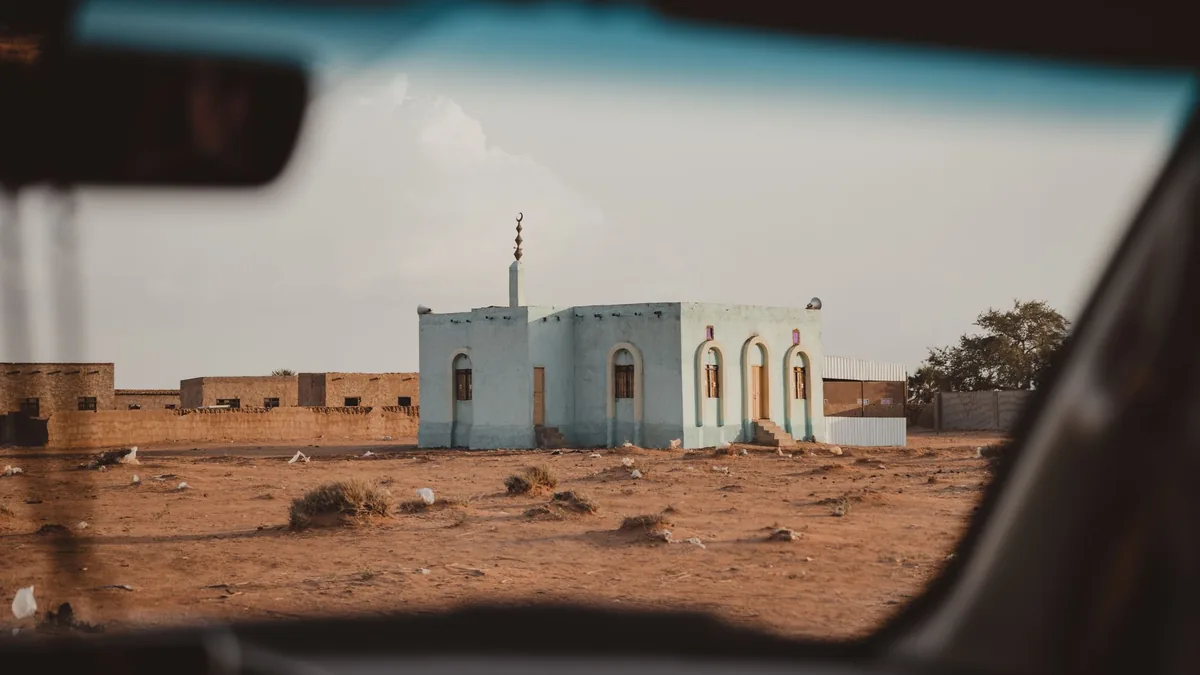
Namaz during travel is easier than most families expect, provided you plan it before the car moves rather than on the hard shoulder. On a three-to-five-hour intercity drive in Pakistan, one or two prayers will usually fall inside the journey. Look up the timetable for both your departure and arrival cities on the travel date, mark which prayers land between leaving and arriving, and choose one stop where you can pray and eat together. Then tell your driver or booking team about that stop when you enquire, so the time is planned in rather than squeezed in. On the M-2 between Lahore and Islamabad, the service areas have mosques as well as food. On less-served roads such as the M-9 between Karachi and Hyderabad, you need to plan harder. For rulings on shortening (qasr) or combining prayers, ask a scholar you trust: this guide covers the logistics, not the fiqh.
Namaz during travel starts with two timetables, not one
Prayer times depend on where the sun is, so they shift a little with location and noticeably with season. Maghrib is prayed straight after sunset, and sunset over Lahore is not at the same minute as sunset over Islamabad. The gap is small between Punjab cities. It gets larger when you add a long drive and a winter afternoon, when Asr and Maghrib come close together.
On the evening before you travel:
- Open the timetable for your departure city for the travel date. Your local mosque's printed or WhatsApp timetable is usually the most trusted source in your family.
- Open the timetable for your arrival city for the same date.
- Write down your planned departure time and a realistic arrival time. "Realistic" includes the time it takes to leave the house, fuel, city traffic at both ends, and at least one break.
- Circle every prayer whose start time falls between departure and arrival. Those are the prayers you are planning around.
- Note the end of each window, not just the start. A prayer that begins 40 minutes after you leave may still be comfortably prayable at a stop 90 minutes in. The question is whether you reach a suitable place before the window closes.
That fifth step is the one most families skip. They see "Zuhr 1:15" and assume they must stop at 1:15. You rarely need to. You need a stop at some point inside the window, ideally one that also works for lunch.
Where prayer usually falls on a 3-5 hour drive
Every journey is different, so treat the patterns below as a way of thinking, not a schedule. The times in the examples are illustrations only. Always check the real timetable for your date.
Morning departures
Leave after Fajr and before mid-morning, and a four-hour drive usually brings only Zuhr into play. That is the simplest shape. One mid-journey stop, placed after Zuhr has begun, covers prayer, lunch and a toilet break together.
*Example only:* a family leaves Lahore at 9:30 am for Islamabad. If Zuhr begins around 12:30 pm on that date, a stop after about three hours on the road lands inside the Zuhr window, near the later part of the motorway. They pray, eat and arrive for a late lunch or an early tea without a second stop.
Midday departures
Leave around noon and you are likely to meet both Zuhr and Asr. Many families pray Zuhr at home before leaving, then plan one stop for Asr and a snack. In winter, when Asr comes early and the gap to Maghrib is short, that single stop can do a lot of work.
Afternoon and evening departures
This is the tricky shape. An afternoon start can bring Asr, Maghrib and sometimes Isha into one drive. Maghrib has a narrow window after sunset. Driving through it without a plan is how families end up praying on a verge in the dark. If you must leave in the afternoon, fix the Maghrib stop first and build everything else around it.
Route by route: where a family can actually stop
The single biggest variable is not the prayer timetable. It is whether the road gives you a clean, safe place to stop at the right moment.
Lahore to Islamabad on the M-2
The M-2 is the easy case. It runs about 375 km between Lahore and Rawalpindi/Islamabad and has five service areas, at Sukheki, Sial, Bhera, Kallar Kahar and Chakri, built on both carriageways because you cannot cross over inside the motorway. The facilities listed there include mosques, washrooms, bakeries, tuck shops and fast-food outlets. That combination is exactly what a family stop needs: a place to pray, a place to eat and a place for the children to stretch.
Because the service areas sit roughly 60-80 km apart, you rarely have to choose between praying early and praying late. If the window opens just after you pass Sial, Bhera is not far behind. A motorway mosque prayer stop here is usually a short walk from the car park, which matters when you have elderly relatives or small children.
Two practical points on the M-2:
- Pick your side. Service areas are on both carriageways, so the stop you planned on the way up is not the stop you will use on the way back. Plan the return separately.
- Allow for the queue. At Zuhr on a busy day, the wudu area and the food counters fill up at the same time. Pray first, then queue for food, or split the family so one group orders while the other prays.
For a fuller picture of tolls and typical drive times on the M-1, M-2 and M-4, see the motorway tolls and drive times guide from iDrive, the network behind Pakistan Taxi.
Lahore towards Faisalabad and Multan
South and west of Lahore, the M-3 runs about 230 km from the Lahore end of the M-2 to the M-4 near Abdul Hakeem, with three rest areas along the route. That is fewer options than the M-2, so fix your stop before you set off rather than hoping one appears at the right time. From the junction, the M-4 carries on south to Multan; Faisalabad sits further north on the same M-4, which runs from Pindi Bhattian. On any of these roads, ask the driver which stops they normally use. Drivers who work the route regularly will know which rest area has a usable prayer space and which one is only a fuel stop.
Karachi to Hyderabad on the M-9
The M-9 is short, about 136 km between Karachi and Hyderabad, but it is a different kind of road. It is noted as lacking the proper service areas and amenities of the M-2, M-3 and M-5, and local traffic can merge directly from roadside fuel stations and hotels. For a family, that means two things:
- On a drive this short, it is often simpler to pray before leaving or after arriving, if the timetable allows it.
- If a prayer falls mid-journey, agree the exact stop with the driver in advance. A roadside fuel station with a small prayer room can work, but pulling in and out through merging traffic is not something to improvise.
Quick comparison
| Road | Approx. length | Stops for families | Planning tip |
|---|---|---|---|
| M-2 Lahore-Islamabad | 375 km | Five service areas with mosques, food and washrooms | Choose which service area matches your prayer window |
| M-3 Lahore-Abdul Hakeem | 230 km | Three rest areas | Fix the stop before departure; confirm prayer space with the driver |
| M-9 Karachi-Hyderabad | 136 km | Limited formal service areas | Pray before or after if you can; agree any mid-route stop in advance |
Lengths are from the motorway records linked above. Actual journey times depend on traffic, weather and the time you spend at each stop.
One stop, not three: combining prayer with a meal
The most common mistake on a family drive is treating every need as a separate stop. Someone needs the toilet at 90 minutes. Zuhr begins at two hours. Lunch is at three. That is three stops, each costing 15 to 30 minutes by the time everyone is back in the car. On a four-hour journey you have added an hour without noticing.
Praying on a long car journey in Pakistan works best when the prayer stop is the stop. The fix is to design one main stop that does everything, plus at most one short comfort break.
How to design the main stop
- Anchor it to the prayer window. From your timetable, find the prayer that falls most centrally in the drive. That is your anchor.
- Move the meal to the prayer, not the prayer to the meal. A slightly early or late lunch costs nothing. A missed prayer window matters more to most families.
- Pick the location. On the M-2 that is a named service area. On other roads it is a place your driver knows.
- Set a length. Thirty to forty-five minutes is a sensible starting figure for wudu, prayer, a simple meal and a toilet visit for a family. Tell the driver the figure so they are not waiting with the engine running, wondering.
- Decide who does what. One adult orders food while the others pray, then swap. With children, give each adult a named child to keep track of.
What to pack so the stop runs smoothly
- A compact prayer mat per adult, or two to share, in a bag you can reach without opening the boot.
- A small towel or tissues for wudu, and slip-on shoes or sandals so shoes come off and on quickly.
- A qibla compass or a phone app that works offline, as signal can drop between interchanges.
- A scarf or dupatta in the car for anyone who may want one at a mosque.
- Snacks and water, so a delayed prayer stop does not also become a hungry-children stop.
If you have more than one family group, elderly relatives with mobility needs, or a planned visit on the way, the guide to planning a multi-stop family journey goes into sequencing in more detail.
Jumma prayer while travelling on a Friday
Friday changes the shape of the day. Jumu'ah is prayed at midday in place of Zuhr, as two rak'at preceded by a sermon, and the first call usually goes out some 15 to 20 minutes before the service begins. Classical fiqh discussions list travellers among those for whom Jumu'ah is not obligatory, but many families still want to attend when they can, and the details of that ruling belong with your scholar, not your driver.
The practical choices on a Friday are:
Option 1: leave after Jumma
Pray Jumma at your home mosque, have lunch, and leave early afternoon. This is the calmest option. It does move Asr, and possibly Maghrib, into the drive, so plan that stop as described above.
Option 2: arrive before Jumma
Leave early enough to reach your destination with time to spare before the Friday prayer. This works on shorter routes and for morning people. It fails if traffic, fog or a late start eats into the margin. Build in more slack than feels necessary.
Option 3: attend Jumma on the way
Some families plan to join Jumma at a service area mosque or a mosque in a town just off the route. If you choose this:
- Ask the driver in advance whether they know a mosque on the route that holds Jumma, and roughly when the khutbah starts there. Timings vary from mosque to mosque.
- Arrive early. Parking and wudu fill quickly.
- Plan lunch right after, so the Friday stop is also your meal stop.
- Remember the driver. Many drivers will want to attend too. Agree a meeting point and time at the car so nobody is left waiting.
Whatever you choose, say so when you plan the journey. "We want to stop for Jumma" is a very different day from "we will pray when we arrive", and the stop time should be in the plan from the start.
Qasr namaz distance and combining prayers: ask a scholar
Many families ask about qasr namaz distance: how far you must travel before the four-rak'at prayers may be shortened, and whether Zuhr with Asr or Maghrib with Isha may be combined. General references describe shortening Zuhr, Asr and Isha from four rak'at to two once a journey passes a minimum distance, with one summary giving about 90 km. They also note that the schools of Islamic jurisprudence differ on when combining is allowed.
We are a transport service, not a source of religious rulings, and those differences are exactly why we will not give you one here. The distance threshold, how it is measured, how long a stay ends traveller status, and whether combining is allowed all depend on the school your family follows and on your circumstances. Ask:
- the imam of your local mosque, in Pakistan or abroad;
- a scholar or mufti your family already trusts; or
- a recognised institution in your school of thought.
The Council of Islamic Ideology advises Pakistan's legislature on whether laws conform with the Qur'an and Sunnah, and draws its members from various schools of thought. It shows how rulings are approached at national level, but a personal fiqh question is best put to a scholar you can speak to directly.
Once your family has settled that, the stop plan follows: combining, where allowed, may remove a stop; praying each prayer in its own time may add one.
Tell the booking team before you set off
A prayer stop that is agreed in advance is part of the journey. A prayer stop that is announced at the interchange is a surprise. The first gets built into the timing and into the team's reply to your enquiry. The second puts the driver in an awkward position and the family under time pressure.
When you use the Pakistan Taxi journey planner (planned link), include:
- Departure time and how fixed it is. "9:30 am, flexible by 30 minutes" helps more than "morning".
- Which prayers you expect to pray on the way, and whether you plan to attend Jumma.
- Your preferred stop, if you have one, such as "Bhera service area for Zuhr and lunch".
- How long you want to stop. A figure, not "a while".
- Who is travelling. Elderly passengers, wheelchairs or small children change how long a stop takes and where the car should park.
- Any other stops. A relative's house, a sweet shop for mithai or a shrine visit all add time and are better planned together.
This lets the team plan a realistic journey and reflect the stop time when they reply. Sending an enquiry does not secure a vehicle or fix a price; each one is reviewed and answered separately. The checklist of what a city-to-city quote should include explains how waiting time and stops are usually treated, and the guide to asking for breaks and stops on an intercity journey covers how to raise them politely with the driver on the day.
When the plan slips
Even a good plan meets a closed interchange, a late departure or a slow queue at the wudu taps. Decide your fallbacks the night before so nobody argues about them in the car.
If you are running late
Look at the window end time you wrote down. If you will still reach your planned stop inside the window, carry on. If you will not, pick the nearest earlier stop and tell the driver as early as possible. A calm request made 20 km out is easy. A sudden request at the slip road is not.
If the weather turns
Road conditions can change on the day, especially on winter mornings and evenings. The National Highways and Motorway Police runs a travel advisory service for motorists, and it is worth checking before an early or late departure. A slower drive can push an extra prayer into the journey. Recheck your timetable against the new arrival estimate and adjust the stop, rather than the other way round.
A word on safety
The routes in this guide sit outside the areas the UK FCDO travel advice for Pakistan warns against, but the list is specific. It advises against all but essential travel to Sindh north of and including Nawabshah, for example, so a Hyderabad drive is a different proposition from one that carries on up the province. If relatives from abroad are joining you, have them read the current advice for the full route before you fix the date.
A one-page checklist for the night before
Copy this into your family group chat.
Timings
- [ ] Prayer times for departure city, travel date
- [ ] Prayer times for arrival city, travel date
- [ ] Departure time and realistic arrival time written down
- [ ] Prayers that fall inside the drive circled, with window end times
- [ ] Friday? Jumma plan agreed (before, after or on the way)
Stops
- [ ] Main stop chosen for prayer, meal and washroom together
- [ ] Stop length agreed (a figure in minutes)
- [ ] One fallback stop earlier on the route
- [ ] Driver or booking team told about stops and Jumma plans
Travelling on to Umrah as well?
Many Pakistani families combine a domestic drive with an Umrah trip, and the same principle applies in Saudi Arabia. Time the transfer around the prayer, not the prayer around the transfer. Our sister company Hajj Umrah Taxi has a separate guide to timing intercity transport journeys around prayer breaks for the Makkah, Madinah and Jeddah legs.
Your next step
If you have the travel date, the cities and a rough idea of which prayers fall on the way, you have what you need to plan the journey. Use the Pakistan Taxi journey planner to send the details, including your prayer and meal stop, or see how city-to-city journeys are arranged. The team will come back to you to confirm what can be arranged for your date.