
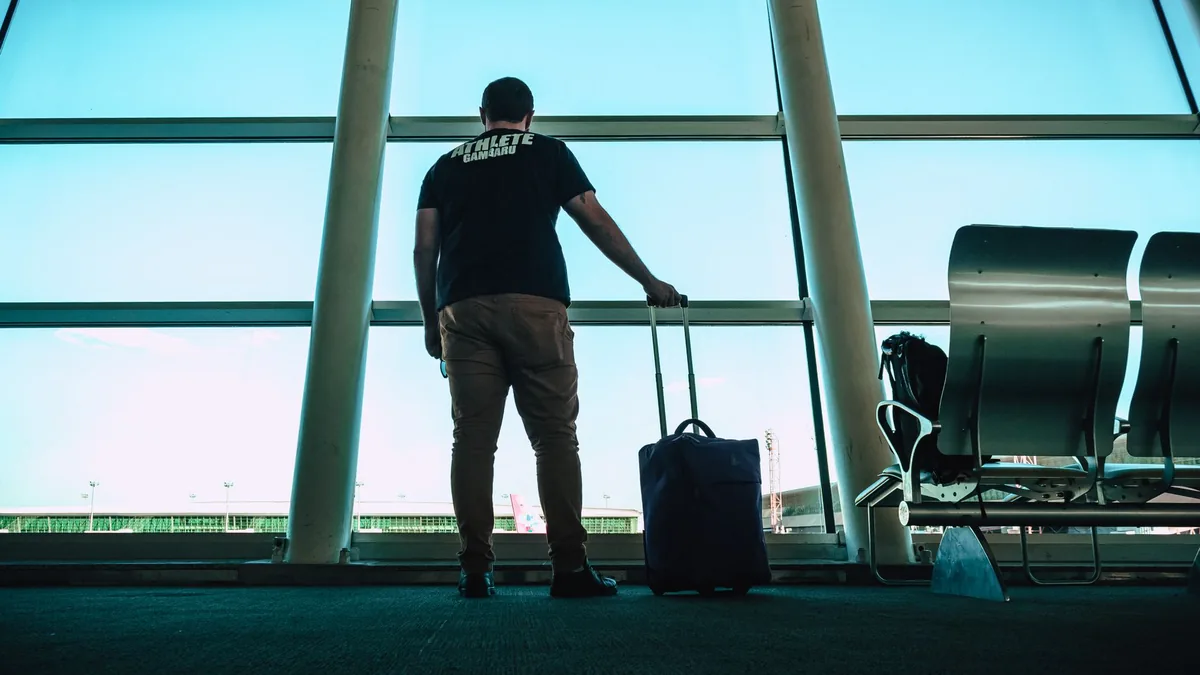
When one person in the family has an early morning flight from Lahore Airport and everyone else is staying on, treat that departure as its own small journey rather than a footnote to the family's plans. Work backwards from the airline's deadlines, not from the time on the ticket. Allama Iqbal International Airport's own guidance asks international passengers to arrive four hours before the scheduled departure, and two hours for domestic flights. Add the drive, a buffer for the security queue at the vehicle gate, and the time it takes to get one sleepy traveller and their bags out of the house. For a 4am flight, that usually means a car at the door the evening before, often before midnight. Settle it while the house is awake: arrange a separate airport drop-off for that person, agree who (if anyone) rides along, and decide how that companion gets home. Everyone else sleeps.
The rest of this guide walks through each of those decisions in order, with a checklist you can hand to whoever is organising.
Why the early leaver needs their own plan
Most return-journey planning assumes the whole group goes together: one vehicle, one time, one set of goodbyes at the door. That is how our guide to planning the return airport journey approaches it, and for a family flying back as a unit it works well.
It breaks down when you have one relative flying home early and only one person is leaving before the rest of the family. A brother whose leave ends before the wedding week is over. A parent flying back to Manchester while their children stay with grandparents. A cousin with a job in Doha who could only get five days. Suddenly you have:
- one passenger, often with more luggage than they arrived with
- a departure time that falls in the dead of night
- a household where half the people are asleep and the other half want to come along
- a question nobody has asked yet: who drives the companion back?
None of this is complicated. It simply gets forgotten until 11pm the night before, when the person who "was going to sort the car" realises nobody did.
How early is early? Lahore's night departure bank
Lahore has a real overnight departure schedule, particularly towards the Gulf and Saudi Arabia. On the morning we checked the airport's live flight schedule (25 September 2026), the departures list included flights to Doha at 00:45, Jeddah at 02:40, Doha again at 03:10, Muscat and Dubai at 03:25, Riyadh at 03:55, Abu Dhabi at 04:15 and Dubai again at 04:50. Schedules change by season and airline, so check your own flight rather than relying on that list.
The point is simple. If your relative is flying to the Gulf, or connecting through a Gulf hub to the UK, Europe or North America, there is a fair chance their departure sits between midnight and 5am. That means the car has to arrive at the house at an hour when:
- the household is winding down or already asleep
- the traveller has had little rest
- most people's judgement about timings is at its worst
So the planning has to happen earlier, while everyone is awake and thinking clearly.
Working back from the airline's check-in cut-off
There are two clocks to respect, and the stricter one wins.
The airport's advice. Allama Iqbal International Airport's entrance guidance advises departing passengers to arrive 4 hours before international flights and 2 hours before domestic ones. The airport's departure procedure page sets out the order of things once you arrive: ASF baggage screening at the departure lounge entrance, customs and anti-narcotics clearance, airline check-in, immigration, then the departure lounge and boarding.
The airline's deadlines. Each airline sets its own check-in closing and gate closing times, and they are printed on the ticket or the airline's website. As one example, Emirates' online check-in page says online check-in opens 48 hours before departure and closes 90 minutes before, that passengers should go through passport control and security no later than 90 minutes before departure, and that Economy passengers should be ready at the gate 60 minutes before departure. It also notes that at some airports the recommended arrival time can be up to four hours. Other carriers publish their own figures, so look up your relative's airline rather than assuming.
A useful habit: do online check-in as soon as the window opens. It will not remove the queues at Lahore, because bags still have to be dropped and passports still have to be checked, but it settles seat choice and flags any document problem while there is time to fix it.
Setting the pickup time for an early morning flight from Lahore Airport
Once you know the time your relative must be inside the terminal, build the pickup time backwards in blocks. Write each block down; it is much easier to argue about a number on paper than a vague feeling that "an hour should be enough".
- Scheduled departure. Take it from the e-ticket, in Pakistan time. If the ticket was bought in the UK, double-check you are not reading a UK time off a confirmation email.
- Arrival target. Subtract four hours for an international flight, per the airport's guidance, or whatever your airline asks if it is earlier.
- The gate queue. According to the airport's entrance page, the Airport Security Force carries out an under-vehicle search at every vehicle checkpoint, and staff at the Main Vehicle Entrance Gate may ask for a CNIC, ticket or passport. The ASF's own frequently asked questions acknowledge that when multiple flights are operating, many vehicles arrive at once and long queues form. The night bank described above is exactly that situation. Allow for it.
- The drive. Ask whoever is arranging the car how long they expect the run from your address to take at that hour, and where the route goes. Night roads are quieter, but diversions, roadworks and security arrangements do happen. The UK Foreign Office's Pakistan travel advice notes that previous protests have led to road closures and transport disruption, and advises allowing extra time and checking routes before travelling. Lahore itself is not among the areas the FCDO advises against visiting.
- Door-to-car time. Loading bags, a final round of goodbyes, the forgotten phone charger. Give it fifteen minutes and you will probably use them.
A worked example (hypothetical)
This is an illustration only. Your numbers will differ.
| Step | Example time |
|---|---|
| Flight departs (Pakistan time) | 04:00 |
| Airport's advised arrival for an international flight | 00:00 |
| Allowance for the vehicle gate queue (example) | 30 minutes |
| Drive from the house, as estimated by the operator (example) | 40 minutes |
| Loading and goodbyes | 15 minutes |
| Driver at the door | 22:35 the previous evening |
Notice what that does. A "4am flight" turns into a car at the door before 11pm. That is often the moment families realise the traveller should not try to sleep first. Either they rest in the early evening, or they accept they will sleep on the plane.
Tell the operator the right things
When you enquire, give the details that actually change the plan:
- the flight number and scheduled departure time
- the full pickup address, a landmark, and which gate or lane the driver should use
- how many passengers will travel (the traveller plus any companion)
- the exact number of large bags and any awkward items, such as a wheelchair or a box of gifts
- whether the companion needs a ride back, and to where
Our Lahore airport journey guide (planned link) covers the airport itself in more detail. The difference between arriving and leaving matters here too: a pickup waits on a plane, a drop-off waits on nobody, which is why our note on why pickups and drop-offs need different timing plans is worth two minutes of your time.
Packing and goodbyes the night before
The single best thing you can do for a dawn departure is to make the evening before the real farewell.
The evening checklist
Do these while the house is still awake:
- Passport, visa and any residence card in one pouch, in the hand luggage. The airport's departure page lists a valid ticket, valid passport, valid visa where applicable, CNIC and photo ID among the documents for international departures.
- CNIC or NICOP where the traveller holds one. It may be asked for at the entrance gate as well as inside.
- Polio certificate if it applies to them. The departure procedure at Lahore includes a stop at the Airport Health Desk to show a polio health certificate; the airport says vaccination is free at Pakistan's international airports, and certificates can also be obtained beforehand from designated Ministry of Health centres. Check whether your relative needs one before the night, not at the desk.
- Bags weighed and closed. Gifts and food parcels from relatives tend to arrive in the final hours. Decide a cut-off and stick to it.
- Valuables in the cabin bag. The airport's own guidance is to hand-carry expensive items such as cameras and jewellery, and fragile items.
- Name and address on every bag, written in English, as the airport advises.
- No carrying for strangers. The airport explicitly warns passengers to refuse to carry items at anyone else's request.
- Phone charged, with the driver's contact saved and the booking reference to hand.
- Clothes laid out. Nobody wants to search a dark room for socks at 10:30pm.
Saying goodbye without waking the whole house
Have the family meal, the photos and the long hugs at a sensible hour. Then let people go to bed. Agree that the one or two people who really want to be at the door will be there, and that everyone else has already said farewell. Elderly relatives in particular are better served by a proper goodbye at 9pm than a groggy one at the gate.
If there are children in the house, the gate and the main door are where noise travels. Ask the driver to message on arrival rather than sound the horn, and keep the car's engine running time short.
Who from the family, if anyone, rides along
This is where most of the friction lives. Somebody always wants to come, and in a big family visit that somebody can quickly become four people. Before you agree, know the rules at the gate.
What the airport allows
The ASF's published answer is clear: only three persons including the driver, in the case of a private vehicle, are allowed with one passenger, to avoid unnecessary rush in the concourse halls and car park areas. At the entrance, security staff may ask to see a CNIC, passport, airline ticket or airport entry pass, and pedestrians entering through the Pedestrian Gate are body-searched.
Inside, the departure process is built for passengers. Entry to the departure lounge is at the ASF screening point, and the airport asks passengers to show a valid airline ticket at the entrance gate to the departure briefing lounges. So a companion without a ticket should expect to say goodbye before that point, not at the check-in counter or the boarding gate.
The realistic question, then, is not "can the family see them off inside?" but "is it worth someone losing a night's sleep for a goodbye at the kerb?"
A quick way to decide
| Situation | Suggested approach |
|---|---|
| Confident adult traveller, standard luggage | Travels alone. Goodbyes at home. |
| First-time solo flyer, or an older parent | One companion rides along for reassurance at the gate, then returns. |
| Traveller needs mobility help | Arrange assistance with the airline in advance; one companion to the kerb is enough. |
| Heavy or awkward luggage | One companion, or use the airport's paid porter service. |
| Companion would have to come back alone at 2am with no ride arranged | Do not send them. Say goodbye at home. |
The airport lists paid porter services and baggage trolleys as part of its departure process, which often removes the main practical reason for a second person to come along.
If a companion does go
Give them a clear role. They are there to see the traveller through the vehicle gate and to the terminal entrance, to confirm by message once the traveller is inside screening, and then to come home. They are not there to wait until the plane leaves. Agree that in advance and nobody feels guilty about heading back.
Getting that relative home after the drop-off
This is the part everyone forgets. The traveller is sorted; the cousin who came along is now standing outside the terminal at 1am.
Decide one of these before the night, not at the kerb:
- Same vehicle, return leg. The simplest option. The driver drops the traveller, the companion stays in the car (or rejoins it after the goodbye), and the car goes straight back. Say this clearly when you enquire so that the plan covers the return, including any waiting time at the terminal.
- Family car follows or collects. If a family member drives, the airport's parking page lists a car park for departing passengers and for meeters and greeters, plus a drop lane. Published charges at the time of writing were Rs 100 for a car's first three hours and Rs 30 for each hour after that; check the page, as tariffs change.
- A separate ride back. Possible, but at that hour you want it arranged in advance rather than improvised.
Whichever you choose, the companion should send a message home when they leave the airport and again when they reach the door. It sounds fussy. At 2am it is not.
What about the rest of the family's own departure?
Keep the early leaver's drop-off entirely separate from the main group's later journey. Different day, different vehicle, different booking. Mixing them in one enquiry is how times get confused. If the others fly out on a later date, handle that as its own plan once the first departure is done.
When the flight time moves
Dawn flights are re-timed more often than people expect, sometimes by a few minutes, occasionally by hours. Two checks save a wasted night:
- The evening before, look up the flight on the airline's app or website and on the airport's live flight schedule. If the time has moved, change the pickup then, not at midnight.
- Before the car leaves, check once more. If the airline has cancelled the flight and sent a message, do not go to the airport on the strength of the old booking; contact the airline first.
If a change comes through after you have arranged the drop-off, tell the operator straight away with the new flight time. A pickup timed for the old schedule is the most common way a carefully planned early departure goes wrong.
Arranging it from abroad, or for someone else
Often the person organising is not the person flying. A son in Birmingham books the ride for his father leaving Lahore; a daughter in Dubai arranges it for her mother after a family visit. That works well as long as the operator knows who is who.
- Give the traveller's name and phone number as the passenger, and your own as the organiser.
- Make sure the traveller knows the pickup time in Pakistan time, and has the driver's details.
- Decide who will receive updates on the night. Ideally both of you.
Our guide to booking an airport ride for someone else covers the organiser-and-passenger split in more depth.
If the organiser prefers a service page focused purely on Lahore airport runs, our sister service iDrive, the network behind Pakistan Taxi, has a Lahore Airport transfer page covering those journeys.
A night-before plan for a dawn departure you can paste into the family group
Copy this, fill in the blanks, and send it to the family chat the evening before. It keeps everyone on the same page without anyone having to stay up to coordinate.
Tonight's airport run
Traveller: ______ · Flight: ______ departing ______ (Pakistan time)
Car at the door: ______ · Driver contact: ______
Riding along: ______ (or "nobody, goodbyes at home")
Return for companion: ______ (same car / family car / other)
Bags: ______ large, ______ cabin · Passport, CNIC and ticket in the cabin bag
Messages: traveller texts when through the gate; companion texts on leaving and on arrival home
The act of filling it in forces the missing decisions to the surface. If a blank will not fill, that is the thing to sort out before bed.
Plan the drop-off
When you are ready, use the Pakistan Taxi journey planner (planned link) and choose an airport journey to the airport, entering the pickup date and time in Pakistan time, the flight number, passenger count and large bags. The planner shows indicative one-way estimates; searching does not make a reservation or take a payment, and our team replies to the details you send. Mention the companion's return leg, the gate or lane at the house, and anything about luggage or assistance in the notes, so the reply fits the night you are actually planning.
The traveller gets a calm, unhurried exit. Everyone else gets a full night's sleep. That is a good trade.