
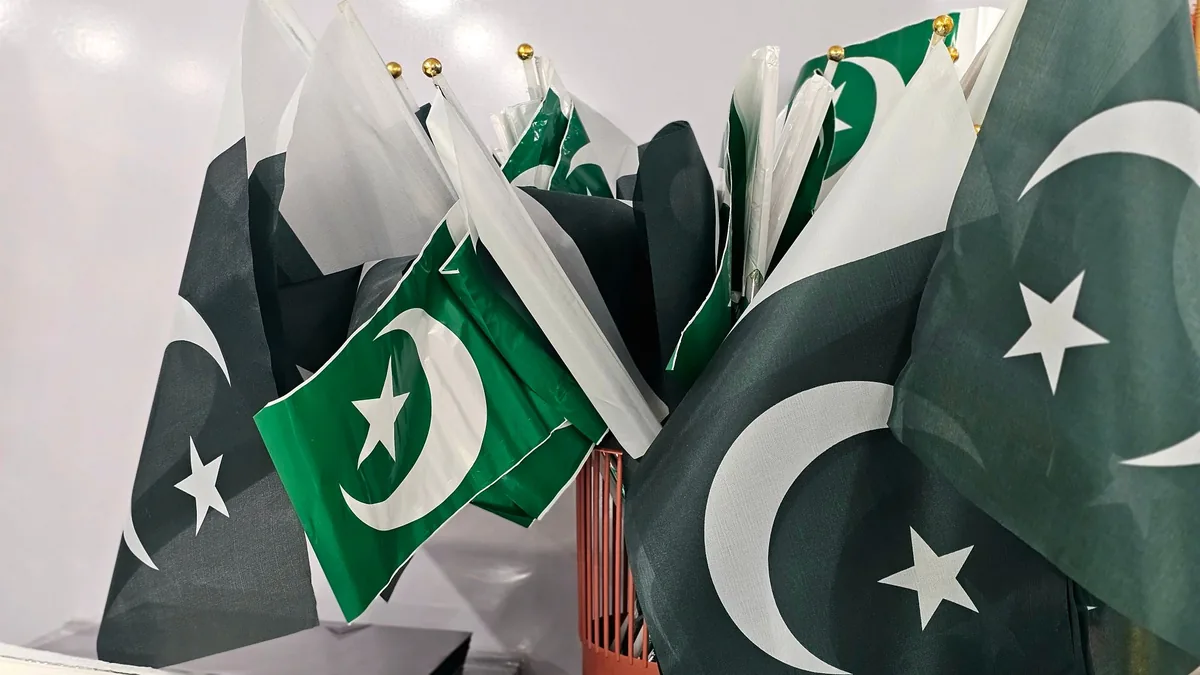
Wagah border ceremony timings follow the sun, not the clock. The Pakistan Rangers and India's Border Security Force lower their flags together every evening just before sunset, so the ceremony can finish before 5pm in December and after 7pm in late June. Work backwards from the day's sunset: be at the Wagah gate at least 90 minutes early, and leave central Lahore a good hour before that. The drive itself is short (Wagah sits about 24 km from Lahore on the old Grand Trunk Road), but the last stretch fills with cars, buses and families on foot, and the security queue at the gate does not care how far you came.
The part most guides skip is getting home. Thousands of people leave at the same moment, phones can struggle to connect in a crowd that size, and every driver is waiting in the same place. This guide gives you a leave-by time for each season, what to carry, how the gates work, and a pickup plan that actually works in the dark.
Can you still go? The current position
Before timings, the honest status check.
- The border crossing is closed; the ceremony is not. The UK Foreign, Commonwealth & Development Office (FCDO) advises against all but essential travel within 5 miles of the Pakistan–India border, but makes an exception for the Grand Trunk highway via the Wagah border. Its Pakistan travel advice says the crossing point is currently closed, "however visitors can still access and attend the daily Wagah border ceremony".
- The ceremony has been paused before. According to the Wikipedia summary of the Attari–Wagah ceremony, it was paused indefinitely on 8 May 2025 after the Pahalgam attack and resumed in a limited form on 20 May 2025, without the handshake or the exchange of sweets. In 2016, after a military confrontation, the Indian side also shut its stands to the public for about ten days. When relations between the two countries are tense, check local news on the morning you plan to go.
- Crowds carry risk. The FCDO's safety and security page asks visitors to be cautious about attending any public event, sports events and religious gatherings included. Wagah has a specific history here: Dawn reported that on 2 November 2014 a suicide bomber struck around 600 metres from the parade venue as crowds were leaving, killing at least 60 people. Checkpoints stopped the attacker reaching the ceremony itself, and security has been heavy ever since. That is exactly why the gate rules below exist, and why the exit plan matters.
For US citizens, the State Department's Pakistan advisory notes that Wagah–Atari is the only official Pakistan–India crossing point for people who are neither Indian nor Pakistani citizens, which is why foreign visitors have historically been common in the stands.
Wagah border parade time by season
The flag comes down at sunset. The marching, the crowd warm-up and the drumming all happen in the stretch before it, and seating fills well ahead of the main drill. So the useful number is sunset, and your arrival time comes from that.
The table below uses calculated sunset times for Lahore. Pakistan has not used daylight saving time since 2010 (see Pakistan Standard Time), so these hold year to year within a minute or two. For March, our figures match the published Lahore sunrise and sunset table, which lists 6:08pm on 12 March and 6:21pm on 31 March.
| Month | Approx. sunset (1st–15th) | Be at the Wagah gate by | Leave central Lahore by |
|---|---|---|---|
| January | 5:08pm–5:19pm | 3:30pm | 2:30pm |
| February | 5:35pm–5:47pm | 4:00pm | 3:00pm |
| March | 6:00pm–6:10pm | 4:30pm | 3:30pm |
| April | 6:20pm–6:30pm | 4:45pm | 3:45pm |
| May | 6:40pm–6:50pm | 5:00pm | 4:00pm |
| June | 7:00pm–7:07pm | 5:30pm | 4:30pm |
| July | 7:10pm–7:08pm | 5:30pm | 4:30pm |
| August | 6:58pm–6:46pm | 5:15pm | 4:15pm |
| September | 6:27pm–6:08pm | 4:45pm | 3:45pm |
| October | 5:47pm–5:30pm | 4:00pm | 3:00pm |
| November | 5:13pm–5:03pm | 3:30pm | 2:30pm |
| December | 4:58pm–5:00pm | 3:15pm | 2:15pm |
The "leave by" column is a planning allowance, not a measured drive time. It gives you roughly an hour for 24 km plus the queue of vehicles near the border, which is where the time really goes. On weekends, public holidays, national days and during Eid breaks, add another 30 to 45 minutes, because those are the days whole families make the trip. If you are staying near the airport or in DHA, you are already on the eastern side of the city and may need less; from Gulberg, the Walled City or Johar Town, keep the full hour.
No official source publishes a start time for the warm-up; the reliable fixed point is that the flags come down immediately before sunset. The Rangers set the order of events, and the format has shifted with the political weather, so treat the table as the latest sensible arrival, not an invitation to cut it fine.
Lahore to Wagah border: the drive out
Wagah lies on the Grand Trunk Road east of Lahore, roughly 24 km out and 32 km short of Amritsar on the Indian side. You do not need a motorway for this one. Your driver will head east through the city towards the old GT Road alignment and follow the signs for Wagah and the Bab-e-Azadi gate.
What slows you down
- The last few kilometres. Traffic compresses as buses, rickshaws, motorbikes and private cars all try to reach the same parking areas.
- Checkpoints. Expect vehicle and passenger checks before the parking area. The Rangers decide where private cars can stop, and that can change on busy days.
- School and office traffic. In winter the leave-by time lands close to the afternoon school run, so the first part of the journey through Lahore can be slower than the last.
- Winter evenings. In the coldest months you drive back in full darkness, sometimes in poor visibility. The FCDO notes that local driving standards are erratic, especially at night, which is one more reason to have a driver who knows the road rather than navigating it yourself.
Why a waiting car makes sense here
Getting a ride out to Wagah is rarely the hard part. The return is. Once the ceremony ends, you are one of thousands of people trying to leave a border area at the same time, and a one-way drop-off leaves you hunting for a car in the dark. A car and driver who waits for you, parked where you agreed, takes most of that uncertainty away. Our car and driver hire page explains how a waiting-time journey is planned, and you can describe your evening through Plan Your Journey (planned link) so an operator can come back to you with what is possible.
Wagah border ceremony for foreigners: ID, seating and what to carry
Identity documents
Carry your original passport (foreign visitors) or CNIC / NICOP (Pakistani and dual nationals). The FCDO is blunt about this for all of Pakistan: "Always carry photo ID. You may be asked to show it and you might be detained until you can show a valid ID." At a military-controlled border point, a photocopy or a picture on your phone is a weak substitute. If you are a visiting family, keep the children's passports with you too; it costs nothing and saves an argument at a checkpoint.
Seating and enclosures
The Pakistani side has stadium-style stands facing the gate. How those stands are divided (families, women, men, foreign passport holders, VIP guests) is decided by the Rangers, and arrangements have changed over the years. We could not find an official published seating plan, so we will not pretend to give you one. What you can plan for:
- Stay together at the gate. If staff send men and women of your group to different queues or stands, agree a meeting point before you split.
- Say you are a foreign visitor if you are one. Staff may direct you to a particular section or queue; do not assume, just follow their instructions on the day.
- Arrive early for good seats. The stands fill from the front, and on busy evenings latecomers watch from the back or not at all.
Wagah border Lahore gate rules: bags, cameras and security
There is no official, published list of permitted items that we could verify, and rules at the gate are set by the Rangers on the evening. After the 2014 attack, assume screening will be thorough and that anything unusual will be refused or held. Pack as if you expect to be searched, because you will be.
A sensible packing list
- Passport or CNIC/NICOP (original)
- Phone, fully charged, plus a small power bank
- A little cash in small notes
- Water for children and older relatives, especially from May to September
- A shawl or light jacket from November to February; the stands cool quickly once the sun goes
- Any medicines you would need if you are held up for an hour on the way back
What to leave in the car or the hotel
- Large bags, backpacks and anything with lots of compartments
- Food hampers and flasks beyond what you genuinely need
- Lighters, knives, tools, and anything that could be read as a weapon
- Drones, full stop
Cameras and phones
Phone photography of the ceremony from the stands is widespread. Bigger kit is a different matter: a long lens or a tripod draws attention at any security point, and the FCDO's general Pakistan advice is not to take photographs at military establishments or infrastructure. Wagah is both. Photograph the parade from your seat, keep the camera away from checkpoints, vehicles and personnel on the approach, and put it away if anyone in uniform asks. If you rely on a professional camera for work, ask at the gate rather than assume.
The crowd exit and meeting your driver
This is the section to read twice. Getting to Wagah is easy; getting back to the car is where evenings go wrong.
Before you get out of the car
Agree three things with your driver while you are still sitting together:
- The exact waiting spot. Not "the car park" but a landmark you can see and find again in the dark: a named stall, a signboard, a particular row. Take a photo of it.
- A fallback spot. If the first spot is closed off after the ceremony (it can happen), where will you both go instead? Pick somewhere further back towards Lahore, away from the densest crowd.
- A time. "We will be at the car 40 minutes after the flag comes down" gives the driver a window and gives you permission to wait out the worst of the rush.
Save the driver's number, then send them a message there and then so it sits at the top of your chats. If mobile networks struggle with the crowd, a plain text message may get through when a call will not.
When the ceremony ends
- Do not rush the exit. The minutes straight after the flag is lowered are when the whole crowd moves at once. Sit, let the stands empty a little, and then walk out as a group.
- Walk in a fixed order. For families, one adult leads, one adult walks at the back, children and older relatives in the middle. Count heads at every gate you pass through.
- Give children the plan too. Tell them the name of your meeting spot and show them the photo. Write a parent's phone number on a card in their pocket.
- Keep your ID reachable. You may pass a checkpoint on the way out as well as on the way in.
If you cannot find the car
Stop moving and message the driver with a precise description of where you are standing. Walking in circles in the dark only makes the search harder for both of you. Once you are in the car, the drive back is usually slower than the drive out simply because everyone leaves at once.
Groups, families and more than one car
Wagah is a popular evening for visiting relatives, wedding guests with a free day and school or office groups. Once you have more than one vehicle, the pickup becomes a small operation.
- One contact person per vehicle. Each car gets a named passenger who holds the driver's number and counts heads.
- Stagger the return if people want different things. Older relatives may want to go straight to the hotel while cousins go on to dinner. Our guide to event return transport when guests leave at different times shows how to plan split departures without leaving anyone behind.
- Vans have their own parking rules. Larger vehicles may be directed to a different area from cars, so confirm on the approach where the van will wait.
For wedding parties and larger outings, our events and group travel page explains what to tell an operator when you plan a multi-vehicle evening.
Combining Wagah with dinner in Lahore
Because the ceremony ends at sunset, Wagah fits naturally before a late Lahore dinner. Lahore dines late, and by the time you are back in the city the food streets and restaurants are just getting going.
How to plan the evening
- Plan one car for the whole evening, not two separate trips. A single journey with waiting time (hotel to Wagah, wait, Wagah to restaurant, wait, restaurant to hotel) avoids the hardest job of the night: finding a second ride from a border area after dark.
- Choose a restaurant on your side of the city. If you are staying in Gulberg or DHA, eating nearby after Wagah is kinder than crossing Lahore again at 9pm with tired children.
- Leave slack between the flag and the table. Given the slow exit, a dinner reservation for roughly two hours after sunset is realistic. In winter that could mean eating at 7pm; in June it will be 9pm or later.
An example evening in October
This is an illustration for planning, not a timetable.
| Time (example) | What happens |
|---|---|
| 3:00pm | Driver collects you from your hotel in Gulberg |
| 4:00pm | Arrive near Wagah, pass checkpoints, walk to the stands |
| 5:40pm (around sunset) | Flags lowered; stay seated while the crowd thins |
| 6:15pm | Meet the driver at the agreed landmark |
| 7:30pm | Dinner in the city |
| 9:30pm | Back at the hotel |
Adjust the start using the season table above. In June the whole plan slides about an hour and a half later.
Arriving in Lahore and going to Wagah the same day
Plenty of overseas visitors try to fit Wagah around a flight. It can work, but only with margin.
- Landing in the morning: realistic. Rest, eat, and leave the hotel at the time shown in the table.
- Landing in the early afternoon: tight. Immigration, baggage and the drive into Lahore all eat into the window, and you would be carrying luggage in a place where bags are the first thing screening looks at. Better to go the next evening.
- Flying out the same night: possible in winter, when sunset is early, but only if your flight leaves late and you go to the airport straight from Wagah with no dinner stop. Keep your luggage in the car and remember that it stays with the driver while you are in the stands.
Our Lahore Airport journey guide (planned link) covers the pickup side of arrival day, including what to share with your driver before you land.
If you need a Lahore taxi for other parts of your stay, iDrive, the network behind Pakistan Taxi, lists its Lahore car and driver options on its own site.
A checklist for the evening
Copy this into your phone the day before.
- Check the news in the morning for any pause to the ceremony or change to public access.
- Look up today's sunset and set your leave-by time from the table.
- Pack original passport or CNIC/NICOP for everyone, a charged phone, water and a warm layer in winter.
- Leave large bags, drones and anything sharp at the hotel.
- At drop-off, agree the waiting spot, a fallback spot and a meeting time with your driver. Photograph the spot.
- Save and message the driver's number.
- Stay seated for 15 to 20 minutes after the flag comes down.
- Walk out together, count heads, meet the driver.
- Head to dinner on your side of the city, or straight back if the children are done.
When you have your dates and group size, plan your Wagah evening (planned link) with us and describe the waiting time you need; an operator will come back to you with what they can arrange.