
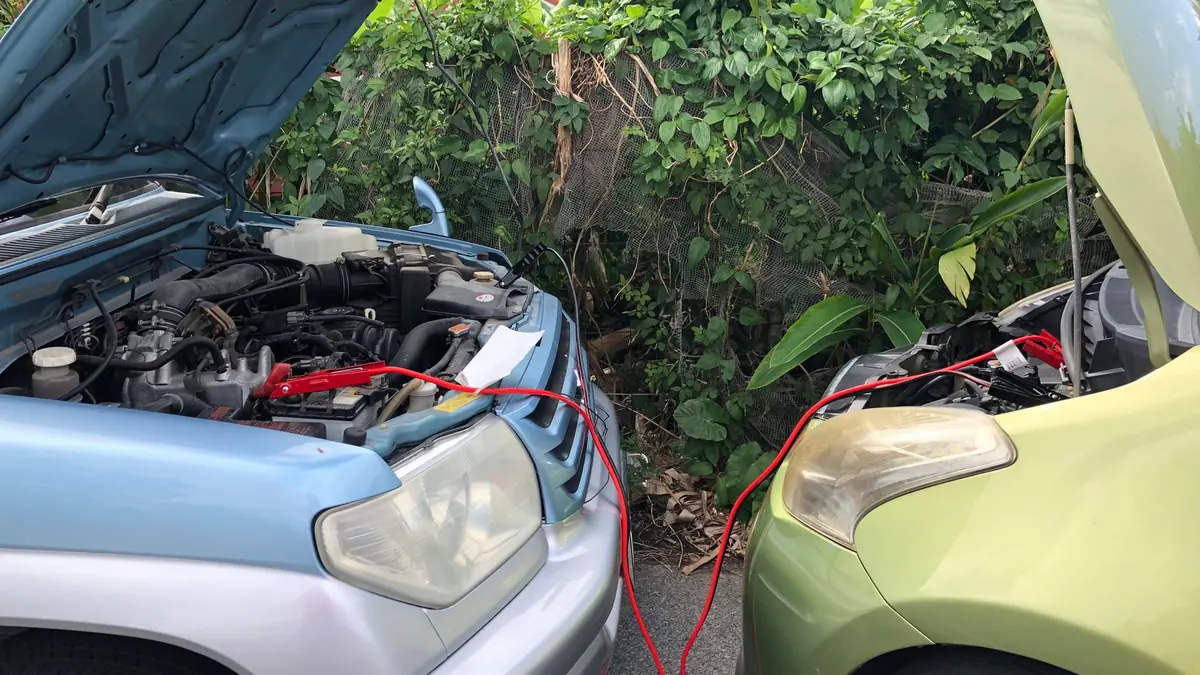
If you are wondering what to do if rental car breaks down on a Pakistani road, the order matters more than the mechanics. First, get the car and everyone in it out of the path of traffic. Second, ring the rental supplier before anyone touches the engine. Third, agree in writing, even a WhatsApp message counts, who is authorising any repair and who is paying for it. Only then decide how the family carries on: a replacement car, a tow, or a driver to take you onward.
The step most visitors get wrong is the second one. Breakdown guides written for Europe or North America assume you ring a brand hotline and a recovery truck turns up. In Pakistan the more common scene is a helpful roadside mechanic who appears within minutes, opens the bonnet and starts work before you have agreed anything. The repair may be perfectly good. The trouble comes at the return desk, when the supplier says they never approved it, the part is not genuine, or the fault was caused by the fix rather than the car. This guide walks through each stage so a breakdown stays an inconvenience rather than a dispute.
Step one: get off the carriageway and make everyone safe
Everything else can wait. A stranded car is a hazard, and on a fast road the risk to people standing beside it is greater than any risk to the vehicle.
- Signal and move left. Pakistan drives on the left, so your refuge is the left edge of the road or the hard shoulder on a motorway. Hazard lights on as soon as you feel the fault.
- Stop as far off the running lane as you safely can. On motorways such as the M-2 or M-9, use the shoulder or, better, coast to the next service area or interchange if the car will still move without damage.
- Get passengers out on the side away from traffic and behind the barrier where there is one. Children and older relatives should not wait in the car on a motorway shoulder, however hot it is outside.
- Place the warning triangle well behind the car if the rental has one. Ask about it at collection; not every car will.
- Note where you are. Motorway distance markers, the last interchange you passed, or a dropped pin on your phone. You will be asked for this by the supplier and by any emergency service.
Who to call in an emergency
On motorways and national highways, the National Highways and Motorway Police (NHMP) publish 130 as their helpline on the official NHMP website, and the force lists assistance to road users as part of its mission. If you are stopped on a motorway or national highway and feel unsafe, or the car is blocking a lane, ring 130 before you ring anyone else.
If anyone is hurt, or there has been a collision or a fire, ring 1122. In Punjab, Rescue 1122 is run by the Punjab Emergency Services Department and handles medical emergencies, road traffic crashes and fires, among other incidents. It is not a breakdown service, so do not use it for a flat battery.
Safety beyond the car
The UK Foreign, Commonwealth and Development Office warns on its Pakistan safety and security page that local driving standards are erratic, especially at night, that road quality varies away from the main motorways, and that travellers should be aware of carjacking risks on long journeys. It also advises against all travel to Balochistan, to several districts of Khyber Pakhtunkhwa including Peshawar, and to the Karakoram Highway between Mansehra and Chilas, among other areas. It advises against all but essential travel to further areas, including Sindh north of and including Nawabshah, and Dera Ghazi Khan in Punjab. No leisure self-drive plan should take you into those areas, and a breakdown there is a security issue first. Check the current FCDO Pakistan travel advice before any long drive.
Practically, this means:
- Plan long drives for daylight, so that if something fails you are not waiting on an unlit road.
- Keep the phone charged and a power bank in the glovebox.
- Be polite but cautious with strangers offering to "take you to a workshop" in their own vehicle. Stay with your party.
What to do if a rental car breaks down: call the supplier before any repair
Once everyone is safe, the first call is to the company whose name is on your rental agreement, not to the nearest mechanic.
Why the order matters so much:
- The agreement usually decides who can repair the car. Many rental agreements say only the owner or an approved workshop may carry out repairs. An unauthorised repair can shift the cost to you even when the original fault was not your doing.
- The supplier may have a better answer. They may know the car's quirks, such as a relay that trips or an immobiliser that needs the spare key. A two-minute call can save an hour.
- They may send help or a replacement, depending on where you are and what they have.
Before you ring, have this ready so the call is quick:
- The booking or agreement reference and the registration number.
- Your exact location (motorway marker, interchange, or a map pin you can share).
- What happened, in plain words: "a red oil light came on and the engine cut out", "the temperature needle went into the red after the toll plaza".
- Who is with you, especially children, older relatives or anyone unwell, and how hot it is.
- What you need: advice, a mechanic, a tow, a replacement car, or onward transport.
When the roadside mechanic arrives first
Very often someone will stop to help before you have finished the call. That is kindness, and it is common. Accept the help with the safety part, such as pushing the car off the road, but hold off on repairs until the supplier agrees. A reasonable line is: "Thank you, the car belongs to the rental company and I have to ask them first."
If the supplier approves a local repair, ask them to confirm three things in a message you can screenshot:
- that the repair is approved,
- the maximum amount you may spend,
- whether they will reimburse you or pay the mechanic directly.
Then ask the mechanic for a written slip or at least a photo of the parts used and the amount paid. A handwritten note with a phone number is better than nothing.
If you cannot reach the supplier at all, and the car is safe where it is, waiting is often the cheaper option. If waiting is unsafe, prioritise getting people away and keep a record of every attempt to call.
Warning lights, overheating and AC failure
Most breakdowns announce themselves first. Knowing what each warning means helps you decide whether to stop immediately or limp to a safer spot.
Rental car warning light on: what it usually means
Dashboard symbols vary by make, so check the handbook if one is in the glovebox. As a general guide:
| Warning | What it often indicates | What to do |
|---|---|---|
| Red oil can | Low oil pressure | Stop as soon as it is safe and switch off. Running on can wreck the engine. Call the supplier. |
| Red thermometer or temperature needle in the red | Engine overheating | Stop, switch off, do not open the radiator cap. See the overheating section below. |
| Red battery symbol | Charging fault, often the alternator or belt | The car may run for a short while on battery alone. Head for a safe stop and call. |
| Amber engine symbol | Engine management fault | Usually safe to drive gently to a safe place; report it promptly. |
| Red brake symbol | Handbrake still on, or a brake system fault | Check the handbrake is fully off. If the light stays on, stop carefully and do not drive on. |
| Tyre pressure symbol | Loss of pressure | Slow down, stop safely and check. A puncture is usually a wheel change, not a breakdown. |
As a rough rule, red usually means stop soon, amber means get it checked, though colours vary by make and the handbook has the final word. Whichever it is, photograph the dashboard with the light showing. That photo is your evidence that you stopped when warned, which matters if the supplier later asks whether the car was driven on after a fault appeared.
Rental car overheating in summer
Pakistan's plains get extremely hot in May and June. June averages around 38°C across the plains, heat waves are typical in southern Punjab, upper Sindh and central Balochistan in those months, and Turbat recorded 53.7°C in May 2017. Long motorway runs in that heat, often with the AC on full and a boot full of luggage, are exactly when a tired cooling system gives up.
If the temperature needle climbs:
- Switch the AC off and, oddly, turn the cabin heater to full hot with the fan on high. It draws heat away from the engine. Open the windows.
- Pull over safely as soon as the needle is near the red or steam appears.
- Switch off the engine and open the bonnet only if you can do so without touching hot parts.
- Never open the radiator or coolant cap on a hot engine. Pressurised coolant can scald. Wait until the engine has cooled right down.
- Call the supplier. They may say it is safe to top up with water once cool and drive gently to a workshop, or they may want the car towed.
Before a summer drive, check the Pakistan Meteorological Department forecasts and alerts on PMD's official site, and carry more drinking water than you think you need. If the car stops in the afternoon heat, the people matter far more than the engine: find shade, keep children and older passengers drinking, and do not let anyone wait in a closed car.
Rental car AC not working
A failed air conditioner is not a breakdown in the strict sense: the car still drives. In a Pakistani summer, though, it can make the car unsuitable for a family, and some agreements treat it as a fault the supplier should fix.
- Check the obvious first: AC button on, fan above zero, recirculation on, and that the engine is not overheating. Some cars cut the compressor when the engine runs hot.
- If it is blowing warm air after those checks, stop at a safe place and message the supplier with a short video of the vents and the controls.
- Ask plainly whether they will swap the car, arrange a repair, or adjust the charge. Do not get the AC regassed at a roadside shop without approval; that is a repair like any other.
If you are travelling with a baby, someone elderly or anyone with a medical condition, say so. It changes how urgent the problem is.
Who pays for rental car repairs
The honest answer: it depends on your written rental agreement and on what caused the fault. No general guide can override the contract you signed, so read it before you drive off and keep a copy on your phone.
In broad terms, suppliers tend to separate faults into two groups.
| Usually the supplier's cost | Often the renter's cost |
|---|---|
| Mechanical failure from normal use: a worn clutch, a failed alternator, a tired battery, a radiator that gives out | Damage from misuse: driving on after a red warning light, wrong fuel, off-road use not allowed by the agreement |
| Faults the car had at collection | Punctures and tyre damage, depending on the agreement |
| Routine servicing items | Lost keys, damage from a collision you caused |
| Tow or recovery when the car was at fault | Unauthorised repairs, and any damage those repairs cause |
Some points worth confirming before your trip, preferably in writing:
- Is there any breakdown cover included, and what number do you call?
- Is there an excess you would pay for damage, and does it apply to mechanical faults at all?
- Are tyres, glass and the underside of the car covered, or excluded?
- What is the reimbursement process if you pay a mechanic on the supplier's instruction: receipts, photos, bank transfer, a deduction from the deposit?
- What happens to the rest of your hire if the car is off the road for a day?
A hypothetical example: a family collect a car in Lahore, and on the second day the battery light comes on near Sheikhupura. They stop, photograph the dashboard, ring the supplier, and are told to wait for a mechanic the supplier sends. The alternator is replaced. Because they reported it, stopped when warned and did not authorise their own repair, the cost should sit with the supplier under a typical agreement. If they had driven on to Faisalabad with the light on and the engine had then failed, the conversation at return would be much harder.
Getting the family moving again
Once the car is safe and the supplier knows, the next question is how everyone gets where they were going. There are usually three options, and it helps to decide quickly rather than letting the afternoon drain away on the hard shoulder.
Option 1: wait for a repair on the spot
Sensible for a simple fault such as a flat battery, a loose hose or a puncture, when the supplier's mechanic is close and the weather is kind. Less sensible if you are an hour from the nearest town, it is 40°C, and the family has a function to reach that evening.
Option 2: a replacement car
Ask the supplier directly whether they can bring or arrange a replacement, where it would be handed over, and roughly when. Some suppliers can; others cannot, especially outside the main cities. If a replacement is offered, confirm:
- that the terms, deposit and cover carry across to the new car,
- who is collecting the broken car and when you may leave it,
- whether you need to be present when it is recovered.
Do not simply abandon the car at a petrol station with the keys at the counter unless the supplier has told you to, in writing.
Option 3: onward transport with a driver
Sometimes the right call is to let the car go and get people moving. If the supplier cannot offer anything quickly, a pre-arranged car with a driver can take the family and luggage onward while one adult waits for recovery, or while the supplier sorts things out.
If you are planning a longer trip, it is worth keeping city-to-city travel with a driver in mind as a fallback for an important day, such as a wedding function or a flight home. You can plan the onward journey with our team (planned link) and we will check what can be arranged; availability and fares are confirmed by the booking team, not assumed.
If someone must stay for recovery, make it the adult named on the agreement, with the documents, a charged phone and water. Everyone else can go on ahead.
Recording everything for the return
At the return desk, what you can show counts far more than what you remember, and a breakdown is exactly when people forget to take photos.
At the roadside, record:
- a photo of the dashboard showing any warning light and the mileage,
- a photo of where you stopped, including a road sign or marker,
- the time you first noticed the fault and the time you stopped,
- screenshots of every call and message to the supplier, with times,
- the name and number of any mechanic, and what they did,
- receipts or photos of parts and payments.
At the handover of a replacement car or at the final return, record:
- photos of all four sides, the wheels, the windscreen and the interior,
- fuel level and mileage,
- a short message to the supplier confirming the car was returned, when and where.
Keep all of it in one folder or chat until any deposit is refunded. If there is a disagreement later, a timeline with photos usually settles it.
Before you drive: a five-minute check at collection
A breakdown is easier to handle if you prepare at collection:
- Save the supplier's breakdown number and a second contact in your phone, plus NHMP 130 and 1122.
- Check the spare wheel, jack and wheel brace are actually in the car.
- Run the AC for a few minutes while stationary. If it is weak in the car park, it will be worse on the motorway.
- Look at the temperature gauge and warning lights once the engine is running.
- Ask how repairs and breakdowns are handled, in their words, and ask them to confirm by message.
- Photograph the car all round, including existing marks and the fuel gauge.
Our guide to self-drive questions for overseas bookers covers eligibility, deposits and handover in more detail. UK visitors should also note that the FCDO says you need the 1968 International Driving Permit alongside your UK licence, and that the permit cannot be bought once you are outside the UK.
Self-drive or a driver for the trip?
Self-drive gives freedom, but you handle breakdowns, parking and paperwork yourself. A car with a driver moves that responsibility to the operator.
You can explore self-drive hire through Pakistan Taxi with your dates, collection point and who will drive, and our team will check what can be arranged. Our sister service iDrive, the network behind Pakistan Taxi, also lists self-drive car rental in Pakistan. If you have questions before deciding, the Pakistan Taxi help centre (planned link) is the place to start.